
HISTORY OF BAKER PERKINS INC, SAGINAW
See also:
History
of Baker Perkins in the Chemical Industry
History of
Baker Perkins in the Bakery Business
INDEX:
- THE IMPORTANCE OF SAGINAW
- PROGRESS BETWEEN THE WARS
- WW2 BRINGS A MAJOR THREAT
- PROBLEMS OF PEACE
- THE SEVENTIES
- THE EIGHTIES
- SAGINAW PRODUCT GALLERY
- SAGINAW PEOPLE
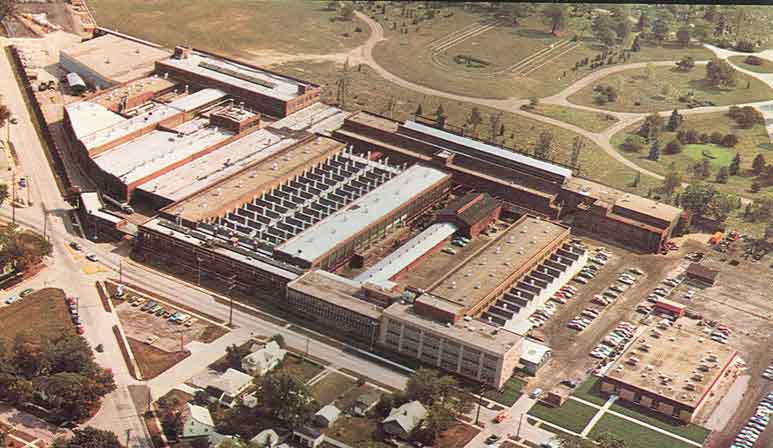 Aerial view of Saginaw factory
THE IMPORTANCE OF SAGINAW
The Saginaw factory was for many years a very important part of the Baker Perkins empire serving one of its key markets. It covered some 22 acres and employed around 1,000 people. How it came to be part of the Group is an interesting story.
Saginaw is in Michigan - one of the most northerly of the States, separated only by water from Canada – it borders four of the five Great Lakes. Positioned roughly in the centre of the southern and main peninsula of Michigan, it is around 600 miles by air from New York, 90 miles north-west of Detroit and 250 miles north-east of Chicago. Saginaw - the word means "Land of the Sauks", an Indian tribe that lived there before they were annihilated by another tribe in 1520 – started life in the early 1800's. It was then that white traders and settlers, later protected by two forts on the river, moved into the area.
From 1851 to 1897, Saginaw was the lumber capital of the world as 25 billion feet of pine logs from surrounding forests were floated to mills on the banks of the Saginaw River. The population had reached 7,000 by 1869 and 20 years later two separate towns – Saginaw City and east Saginaw – were united. With the end of the lumber boom, Saginaw stagnated for around a decade before a group of business leaders decided that something had to be done to fill the vacuum left by the exhausted lumber industry. Thus the growth of modern Saginaw began.
An article in the local paper - "The Saginaw News" - dated Sunday, November24, 1985, described the early development of the district:
"Werner & Pfleiderer of Cansatt Stuttgart, Wurtemburg, Germany, was a worldwide industrial giant in the late 1890s. Established about 1850, the company patented and manufactured mixing and kneading machines for the baking, chemical, pharmaceutical and rubber-working trades.It operated plants in Berlin, Cologne, Frankfurt, Dresden, Vienna, London, St Petersburg, Paris, Milan, Moscow – and Saginaw.
The facility in Saginaw was the forerunner of what is today Baker Perkins Inc. Werner & Pfleiderer arrived on the bread scene at a time marked by declining lumber and salt production and a concerned Board of Trade. The Canadian government had placed a high export duty on the cutting of logs across Lake Huron – a practice that extended the life of the Saginaw lumber industry for several years – and the community’s prestige as a lumber market was ebbing. Mills "History of Saginaw County" explains.
In response to the situation, the Board of Trade began searching for diversification, aided by the Saginaw Improvement Company. Organised in 1890, the Improvement Company was comparable to the public economic development corporations of today. Its task was to find ways to offset the depression, keenly felt by commercial as well as industrial interests in the city. Many members of the Improvement Company were also members of the Board of Trade.
“This period of lassitude in business,” Mills says, “was more pronounced between 1895 and 1905, in which the population fell off heavily”The 1890 census listed the population at 46,322. By 1900, the count had dropped to 42,846. People were moving out beyond the townships.
A contributing factor to the depression was the failure of some of the businesses established by the Improvement Company. Chances are that a good number of Saginaw residents would run across the organisation. If they were to check the abstracts for their property.
The Improvement Company came up with a plan to purchase acreage on both sides of the river, platting some into lots and providing some factory sites adjacent to the railroads. A number of new industries were then brought here with proceeds from the property sales.
About 2,500 lots were sold quickly at the rather steep price of $150 each. The attraction, however, was that the property was distributed by way of a drawing.The main prize was the old homestead of William I Webber on Jefferson at Webber – a home that was to become the first church school building for St Casimir’s parish – which consisted of a substantial brick house in a grove of pines.
Mildred Gage, whose husband, Chauncey H Gage, was to become a Circuit Court judge, was the big winner. Most of those who drew lots on principal streets were greatly pleased, Mills notes, although those who won lots outside of the city or some distance removed from factory sites were disappointed. As a matter of fact, Mills says, some never took their lots, while others let them revert to the state for back taxes.The land sale nonetheless helped the Improvement Company bring a number of industries to the community within the next two years. Werner & Pfleiderer was among them.
Some of the others were: F.G.Palmerston Woodenware Company Ltd. Tubs and pails; Ferrell, Prame & Ozier, grain cleaning machinery, Beelman manufacturing Company. Adjustable roller shades; Saginaw Box Company, grease boxes; Crume & Sefton Manufacturing Company, butter dishes and berry boxes; Lukin Rule Company, wood and steel rules and tapes; Peninsular Carriage Company, buggy bodies, gears and bent work.
The companies were given sites and buildings – conveniently located near the railroads –at no cost. The H.J.Heinz Company of Pittsburgh also was among the newcomers, est5ablishing a pickling station on the East Slide Improvement grounds, between the Lutkin plant and the Peninsular Carriage Company factory on Hess.
“The Peninsular Carriage Company controlled by Den Bleykers of Kalamazoo, was the first to show signs of distress and soon after failed” Mills reported. Later, the plant was taken over by Charles W McClure and became the home of Farmers’ Handy Wagon Company which also built silos.The wagon business eventually was discontinued and transformed into The McClure Company The Bechman Manufacturing Company which made furniture, especially for halls, also went under.The company’s plant at Hess and Jefferson was taken over by the Brewer Pryor Piano Company, manufacturers of a medium grade piano sold directly to customers at the factory. Brewere-Pryor ceased operations about 1904 and became William Polson & Company, manufacturers of sash, doors, blinds and interior finishes.
Werner & Pfleiderer’s leap from Europe to Saginaw began about the turn of the century when Hermann Werner of Cannstatt, a principal in the firm, started looking for markets abroad, especially in America. It was through an alert Board of Trade that he was attracted here.The board in 1897 found two acres north of the Bristol (now Holland) Bridge at Niagara, and the original factory was built there. From the very beginning, it was to know success, and business increased each year. In June of 1902 Emil Staehle – who came from Germany- was named general manager. The business quickly outgrew the plant and company officials sought a new site.
A planned move to a 25 acre tract at Hess and Jefferson was stalled when the local street car company was reluctant to extend its lines to the site, leaving the company concerned over how its employees would get to work.In 1913, however, Staehle made a trip to the home office at Cannstatt, and a decision was made to proceed with the relocation.
The new operation was to include a foundry, a pattern shop and an experimental bakery that would display all of the company’s products need for making bread, biscuits and cakes.In a letter to ‘W S Linton, president of the Board of Trade, Staehle said construction would begin in the spring. He also requested that Linton notify the Merchants and Manufacturers Association – another organisation designed to spur business – of the company’s intention.
In April of 1917, the association which had acquired the Hess and Jefferson property four years earlier with Werner & Pfleiderer in mind, gave the company 17 acres. Staehle made the return trip to Saginaw late that year, arriving in New York December 17 having made the crossing on the steamer Princess Irene.Mills says that Staehle was an honoured citizen of Saginaw, the great force behind the local plant.
“To him,” Mills reports, “is largely due the remarkable expansion of trade to America, and the bright future of the firm in this department of its international business.” Mills also notes that Staehle, who was vice president of the Board of Trade, “is of that all too small class of businessmen who accomplish much without the blare of trumpets or the acclaim of citizens, but whose influence is nevertheless felt in the community in which his interests are centred.”
Staehle was to have some difficulties communicating with the home office after World War 1 broke out in 1914 Indeed, he had even greater problems after the United States entered the war in 1917.He tried to call the annual meeting that year for the four share holders of the company, but while he held 50 shares, the other three lived in Germany.The Werner brothers, Richard and Otto, sons of the founder, each with 1,775 shares, were captains in the German army and, what with the fortunes of war and all the shooting going on, Staehle was uncertain as to their whereabouts – or even whether they were alive.He was also unable to contact Gottlob Scholl, owner of 150 shares.
Staehle filed an affidavit with Saginaw County Clerk, Charles Stacey, along with the 1916 annual report, noting that communication with the stockholders in Germany had been exceedingly difficult and since American entry into the war April 6, impossible.
The headline writer for the local newspaper put it this way: “Stock Control in Germany; No Annual Meeting”. A sub head read “Werner & Pfleiderer Company Files Affidavit with County Clerk Heads Fight for Kaiser While Plant Makes Machinery for United States Ammunition”“Mr Staehle, resident manager , it is said, “the same news item also reported “is not a naturalized citizen of this country, although some years ago he took out his first papers.”
Shortly after the United States joined the war, the local Werner & Pfleiderer operation was taken over by the government under the Alien Property Act, with Harry T Wickes, Arnold Bautell and James B Peter as directors.Staehle continued as general manager of the plant, which added to its product line mixers used to manufacture ammunition powder for the Dupont Company.
In 1919, it was announced that the company would be sold September 12 at public auction by the alien property custodian, Francis P Garvan. The sale included the 3,704 shares of stock, two local plants with all equipment, letters, patents and trademarks.The announcement failed to make waves in Saginaw, but it created a tidal wave of interest in England. Augustus Muir’s “The History of Baker Perkins” points out “That fall, a letter arrived at the offices of Joseph Baker Sons & Perkins- a competitor of Werner & Pfleiderer and later to become Baker Perkins – from George Hicks, who had worked at the Saginaw plant had left, as the book notes, “on none too good terms with the Saginaw management.”Hicks also had worked for the British firm and was writing to tell it that the Saginaw business was for sale.
His letter, Muir says, “was a stroke of luck unparalleled in the history of Baker Perkins.”Company officials went into action. The notice was too short to book passage from England but two officials crossed the English Channel to the French coast and managed to board a small steamer headed for America. The boat was crowded with soldiers en route home from the battlefields."Discomfort shared with the victorious Doughboys meant little compared with the issue at stake” Muir wrote.The two officials were instructed to use their judgement on the value of the business and to buy the factory if possible.
The sale took place at the company’s offices at 1204 N Niagara. The Works- lock, stock and trademarks –went for $350,000 to New York banking interests acting for the British firm.The bankers declared that the facility would continue to operate and that its product lines would be expanded.The local newspaper reported that Donald D Davis of New York, representative of the bankers, said the buyers were more than satisfied that Saginaw was not only the logial kplace for the factory but also the place in which they desired to develop it. Davis further suggested that the rapid growth of the new company would be as much of a surp0rise as a delight.
In June 1930, it was announced that the company was sold to Joseph Baker Sons & Perkins Company of White Plains, N.Y., a subsidiary of the British firm. The name of the local operation became Baker Perkins Manufacturing Corporation.Shortly after the sale, Saginaw banker Otto Schupp was named president. The directors included R.F Baker & Sons of New York and London.Carl Pfleiderer, who had joined the company in 1912, was in charge when Baker Perkins took over. In 1930, he was appointed vice president and resident executive.
Staehle remained with the company until the sale..While very little additional information on Staehle is available, it is known that he and his wife, Lenora, lived at 315 S Weadock – later to become the Ayers Apartments – for a number of years after the Baker Perkins transition.
Harry Feige of 2455 N Mason, now 89, went to work for Werner & Pfleiderer in 1916 as an engineer and retired in 1958.“I remember him,” he says of Staehle, “and having been to a party ot his home on Weadock, close to downtown. He died in Saginaw, that I know.”
Davis’s prediction of “surprise and delight” was to come true.The announcement of a new machine shop and office building came in February 1921.The following year, company President R E Baker arrived from New York to announce that another shop, 60 feet wide and running the length of the plant, would be built in 1934.Even so, the company was once again concerned about streetcar service.
“We feel that streetcars are essential if the working men of the city are to be properly and efficiently served,” Baker commented.A sales staff of about 20 was moved to Saginaw in 1924 from White Plains.Two years later, the company announced still another major expansion project construction of a new shop on Williamson and the phase out of all manufacturing operations in the original Bristol and Niagara factory.
In March 1928, the company reported that it would start construction aimed at increasing its space by 25 per cent.In August of the same year, plans for a foundry expansion were announced.The foundry enlargement required a 5ft strip of city owned Forest Lawn cemetery, about one-sixth of an acre, because of a problem of limited space between railroad tracks and the property line.
Sale of public land needed approval by a vote of the people. Then former Mayor William B Baum supported the measure but said he feared public apathy." There is great danger that many will forget the proposition when voting.” He said.
It carried 5,217 to 392.
When World War 2 erupted, “the associate company in the United States had quickly felt the impact,” Muir wrote, “and in 1930, calls were being made upon Baker Perkins Inc. At Saginaw, plans had been drawn up to adjust all operations to aid in the national defence program, and by the end of 1940, an increasing proportion of the firm’s output was being purchased by clients for use in defence projects.”
Among later developments:“In February 1970, Baker Perkins President P B Harley announced a $2 million three building expansion project, In May 1970, Robert E Baker , 85, who had negotiated the purchase of the firm under the Alien Property Act and served as company president until 1950, died in Scarsdale, N.Y.
In January 1977, Baker Perkins Holdings Ltd of Peterborough, England, which held 83 per cent of the stock, bought the outstanding shares at $10.35 a share, which is the price it had paid for its 83 percent.
On August 31, 1983, the company announced it was moving the Food Machinery Division from 1000 Hess to a new plant in Goldsboro, N.C. Howard D Sheltraw, then director of Saginaw’s economic development programme called the move “regional dislocation.”
The Tranter recalled another such regional dislocation that hit the city in February 1969. Lutkin Rule Company, a Hess Street neighbour of Baker Perkins, left for Apex, N.C.after 100 years here.
A Stroke of Luck
Augustus Muir notes that - "Less than two months after the signing of the Armistice in 1918, at a time when the Baker directors were considering the future of the markets on the North American continent, they had a stroke of luck unparalleled in the annals of Baker Perkins".
In January 1919, an ex-Peterborough employee, George Hicks, who had worked at Saginaw when it had been owned by Werner & Pfleiderer, sent a letter to F.C. Ihlee to alert him that the Saginaw factory was about to be sold. Immediately Allan R. Baker was contacted at his office in Willesden, he sent E.H. Gilpin to go with Ihlee to Saginaw and buy the factory if at all possible. They started their journey by crossing to France to board a small steamer loaded with American Doughboys going home after the Armistice.
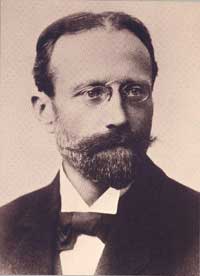 |
Hermann Werner had established the factory at Saginaw after successfully showing their line of equipment at the 1893 World’s Fair in Chicago, purchasing a plot of land at a modest price from the State of Michigan anxious to attract industry to what had become a derelict area. Just before the 1914 War a start had been made on new works in Hess Street where machinery for bread, biscuits and macaroni were to be manufactured. It is interesting to note that this early piece of advertising suggests that Herman Werner's Saginaw factory was marketing mixers for "explosives" (presumably cordite), before 1911
|
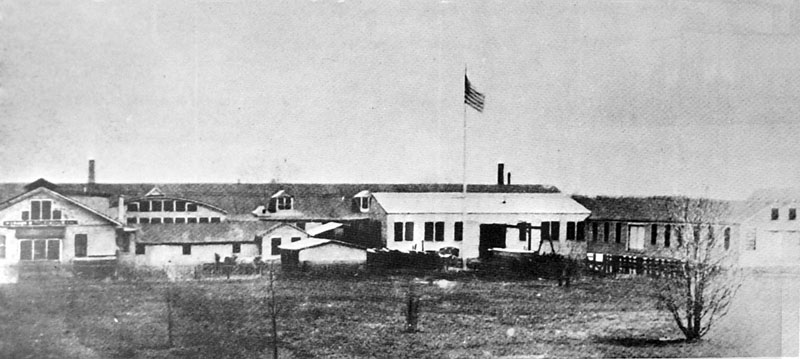 |
Werner & Pfleiderer's Hess Street, Saginaw machineshops in 1914. |
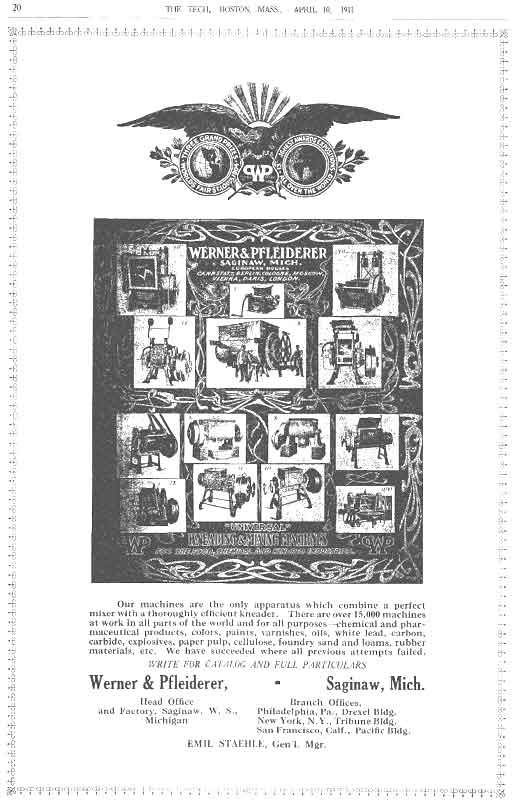 |
The first unit to be erected in 1914 was the original foundry, followed by the pattern shop in 1916 and a building to house the oven department was constructed in 1917. |
Allan R. Baker had hoped to develop closer ties with the Otis Elevator Company – who were manufacturing machinery for Baker customers in America during the war years – but now saw that it would be more to Baker's advantage to have their own factory in the USA (see also Baker Perkins and Werner & Pfleiderer - The European Limited Partnership).
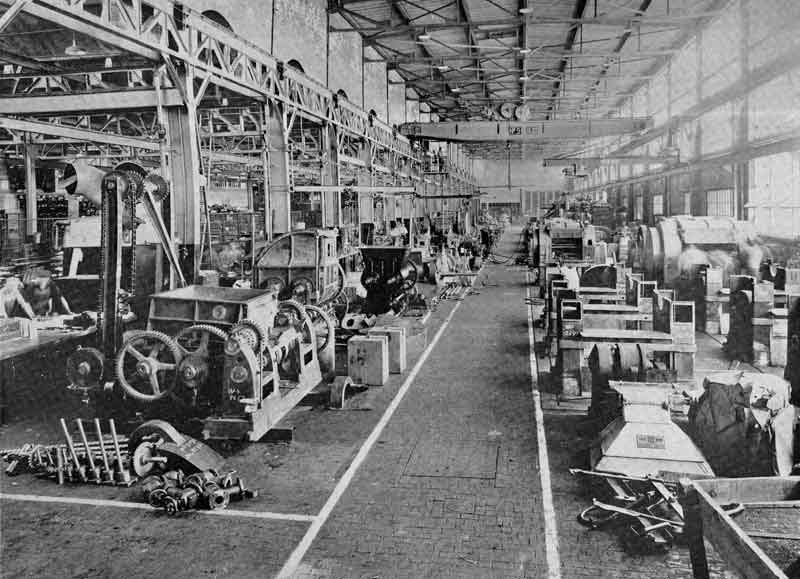 |
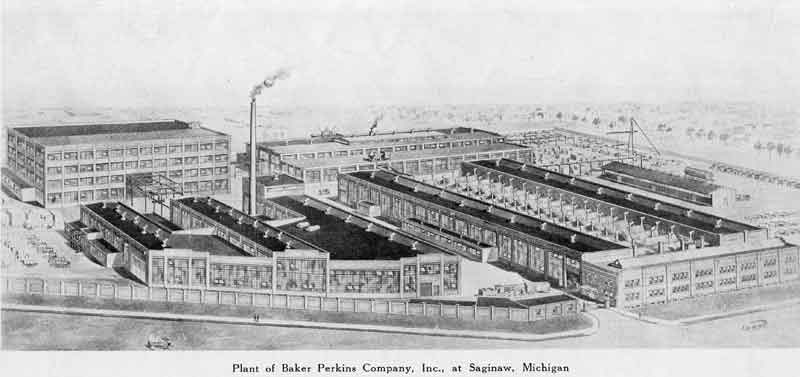 |
Early views of the Saginaw factory |
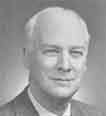 Elmer
Baker became involved in the lengthy negotiations as adviser and the factory
and its equipment was acquired for $351,000, the whole of the purchase
price coming from the Irving Trust, other American banks and loyal customers.
A separate company – the Baker-Perkins Manufacturing Co. Inc. –
was formed to operate the business. The Joseph Baker & Sons Annual
Report of 1919 stated – "The Werner & Pfleiderer Company
had an extensive business in the branches of engineering in which your
company specialises. The works at Saginaw are admirably placed and are
capable of great development. Your subsidiary company has large orders
on its books and will now be able to give better service to its customers
than has been possible in the past".
Elmer
Baker became involved in the lengthy negotiations as adviser and the factory
and its equipment was acquired for $351,000, the whole of the purchase
price coming from the Irving Trust, other American banks and loyal customers.
A separate company – the Baker-Perkins Manufacturing Co. Inc. –
was formed to operate the business. The Joseph Baker & Sons Annual
Report of 1919 stated – "The Werner & Pfleiderer Company
had an extensive business in the branches of engineering in which your
company specialises. The works at Saginaw are admirably placed and are
capable of great development. Your subsidiary company has large orders
on its books and will now be able to give better service to its customers
than has been possible in the past".
[NOTE : Elmer Baker (1885- 1970) was the elder son of Joseph Edward Baker and a nephew of Joseph Baker. His father, Joseph Edward Baker was, from 1891, the representative for Joseph Baker & Sons in North America with his headquarters in Brantford, Ontario.
Elmer Baker returned to Canada in 1908 after his training at Willesden in time to complete the contract - on which his father had begun negotiations - for the first travelling plate oven ever to be sold for bread production (for more details see here).]
Background to the Purchase of Saginaw
Joseph Baker & Sons Ltd formed a Limited Liability Company in 1911 under Canadian Law to carry on their business in Canada and the U.S.A. In 1920 upon the amalgamation of the two English Companies (Joseph Baker & Sons and Perkins Engineers), its name was changed to Joseph Baker Sons & Perkins (Canada) Ltd and again in 1923 (following the change in the title of the English Company to Baker Perkins Ltd) to Canadian Baker Perkins Ltd.
When the United States entered the war the business carried on by Werner & Pfleiderer at Saginaw, Michigan, was seized by the Government and, after the Armistice offered for sale by the Alien Property Custodian.
The representatives of Joseph Baker & Sons Ltd (the amalgamation with Perkins Engineers Ltd not then being legally completed although the basis had been agreed upon) with the concurrence of the Board of Perkins Engineers Ltd arranged to make a bid for the business and the sale took place in 1920.
Under the U.S.A. laws governing such transactions, the majority of the stock in any Company so sold must be for a period of five years held by American citizens. This was met by the formation of the Baker Perkins Manufacturing Corporation to take over the Saginaw business with a capital of $850,000 divided into $350.000 Preferred and $500,00 Common, of the latter $400,000 were issued. The majority of the Preferred stock was held by U.S.A. citizens and the Common Stock was placed for five years under the Control of a voting Trust the members of which were U.S.A. citizens.
Subject to these arrangements the Common Stock in the Baker Perkins Manufacturing Corporation was owned by Joseph Bakers Ltd. A Company was formed under the name of Joseph Baker Sons & Perkins Coy Inc., under the laws of the State of New York which acquired the U.S.A. Assets of Joseph Bakers Ltd and the U.S.A. patents of the English Companies. The members of the voting trust were directors of Joseph Baker Sons & Perkins Coy Inc. The consideration received by Joseph Bakers Ltd for its transfer of assets was 83.4% of the Common Stock of Joseph Baker Sons & Perkins Coy Inc. It transferred these to the amalgamated English Company and was reformed as Joseph Baker Sons & Perkins (Canada) Ltd to carry on the Company’s Canadian business only.
Until the termination of the Voting Trust period there were therefore two Companies operating in the U.S.A. Baker Perkins Coy Inc. and Baker Perkins Manufacturing Corporation.
In 1925 (the voting Trust being no longer required) the two Companies were merged into one, viz. Baker Perkins Coy Inc, but two of the Trustees remained as Directors.
In 1920, shortly after the acquisition of the plant by Baker Perkins, the oven shop was enlarged and The Tod Building in White Plains, Westchester County, New York was first leased, and then within ninety days purchased outright, as the company's general offices. White Plains was one of the 'edge cities' which were developed outside New York City.
Elmer Baker was then thirty-five years old and with the factory in Saginaw and the sales organisation operating out of White Plains, NY, settled down to achieve his promise to his uncles and cousins at Willesden that he would earn, for the parent company, "profits of one hundred thousand pounds in the next ten years". He saw clearly that the market for equipment in the USA was very different from that in the UK with many varieties of bread demanded by the US consumer. Much of the equipment used on the Eastern Seaboard would not have provided the types of bakery foods demanded by consumers on the Pacific coast.
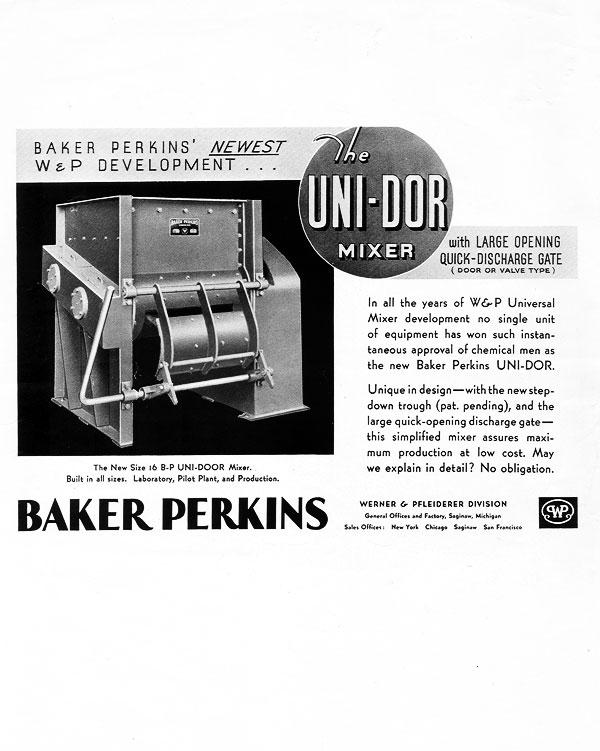 |
It is interesting to note that for some time after its acquisition, the Saginaw factory was known as - "Baker Perkins - Werner Pfleiderer Division". (NOTE: For the full story of Baker Perkins' relationship with Werner Pfleiderer, click here). |
In 1922, the real expansion of the plant was started with the erection of a large machine shop and in 1924, the White Plains general offices were closed and additions made to Saginaw's existing offices to house the displaced staff. Further additions in 1926 increased the size of the oven shop and a substantial addition made to the machine shop. 1928 saw an addition to the pattern shop with extensions to the foundry being made in the following year.
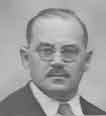 Carl
Pletscher had worked in the drawing office at Peterborough, earning much
the same reputation as Josh Booth, "both men being of uncommon
driving force who could not tolerate opposition". To prevent
a head-on collision it was decided that one of them should be sent to
Saginaw and Pletscher was chosen. Pletscher was responsible for incorporating
some novel ideas into the factory including tunnels under the floors to
carry all of the services required by the many departments – steam,
water, electricity, gas, compressed air. As the engineering chief, he
was said to be the creator of the Saginaw factory and is still revered
as one to whom Baker Perkins Inc. owes a great debt.
Carl
Pletscher had worked in the drawing office at Peterborough, earning much
the same reputation as Josh Booth, "both men being of uncommon
driving force who could not tolerate opposition". To prevent
a head-on collision it was decided that one of them should be sent to
Saginaw and Pletscher was chosen. Pletscher was responsible for incorporating
some novel ideas into the factory including tunnels under the floors to
carry all of the services required by the many departments – steam,
water, electricity, gas, compressed air. As the engineering chief, he
was said to be the creator of the Saginaw factory and is still revered
as one to whom Baker Perkins Inc. owes a great debt.
The following appeared in one of the newsletters produced at Saginaw during WW2 and distributed to employees on active service:
“THE OLD MAN”
(A TRIBUTE)
As is generally understood, the term “old man” is one used in referring to the “Big Boss” and denotes both good will and respect. It is not, of course, used in the presence of that gentleman, however one rates that term may well be proud of the fact. While we at Baker Perkins have long referred to the “old man”, few have given much thought to the subject. In Mr Carl Pletscher we at Baker Perkins have an “old man” and well may that term be applied for many have known and respected him for years. Mr Pletscher is a native of Switzerland (born we don’t know when and don’t dare ask) and has been a citizen of this country for many years. After serving a mechanics apprenticeship and attending engineering college in Switzerland he worked as a journeyman mechanic for two engineering firms in Germany. He then went to England where he worked at Nottingham and Manchester prior to joining up with Werner, Pfleiderer & Perkins Ltd of Peterborough. This was followed by employment with Werner & Pfleiderer of Cannstatt – Stuttgart, Germany, from which place he transferred his activities to Werner & Pfleiderer, Saginaw, arriving here in 1912.
There are few men now actively engaged in the employ of Baker Perkins who were here when Mr Pletscher joined the Saginaw organisation. The following is a list of these “old men”.
Charles Evert
Tom Griffare
Charles Timm
William Laverenz
Charles Gaertner
Albert Nagel
Louis Grant
George Courtright
William Zeman
Mr Pletscher has been instrumental in the direction and growth of the company from a small poorly equipped plant to what it is today. He has, during all this time, taken a keen interest in the welfare of those employed by Baker Perkins, hence the application of the term “Old Man”.
Augustus Muir would add:
"That he and Elmer Baker formed an ideal team, working in the most complete harmony, was a significant factor in the successful growth of the American business between the wars. The Baker Perkins Manufacturing Corporation, which owned the Saginaw factory, was absorbed in 1925 by Baker Perkins Co. Inc. of White Plains, and by centralising control in New York, administration was simplified. Never a day passed without the two men being in consultation by long-distance telephone".
Despite the general depression in the USA after the War, a renewed demand for the company's equipment was seen with Saginaw fully occupied and the men on full time working. By 1921, new buildings were going up on the South side of the Saginaw site as the old West site premises were of wooden construction and considered to be of little value.
PROGRESS BETWEEN THE WARS
From the start, there were two separate strands to output from Saginaw – food machinery (mainly bread making equipment) and chemical machinery (mainly batch and continuous mixers for a wide range of industry sectors).
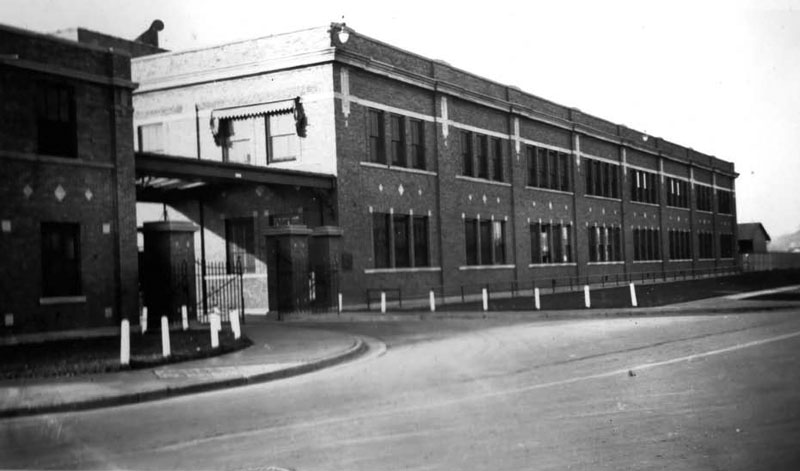 |
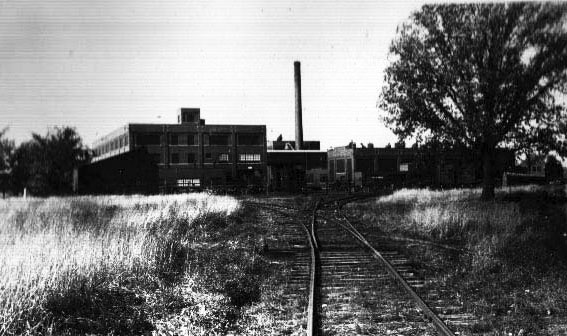 |
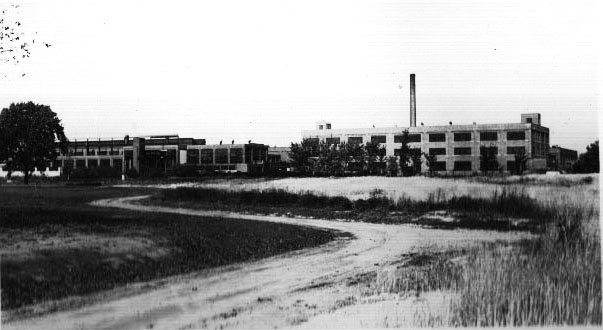 |
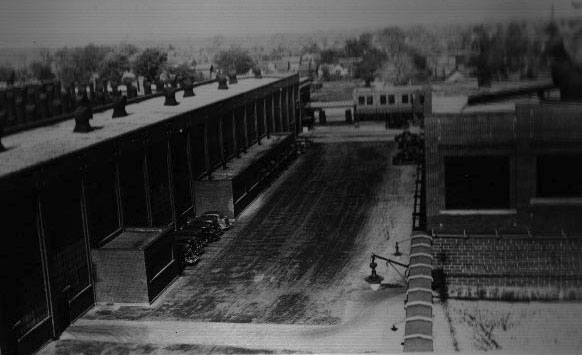 |
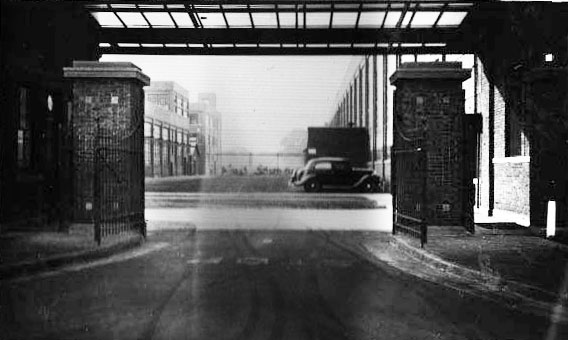 |
| Photographs of the Saginaw factory taken by Wellesley Gaskell and Claude Dumbleton on a visit in 1935. | ||||
In order to facilitate a successful building up of the new American subsidiary, it was agreed that Baker Perkins Inc. would retain all profits to strengthen its finances and fund its development. The company grew so fast that profits alone did not provide sufficient working capital and there were several issues of preference stock, amounting to $1.5m, all raised by Elmer Baker in the States without drawing on the parent company.
Results continued to be good until 1924 when the cost of moving into the new shops at Saginaw and the removal of all services to the works, including the closure of the general offices in White Plains, NY, caused a temporary check. By 1928, plans were being made to extend the Works and Foundry and the Directors expected to begin the payment of dividends on the Common Stock.
At the 1929 peak of the American boom, everything seemed to be going well and BP Inc. paid its first cash dividend to the parent company. Other businesses had been acquired – Canadian Baker Perkins Ltd., with its headquarters still in Brantford, was bought and administered from Saginaw, the assets of the Century Machine Company of Cincinnati and 60% of the shares of the National Bread Wrapping Company were also acquired. However, before the end of autumn of that year the company, like the rest of American business, was feeling the effects of the Wall Street Crash.
Saginaw suffered from the general depression of the early 30's and the payment of dividends was suspended. A small profit was made in 1932 despite a very large drop in turnover and some improvement in business began to be seen during 1934 but, although this improvement continued, there was a dispute with the newly formed labour unions that suspended work for a week in 1936. The 30's ended with another severe depression in the USA.
WW2 BRINGS A MAJOR THREAT
At the beginning of WW2 there was concern that American investments like the Saginaw factory, might have to be realised at a sacrifice in accordance with the UK Government's plan to pay for munitions from America. This, fortunately, did not occur as, under the Financial Powers (USA Securities) Regulations, 1941, such investments were taken over and deposited by H.M. Government as security for a loan made to it by the Reconstruction Finance Corporation.
A return to a fully loaded factory came with the beginning of WW2 and a large proportion of the factory turned to war work, with large orders for mixing equipment for smokeless powder and cordite. Early in 1941 horizontal boring-mills were being manufactured and it gave much satisfaction to the American management that many of these were shipped to Britain. In recognising that machine tools were at the root of the manufacture of war materials, Elmer Baker summed up Saginaw's task as: "The products of our factories are now fighting the battles that will engage our soldiers and airmen in 1943". Saginaw also produced foundry castings for landing barge propellors, air raid sirens, shell lathes, grinders and other service equipment, together with fabricated hull sections for destroyers and had begun to develop specialised mixers for rocket fuel and explosives.
Saginaw were also involved in the building of a considerable number of landing craft - the famous "Higgins" boats - used in the invasion of Normandy and later in the capture of the Japanese-held islands in the Pacific.
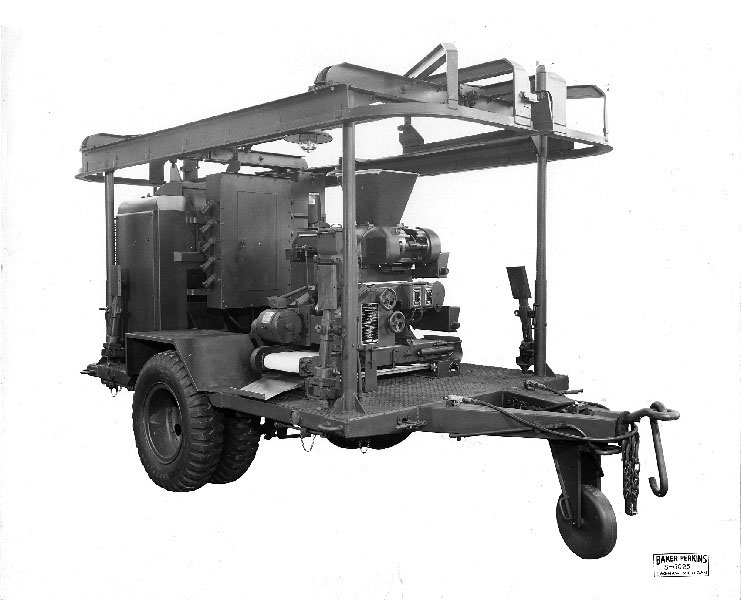 |
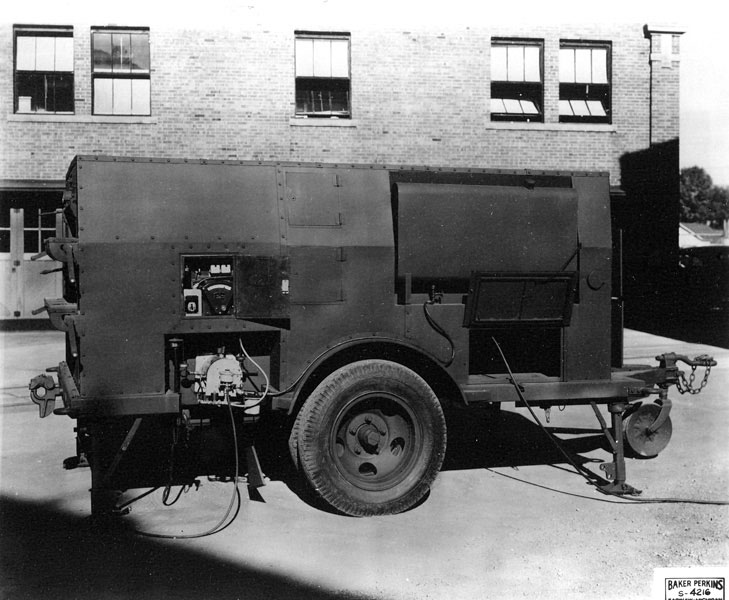 |
During WW2, The Century Machine Company developed a portable field bakery - a wheeled oven and bread make-up equipment similar to that produced at Westwood (click here). The company was given the Army/Navy Award for its success in manufacturing thousands of these for all of the theatres of war where American troops were serving. This equipment was still being made at Saginaw a number of years after hostilities ceased.
Saginaw in Wartime - "Baker Perkins News"
Following the USA’s entry into WW2, some employees of Baker Perkins Inc, Saginaw began to put together a newsletter - "Baker Perkins News" - to send to those colleagues who had joined the Forces. Together with postal addresses and a rich collection of jokes, the newsletters also contained news from the factory and, in time, letters from the men serving in the field. Together, these newsletters form what must be a virtually complete Roll Call of Saginaw employees at the time.
Although clearly subject to censorship (only one of the newsletters bears a date), the newsletters provide a unique insight into attitudes towards the war, nostalgia for home and the thoughts of those left back in the factory as they came to terms with the fact that they were also doing their bit fighting a different kind of war. To a modern mind accustomed to the pressures for politically-correct thinking, some of the content will come as something of a surprise but an evocative picture is painted of a level of camaraderie, both within the factory and being reflected back from those on active service, which, sadly, is perhaps a casualty of today’s very different environment. The world is surely the worse for its passing.
It is not known how many of these informative and clearly morale-boosting newsletters were produced but we are indebted to Bob Sievert and Jim Kowalczyk (ex-Saginaw employees) for providing us with an insight into the attitudes that prevailed during this turbulent period of history. Although some information has been extracted and will appear in relevant sections of the websites, it is felt that the mood of the time is best appreciated by seeing the papers in their original form.
Despite there being no date on all but one of the newsletters, sufficient clues exist to suggest that they were produced in the following order: (Please click on the blue links to see each newsletter):
- Baker Perkins News WW2 #1
- Baker Perkins News WW2 Armed Forces Roll of Honour
- Baker Perkins News WW2 #2
- Baker Perkins News WW2 Destroyer Escort Edition
- Baker Perkins News WW2 October 1945
By October 1945, with the fighting over, demobilisation had begun and a small percentage of the service force were already home and a large percentage on its way. A minority was still needed for occupation duties but it was considered that it would not be feasible to continue to issue "Baker Perkins News" as the chances were that they would be moving around and the "News" would never reach them. The October 1945 edition was the last.
The Saginaw plant closed for two days in August to celebrate V-J Day.
Saginaw in Wartime - Building Destroyer Escorts
The following appeared in an issue of “Baker Perkins News”, a newsletter sent out from Saginaw to all ex-employees on active service in WW2:
“Our first significant job in naval construction was to fabricate the huge rudders for the sea-going rescue tugs that the Defoe Shipbuilding Company was building for the British Navy. These huge tugs have given a very good account of themselves in all parts of the world as we note in a recent issue of the “Defoe Rollover” an excellent tribute from the British Government telling us of some of the exploits of these ships.
Our biggest contribution from the navy shipbuilding standpoint, however, was in the building of bow sections and superstructures for twenty-eight of the famous DE (Destroyer Escort) ships. It is a naval secret** as to the number of these ships built, several hundred at least; many of which were assigned to the British navy under “Lend Lease”.
The “Bow Section” of a DE is the first fifteen to twenty feet of the ship and is one of the most difficult parts of the hull to fabricate. Due to the pronounced flare from keel to main deck and curving water lines, it calls for the utmost in shipbuilding skill. That we did this work to the complete satisfaction of both Defoe and the Naval inspectors is a fine tribute to the ability and versatility of our Baker Perkins men and women.
The “Destroyer Escort” is a three hundred and six foot long eighteen hundred ton fighting ship designed primarily to protect convoys of merchant ships while crossing the wide oceans separating our various fighting fronts. It is somewhat smaller and slower than a regular destroyer though it has speed to overhaul the fastest submarine and carries sufficient fore power to cope with the biggest submarine, besides having adequate protection of anti-aircraft guns”.
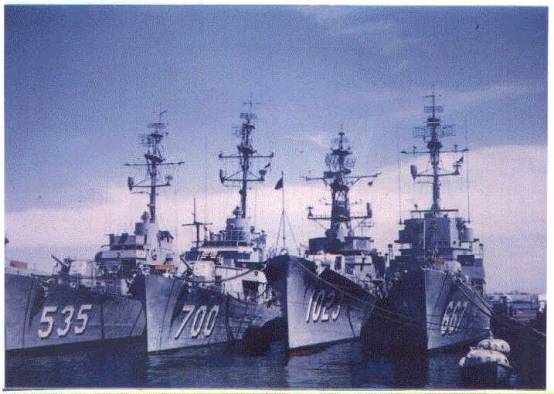 |
Destroyer Escorts. |
(** In fact 503 destroyer escorts were commissioned by the Allies between Jan 1943 and May 1945. The first 3 came in Jan 1943 and they peaked at 48 being commissioned in October that year. 4 more were completed post-war, two of them in 1955).
While fleet destroyers were still more effective for anti-submarine warfare, the destroyer escort outweighed this by being able to be built considerably faster and more economically. These vessels became the most common U-boat hunters from middle of 1943 on wards.
The bow sections were taken from Baker Perkins Inc's factory at Hess Street to Defoe's shipyard in Bay City, Michigan. The yard was very busy during WW2 with boats built for the war effort making their maiden voyages on the Saginaw River as they went through trial testing on the Saginaw Bay.
In order to fulfil the initial subchaser contract in the shortest possible time, an entirely new concept in ship construction was originated and perfected by Defoe. Widely known as the "roll-over method of construction" the technique was utilized in subsequent wartime operations at Defoe. A cradle was built to the exact shape of the main deck of the vessel. On this cradle the deck was laid and frames and bulk-heads were erected bottom-side up. The complete bottom section of the vessel, including keel, floors, and from four to six strakes of shell plating, was dropped into place on top of the frames and bulkheads. The remaining shell plating was installed and welding was undertaken.
|
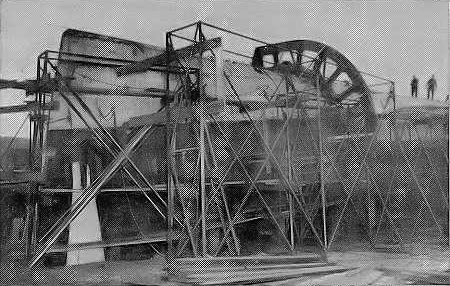
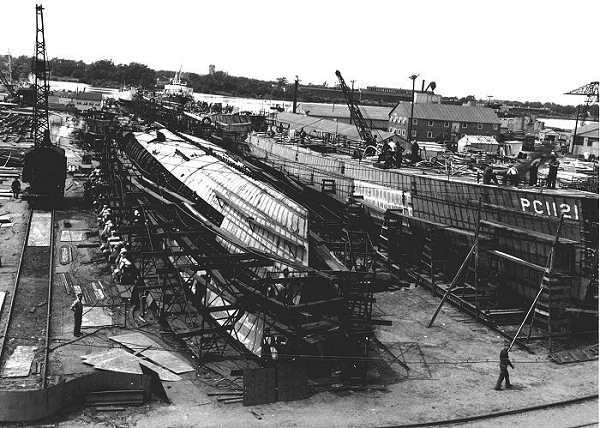

By using this method it was possible for Defoe to eliminate virtually 90 percent of all overhead welding. This fact alone created immense savings in man-hours because, of course, down-hand welding can be performed much faster with concomitant results of better workmanship.
When the vessel was in the upside-down position, all machinery, which normally hangs or is attached to the underside of the deck, was installed. The erection sequence for hull steel was arranged so that nearly all of the conventional ship scaffolding was eliminated.
With the hull completed, two semi-circular steel "wheels" were clamped around it. The deck cradle was dropped into an out-of-the-way position. The hull, by now supported entirely on these two wheels, then rested on two heavy parallel steel tracks. Cables were thrown around the hull in opposite directions and a steam locomotive crane, by pulling on one cable and holding back on the other, rolled the vessel on the two wheels and tracks into an upright position. The whole process took no more than two-and-a-half minutes. With the vessel upright, additional machinery was installed and deckhouses placed in position.(With acknowledgements to The Defoe Story.)
After completion, there was a long trip before the ship was commissioned. Typically, a Destroyer Escort would sail from the builder's yard at Bay City, via Lake Huron and Lake Michigan, to Chicago, Illinois and from there through the Chicago Sanitary and Ship Canal, down the Chicago River to Joliet, Illinois, where pontoons were attached to the ship so it could be pushed down the Des Plaines River, Illinois River, and Mississippi River as part of a barge train. After arriving at the Todd Johnson Shipyard in Algiers, Louisiana, on the west bank of the Mississippi at New Orleans, the rest of the crew reported aboard and the ship finally entered active service.
The Royal Navy's equivalent of the destroyer escort was known as a frigate and, under the Lend-Lease agreement, the Royal Navy received a total of 78 these US destroyer escorts The main design difference between the Royal Navy frigates and the US Navy destroyer escorts was that the British ships had the forward torpedo tubes removed but, presumable to the delight of the Royal Navy crews, they had ice cream makers, iced water fountains, dishwashers, and laundries and the primitive American two seat "thunder trough" toilets (which did not offer even so much as a simple canvas screen to spare blushes) were replaced by enclosed water closets.
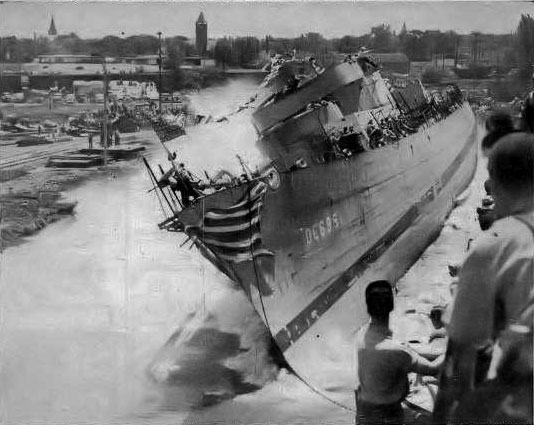 |
USS Rich being launched at Defoe's Shipyard on 27th March 1943 in front of 4,000 spectators. |
What was believed to be the third destroyer escort for which Baker Perkins built the bow section and superstructure was laid down at Defoe's yard on 27th March 1943. Subsequently named USS Rich, she was launched on 22nd June 1943 and after a period of coastal escort and patrol duties, was engaged in trans-Atlantic escort work. After completing three round-trip crossings, she was assigned to escort duty for the D-Day landings. Going to the assistance of another destroyer, USS Rich was struck by 3 mines in succession and 91 of her crew lost. USS Rich was the only American destroyer escort lost in the invasion force. (See - Wikipedia).
[NOTE: A second USS Rich - a Gearing-class Destroyer - was launched in Orange, Texas on 5th October 1945].
Below is printed part of a letter received by Saginaw from Defoe Shipbuilding Company at Bay City, Michigan. It was written by A. Hutchins, Subcontract Department.
“Incidentally, the contract for this work is not far from complete. The way the schedule is set up you will finish in about 60 days which will be early in January. During the past three years a lot of work has come from your plant to go into these combat ships for the U.S. Navy, work in quite a variety, the bulk of it being steel fabrication plus quite an amount of machine work. This runs into several thousand tons, of highly satisfactory war effort performed on time or ahead of schedule with no work stoppages of any sort at any time. This is a record you can well be proud of.
“In spite of the fact that steel ship construction was a line of work absolutely new to you when you signed up with us, your excellently skilled plant personnel and engineering staff were able to so plan and work as to maintain a high quality of workmanship and effect deliveries that made possible the completion of ships on time all the way through the program.
“The occasional changes and alterations incident to this type of work have always been made promptly and well throughout the entire period of your contracts with us and all of your work has been of such high quality that there have been no rejections at any time. We consider this a very excellent record and congratulate everyone in your organisation who had a part in so splendid an accomplishment, and we look forward to a continuance of our pleasant association with you.”
The Return to PeaceWith peace came the return of Saginaw employees who had served their country in the Armed Forces. It was reported in "Baker Perkins News" that:
Mr E.F. Sperling had returned to Baker Perkins after a leave of absence of 2½ years in the War Department in Washington.
In May 1942, Mr Sperling went to Washington to take over new war-time duties as Senior Bakery Equipment Specialist, and in due course he was placed in charge of the Bakery Section of the Food Service Branch, Subsistence Division, Quartermaster Corps, as Head Bakery Specialist.
Due to his training, experience and exceptional ability, Mr Sperling’s services with the War Department were noteworthy. We join with his many friends throughout the country in congratulating him on the high honours he achieved in winning the Commendation for Meritorious Civilian Service, which reads as follows:-
“For his ability and devotion to duty, serving as an inspiration to those serving under him; for the saving of thousands of dollars worth of bakery equipment through his knowledge and experience of bakery equipment, engineering layout work and thorough understanding of bakery problems. The high quality of bread being furnished the Army within the continental limits of the U.S. and the efficient operation of the bakeries are chiefly attributed to the efforts of this employee”.
[It is well known that a number of key Baker Perkins employees were seconded to work for Government Departments in both World Wars – in WW1, Herbert Kirman was in charge of all military bread plant on the Western Front and Major Joseph S. Baker was appointed Inspector of all military baking equipment. A number of Westwood draughtsmen were lent to ordnance factories and the Government’s Armaments Design Departments in WW2, not forgetting the outstanding work carried out by D.Y.B. Tanqueray].
A return to civil work began in 1944 but profits were restricted by the US Government's freezing of prices at 1941 levels. Over a million dollars had been spent on buildings and plant in the previous five years so Saginaw was in an advantageous position to change over to peace-time production at the end of the war and new manufacturing facilities were provided in 1946 and 1947. The Government's price restriction order was lifted at the end of 1946 and the company's business improved considerably, achieving record profits and doubling its dividend by 1947.
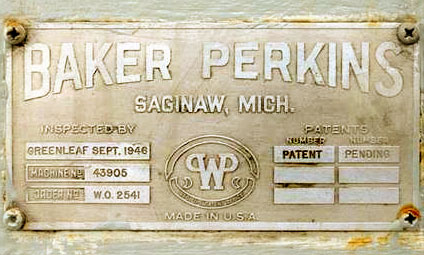 A nameplate from a 1946 Saginaw-made Universal Mixer. It is interesting to
note that the plate still carries the PWP logo some 27 years after Baker Perkins'
acquisition of Werner Pfleiderer's Saginaw factory.
A nameplate from a 1946 Saginaw-made Universal Mixer. It is interesting to
note that the plate still carries the PWP logo some 27 years after Baker Perkins'
acquisition of Werner Pfleiderer's Saginaw factory.
Baker Perkins Inc. had been trying for a number of years to secure permission from the War Production Board to go ahead with a new Erection and Heavy Welding building. Permission was finally given in April 1945.
The 90ft wide and 200ft long building had one 60ft wide aisle served by a 30-ton crane and one 30ft wide sawtooth aisle. The main purpose of the building was to assemble the heaviest type of machinery that could be envisaged at the time and would house the heavy welding and plate manufacturing previously carried out in the old Oven Shop. It had been planned that the new building would be completed by mid- December 1945 but the inevitable delays due to the scarcity of building materials in the post-war period meant a delay until early spring 1946.
At the same time, a new Chemical Experimental and Research Laboratory - made necessary by the erection of the new Erection building - was also suffering from building material scarcity.
In 1950, R. Elmer Baker, who had been President of the Company for thirty years, retired and his younger brother, Joseph Albert Baker, became president.
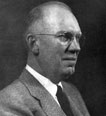 Known as "Brantford Joe" to avoid confusion with the English
Joseph Baker, Joseph Albert Baker had joined the Canadian Air Force in
the First World War and was shot down and badly injured, as a result of
which he had one leg was shorter than the other. He started in the Canadian
company in 1921 but joined Baker Perkins Inc in 1930, after it had become
a subsidiary of the American firm. Just before WW2 he went back to the
Canadian business, the headquarters of which had been transferred from
Brantford to Toronto. After the War, J.A. Baker returned to Saginaw to
become a director of Baker Perkins Inc. and was appointed head of the
Food Division. He became a member of the Board of Management, and was
elected president in 1950.
Known as "Brantford Joe" to avoid confusion with the English
Joseph Baker, Joseph Albert Baker had joined the Canadian Air Force in
the First World War and was shot down and badly injured, as a result of
which he had one leg was shorter than the other. He started in the Canadian
company in 1921 but joined Baker Perkins Inc in 1930, after it had become
a subsidiary of the American firm. Just before WW2 he went back to the
Canadian business, the headquarters of which had been transferred from
Brantford to Toronto. After the War, J.A. Baker returned to Saginaw to
become a director of Baker Perkins Inc. and was appointed head of the
Food Division. He became a member of the Board of Management, and was
elected president in 1950.
Augustus Muir describes the effect that R. Elmer Baker had had on the Baker Perkins Group as a whole - "He had been president of Baker Perkins Inc. since it had been formed thirty years before; and in 1950, on reaching the age of sixty-five, he retired from active leadership of the company. His fellow directors, in paying him a grateful tribute, said it was difficult to express in words what both the American and the British companies owed to him. The president of a rival firm defined Elmer Baker as the 'outstanding man in the bakery equipment world - he was, in fact, "Mr Baker Perkins" and in himself embodied the whole personality of his firm. Dignified in bearing, forceful without being in the least boisterous or pushful, he was courteous both to his associates and his competitors. He commanded great personal devotion without making any effort to seek it. He had no rival in the unique position he held in the industry."
PROBLEMS OF PEACE
Entering the 50's, the factory felt the effects of the re-armament drive and a larger proportion of orders were, once again, for defence. 1951 saw the company's holding in Baker Perkins Inc. released by HM Treasury on repayment of the Government's loan from the Reconstruction Finance Corporation. 1951 also saw a progressive decline in the prosperity of the baking industry with costs increasing, competition keener and profit margins narrowing. The capacity of the baking machinery industry had been built up to meet the great post-war demand and there was now the means to manufacture nearly twice the amount of equipment that the market required. Competition was fierce and it was a difficult time for all in the industry.
New and more spacious accommodation was provided for the design and development staff in 1954.
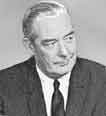 The
President, J.A. Baker, died in 1955 and he was succeeded by P.B. (Phil)
Harley. In the same year, severe competition, particularly in food machinery,
reduced sales and caused a substantial trading loss but this heralded
something of a period of see-saw activity with the achievement of a substantial
profit on record turnover in the next year and another small trading loss
in 1958.
The
President, J.A. Baker, died in 1955 and he was succeeded by P.B. (Phil)
Harley. In the same year, severe competition, particularly in food machinery,
reduced sales and caused a substantial trading loss but this heralded
something of a period of see-saw activity with the achievement of a substantial
profit on record turnover in the next year and another small trading loss
in 1958.
Saginaw closed down the Century Machine Company in 1956. This company had been acquired in 1929 but by now, the market for its particular size of products was fast declining with the trend in the bakery industry being towards larger automated bread plants.
The severe competitive pressure resulted in the demise of some key competitors – the American Machine & Foundry Co. ceased production of custom engineered bakery equipment, the Petersen Oven Co. of Chicago was acquired and all its key personnel, designs and manufacturing moved to Saginaw and, in 1963, the Read Standard Corporation was liquidated and its stock and service obligations taken over by Baker Perkins. Baker Perkins also benefited from the infusion of new blood in the form of technical and managerial staff from these companies.
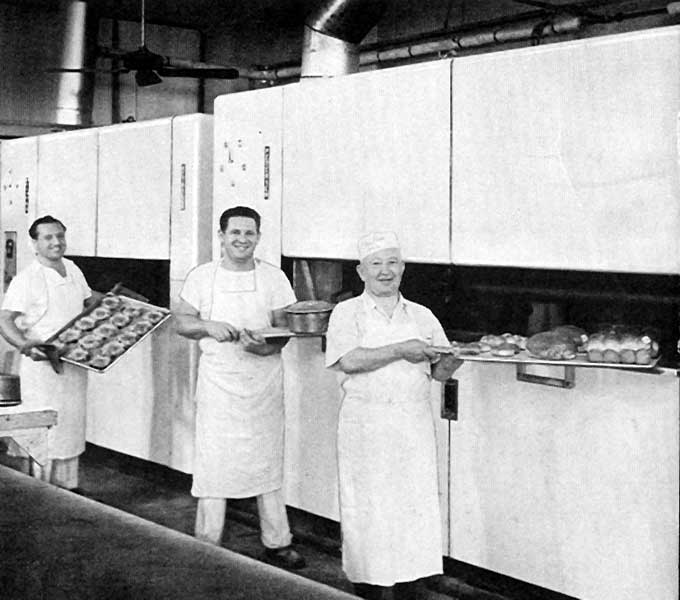
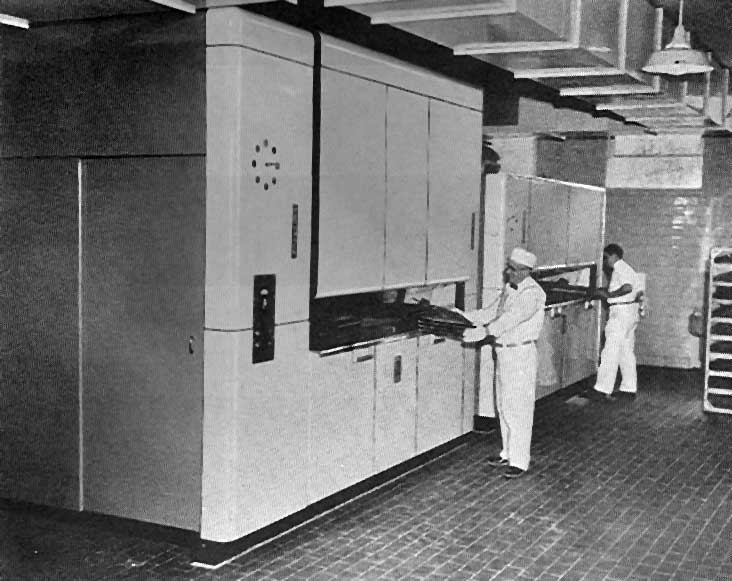 |
Petersen 40 Bun Pan Oven |
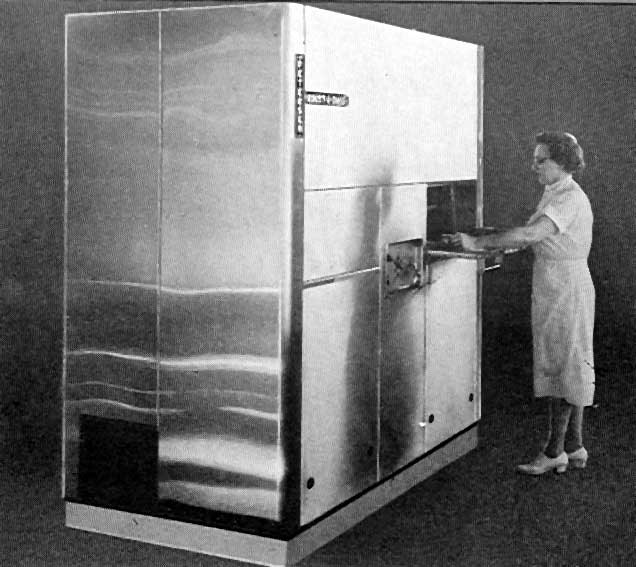
 |
Petersen Travelling Oven |
 |
Petersen Roast-N-Bake Oven |
The Saginaw foundry was closed in 1958 as the trend towards fabricated parts had greatly reduced its importance in Baker Perkins Inc's manufacturing programme. The foundry building was converted to a heavy plate shop to help cater especially for the growing heavier and bigger work on mixers for the Chemical Machinery Division.
Difficult trading conditions continued in the USA through the late 50's and early 60's and the management began to study the possibilities of broadening the base of their operations. The company's difficulties were not helped by a 5 week strike of Union employees that occurred in 1962. Further rationalisation measures and an increase in turnover to over $19m resulted in a return to profitability in 1963. It is worthy of note that nearly one-tenth of this turnover was spent, within the year, on design and development. The Parent company now held 61% of the shares of Baker Perkins Inc.
 |
1961 - Inside the Assembly Shop |
 |
1961 - The Saginaw Factory |
 |
1961 - Saginaw Office Building |
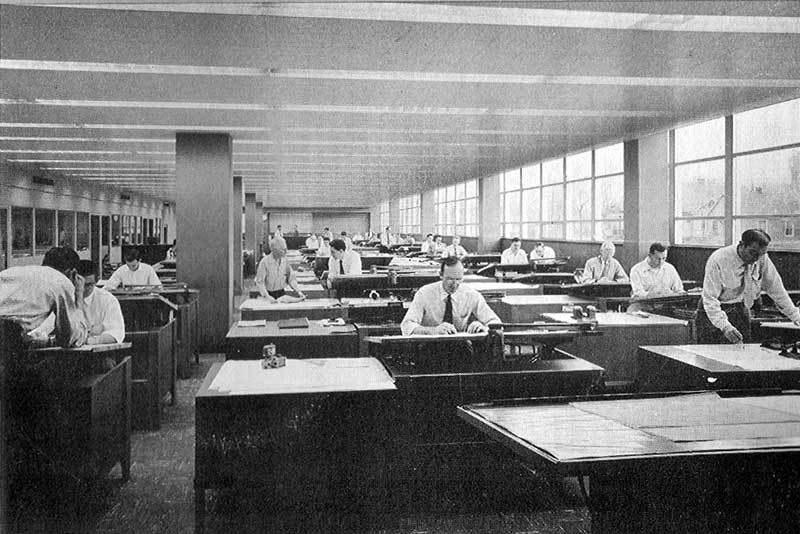 |
1961 - The Saginaw Drawing office |
Turnover and profits continued to improve in 1964 and the company had now entered the Space business with the development of mixers for solid rocket propellant. Trading was generally satisfactory during the second half of the 60's. 1965 had seen Baker Perkins Inc. surpass all previous achievements with total sales of $25.28M and profit before tax of $3.47M. However a note of caution was sounded and 1966 sales and profits were expected to be lower. Turnover in 1967 fell to $23.67M and profits declined a further 19%, reflecting the burgeoning cost increases in the heavy machinery industry. Pre-tax profit fell again in 1968 but unexecuted orders at the end of the year reached record levels leading to another record year in 1969 as sales increased 17.9% and profits rose by 33.6%.
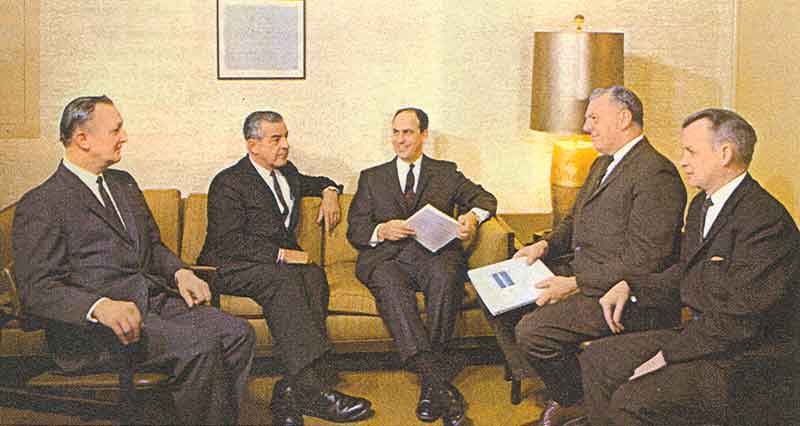 |
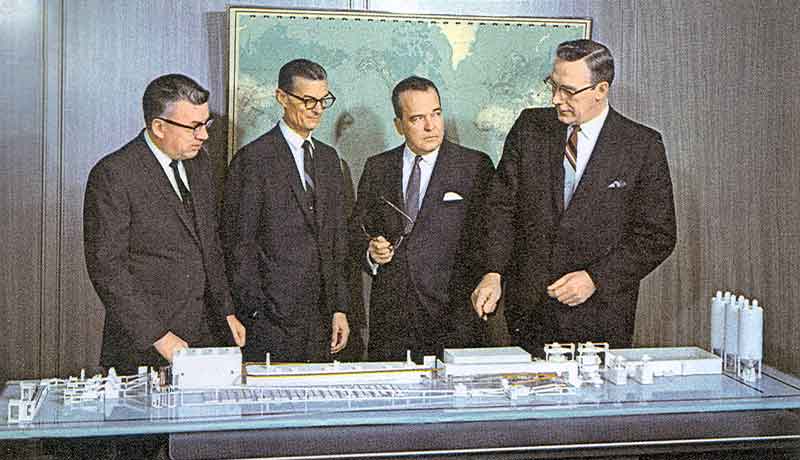 |
 |
| L. Yablonski, K.A. Mack, F. Giordiano, W.D. Chapman, D.B Todd | C.R. Skarin, P.H. Valentyne, J.B. Garrett, E.V. Waack | E.G. Cox, R.A. Baker |
During this period, efforts were made to develop the chemical machinery side of the business. This included the purchase of the Podbielniak centrifuge operations in 1967. from Dresser Industries Inc, Dallas, Texas. The Podbielniak Contactor (the "Pod") was used in liquid-liquid extractions and separations and complemented the solid-liquid centrifugal equipment already marketed by the Saginaw chemical division. (For more details see History of Baker Perkins in the Chemical Business). A further penetration of the centrifuge business came in 1973 with the acquisition of the United States Centrifuge Co., manufacturers of solid bowl centrifuges. The product line was assimilated into Saginaw and the United States Centrifuger Co. factory was closed in 1976.
 |
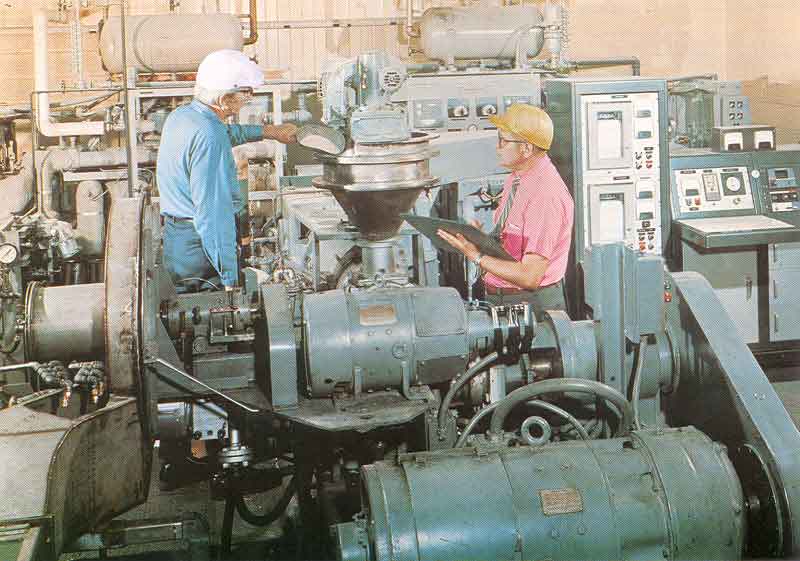 |
| Customer Research and Demonstration Centre | Inside one of the test cells |
Marco Company Inc. was a US-based pump company that was purchased by Baker Perkins, sometime in the late 1960's or early 1970's. Not many pumps were made from their designs, but the one product that came with the company of which many were manufactured were the Rotofeeds - a machine having a conical screw and used to deairate materials that became an important part of the Saginaw chemical process product line. Most Rotofeeds were used to deaerate or devolatilize materials.
Plans for a $3m expansion of the factory were announced. This included:
- A modern research centre for the Chemical Machinery Division, including customer demonstration facilities.
- A 24,000 sq. ft. shipping and marshalling building as an addition to the plate shop.
- A 28,000 sq. ft., four floor extension to the main office building to house technical, marketing and administrative staffs, a relocated computer centre and a cafeteria.
The early 1960s had seen an increasing emphasis within Baker Perkins Inc.on its opportunities in the chemical industry, although the senior management continued to be heavily dominated by the bakery interests. Manufacturing and sales licences for basic designs of newer products were sought with various European firms to extend the company's product range, Saginaw then developing the designs to suit the fast expanding North American market.The growing contribution from the chemical machinery business and a fairly high level of bakery work combined to give Baker Perkins Inc a trading profit/capital employed return averaging 18% in the late 1960s.
Apprenticeships at Saginaw
It is clear that the business environment – and not least Saginaw’s location within the Detroit automobile manufacturing region – meant that a “Westwood-style” apprenticeship system was totally inappropriate.
Bob Sievert, who retired after 46 plus years with Baker Perkins, began as a co-op student in 1943 at the age of 16, together with Bob Zwingman (later a Sales Coordinator), Irv Waack (later, VP of Sales), Jack Thorsby (Salesman and VP), They attended night school for two years, 3 days a week, at Saginaw High, with a high school teacher who had to have extra schooling to teach them. After school and during the summer, they worked at Baker Perkins in engineering (the drawing office). When the time came for them to get experience in the workshops, a shortage of draughtsmen meant that they were unable to go. Later, Bob went into the services, followed by veteran’s schooling. In order to stay with Baker Perkins he had to go through their schooling programme, this did not allow him to go away to college.
Bob recalls – “It said on my diploma that I worked through the shop for so many hours, engineering so many hours, and through-out the company, but we didn’t run the machinery in the shop or work in the electrical shop or paint shop—although we were trained in these areas by the people who worked in them. Bob Zwingman and I went into working as draftsmen in the sales department. Irv Waack and Jack Thorsby went into engineering to work. I still have the diploma.”
Bob Wells and Ken Dietzel also went through the engineering co-op program for 2 years. They would work 15 weeks and went to school 15 weeks. While working, they were moved to different departments so they learned the functions of each department, but finally decided to stay in the Sales Layout Department.
Sue Waack remembers – “They had apprentices out in the shop- electricians, machinists. General Motors snapped them up as soon as they were fully trained. Some stayed that wanted to work in a small shop but we lost a lot of them to General Motors. I don't remember that we ever had a system in engineering (the drawing office) for apprenticeship, at least not formally, but a lot of young kids came in and were trained to work in a certain field like ovens and mixers"
John Baker, who was employed at Saginaw from 1966 until 1980, recalls:
“I understand that before I started working at Saginaw in 1966, there was a formal apprenticeship system for ‘tool & die makers’ but that was phased-out when it became obvious that the vast majority of the ‘graduates’ were being hired away by General Motors (the largest employer in the area at the time). General Motors had abandoned their apprenticeship programme in favour of enticing qualified people away from the other manufacturing companies by offering higher wages and better benefits.
The Saginaw engineering office generally recruited from the various local community colleges (2 year curriculum often along vocational lines) for draughtsmen and designers, and from the state’s 4-year universities for engineers and other professional posts (accounting, personnel, etc.). I was an engineering student attending Michigan Technological University and started at Baker Perkins as a summer hire (sometimes referred to as a co-op if your intentions were to continue to come back each summer until you graduated) working as a draughtsman. I continued to alternate work and going to school until I finally graduated in 1971 with a Bachelors Degree in Mechanical Engineering and at which time the company offered me a full-time position in the Food Machinery Division as Design Engineer. There were several members of our engineering office that had also graduated from Michigan Tech (while I was there that number grew to at least 7 that I can recall) as the then Chief Engineer, and eventual Director of Engineering, William Swartz was also a former graduate and he tended to hire from there – possibly out of a feeling of loyalty. We had engineers from other universities and schools, as well as a certain number who just worked their way into those positions over a long period of experience and in-house training, however the single largest contingent were those of us from Michigan Tech and, in all honesty, it did take on the characteristics of a clique, but since I was an ‘insider’ I never considered it a bad situation, although in retrospect it wasn’t fair to some other people since while we tended to get the hardest and worst jobs. We also got the better promotions and bigger opportunities to learn new skills and technologies such as in 1977 when Baker Perkins invested in CAD/CAM. Our boss, Bill Swartz had to send 2 engineers to be trained in the use of the software and he asked me and another Tech graduate to go, Thus changing at least the direction of my professional career”.
THE SEVENTIES
Baker Perkins de Mexico S.A. was formed in 1970 as a subsidiary of Baker Perkins Inc. in Estado de Mexico, on the outskirts of Mexico City, to handle sales of group products in Mexico and to manufacture bakery equipment locally. This manufacturing operation was short-lived as it was closed in 1976 as business prospects no longer justified local manufacture. The bakery machinery concerned was then supplied from the group’s factory in Saginaw, Michigan.
The unpredictability of the USA market continued through the early 70's and this was reflected in the company's results. The Company's 1970 Annual Report celebrated the 50th Anniversary of the Saginaw facility and the President's Letter to the Stockholders stated – "1970 was a year of recession in the USA with real gross national product down for the first time since 1958. Although your Company was able to maintain its sales volume, we were unsuccessful in overcoming the effects of inflation on costs of materials and labour. Furthermore, it was not considered prudent to cut back immediately, any more than was absolutely necessary, our highly trained organisation when long term prospects, which are so dependent on it, continue to appear bright". The 1970 results showed a slight increase in sales but wage and cost increases reduced profits by 35%. Ominously, orders from the chemical process industry fell sharply for the first time in many years. The parent company now owned 69.6% of Baker Perkins Inc. and this had risen to 70.6% by 1972.
It is worthy of note that, until 1972, Baker Perkins Inc's turnover was divided in the ratio of 60% food to 40% chemical machinery. In 1973, chemical machinery volume overtook that of food machinery and the ratio continued at around 45% food to 55% chemical.
 The
concentration on development of the chemical machinery business was taken
a step further in 1973 by placing the responsibility for exploiting world
markets with Saginaw but fortunes were mixed through the mid-70's. The
Canadian Baker Perkins factory in Brampton was closed in 1975 and its
production transferred to Saginaw. P.B. Harley retired in 1975 as President
and was succeeded by John Peake.
The
concentration on development of the chemical machinery business was taken
a step further in 1973 by placing the responsibility for exploiting world
markets with Saginaw but fortunes were mixed through the mid-70's. The
Canadian Baker Perkins factory in Brampton was closed in 1975 and its
production transferred to Saginaw. P.B. Harley retired in 1975 as President
and was succeeded by John Peake.
The 1974/75 period was characterised by very low activity in the food machinery business and, on the chemical side, by delays in completing manufacture and by poor margins on certain fixed price contracts. A 3-week strike in May 1974 prior to completion of the satisfactory negotiation of a new three year labour contract added to the problems and Baker Perkins Inc. made a loss of approximately £1.4M.
During this period, Saginaw’s Chemical Machinery Division were marketing a full range of batch and continuous mixers for the production of such diversified products as high strength colour pigments, anode and cathode paste for aluminium reduction, solid rocket propellant and the compounding of plastics. Pusher type centrifuges and liquid-liquid contactors/separators were also offered to the Chemical industry. It is of some interest that over 90% of the free world’s penicillin was being produced using Baker Perkins contactors.
The Food Machinery Division marketed a complete line of high speed bakers’ machinery throughout the Western Hemisphere, Western Europe and parts of the Far East. Capable of producing up to 15,000 loaves of bread per hour, the equipment was aimed, primarily, at the major chain and wholesale bakeries. The Division also offered equipment for the large scale production of sweet goods, rolls, pies, cakes, biscuits and crackers.
In December 1975, Saginaw employed 706 people. The hourly paid employees were all members of the factory-based trade union and every three years a new labour contract was negotiated with strike disruption as a possibility. Wages were high by USA standards due to the high wage structure of the automobile industry.
The Saginaw plant was also engaged in sub-contract work for several leading tool manufacturers – horizontal boring mills, various types of engine lathes, grinders and large automatic punch presses. Saginaw had produced for several years large oil drilling equipment such as rotary tables and 650 ton capacity hook blocks.
Saginaw's fortunes took a distinct turn for the better in 1975/76 when the previous year's loss was turned into a £300,000 profit, notwithstanding the continuing depressed trading conditions.
 In
November 1976, Baker Perkins North
America Inc. was formed and acquired the group interest in Baker Perkins
Inc. In March 1977 Baker Perkins North America Inc. Made a successful
offer to the minority stockholders of Baker Perkins Inc., thereby increasing
the group holding from 72.4% to 100% at a cost of $4m.and in September
of that year R.F. (Bob) Kelley was appointed President on J.M. Peake's
return to the UK. (John Peake, who had become Chairman of the Baker Perkins
Inc. Board of Directors on the appointment of Bob Kelley as President
and Chief Executive, resigned from this position in 1980 on being appointed
Group Managing Director and the position was dissolved).
In
November 1976, Baker Perkins North
America Inc. was formed and acquired the group interest in Baker Perkins
Inc. In March 1977 Baker Perkins North America Inc. Made a successful
offer to the minority stockholders of Baker Perkins Inc., thereby increasing
the group holding from 72.4% to 100% at a cost of $4m.and in September
of that year R.F. (Bob) Kelley was appointed President on J.M. Peake's
return to the UK. (John Peake, who had become Chairman of the Baker Perkins
Inc. Board of Directors on the appointment of Bob Kelley as President
and Chief Executive, resigned from this position in 1980 on being appointed
Group Managing Director and the position was dissolved).
Another strike took place at Saginaw in 1978, this time of three weeks duration. At the end of the 70's, chemical machinery was still seen as a major growth opportunity, and in March 1978 Baker Perkins Holdings acquired the business (less the land and buildings) of Malaxeurs Guittard of Paris, France, a manufacturer of a high-quality line of universal and screw discharge batch mixers. The name was changed to Baker Perkins Guittard and operating control turned over to Baker Perkins Inc. However, the volatile nature of the US market continued to have a dampening effect on the company's results.
On the bakery side of the business, the late 1970s saw Saginaw attempt to take on Lanham Machinery Co's. dominance of the 'Proof and Bake' conveyorised automatic bread and roll plant. The story of this can be found in History of Baker Perkins in the Bakery Business. Unfortunately, it was not one of Saginaw's most successful developments.
In July 1977, what was basically a duplicate of the Unigraphics CAD/CAM system installed at Baker Perkins Ltd's Westwood Works four months earlier, was installed at Saginaw. Since this was replacing a 2 year old UNIAPT system, a non-graphical Dasher station was included to support NC Programming.
A 1978 appraisal of the factory premises determined:
"The factory is located on a 22-acre site, 2.5 miles southwest of the central area of Saginaw. Buildings include 380,000 square feet of production space and 85,000 square feet of offices and demonstration laboratories. The manufacturing area is divided nearly equally between food and chemical operations. The main production buildings range in age from 34 to 60 years but are generally in good condition. Manufacturing activity ranges from light fabrication for bakery products to heavy plate work, machining and assembly for chemical products. The factory has an extensive machine shop which includes 12 numerically-controlled machines".
Some sense of the size of the problem alluded to below in R.F. Kelley's report to the parent company board can be judged by the fact that the appraisal estimated a replacement cost of $13.2M and a market value of $1.8M - the large gap being a reflection of the very poor market for general industrial property in an area dominated by the high wage structure of the automobile industry.
It should be noted that Saginaw's Food Machinery Division had, for many years, done a small amount of business in ovens for biscuit manufacture (see History of Baker Perkins in the Biscuit Business), but the available range of associated machinery was very limited and machinery manufactured at Baker Perkins Ltd's factory in Peterborough was used in most applications. In addition, Saginaw held the North American sales agency for the chocolate and confectionery products of Baker Perkins Ltd and Confectionery Developments Ltd. (See also History of Baker Perkins in the C&C Business).
In late 1978, Bob Kelley reported to the parent company board the worsening business climate in the Saginaw/Michigan area:
"The Michigan business climate is ranked 48th of the 50 states in desirability measured in terms of taxes, worker benefits, and other regulatory constraints. Saginaw itself ranks 5th nation-wide in personal disposable income - $26,000 per family - and at the present rate of increase, will rank 3rd by 1980 at roughly $30,000. Looking at our direct cost differential, including wage rate and fringe benefit costs, we are working under a handicap of over $3 per hour relative to our major competition. Of the 190 labour cost areas in the US, Saginaw ranks number one".
Communications with Customers
Before leaving the story of Saginaw in the Seventies it is worth digressing a little. The following correspondence took place between the Baker Perkins Inc bakery sales support team and one of its perhaps less worldly customers. It proves that customer relations are not always straightforward and often benefit from a significant application of humour - on both sides! We are assured that the exchange is genuine - as someone once said - "It is too beautiful to be a lie".
COPY OF CORRESPONDENCE BETWEEN OUR LADY OF THE GENESEE ABBEY AND ROBERT F. HAAS OF BAKER PERKINS INC.
OUR LADY OF THE GENESEE ABBEY
Piffard,
New York 14533
November 1969
Dear Sir:
We have lost our copy of your service and parts manual for your four pocket dough divider, No. 48605.
Will you please send us a new copy at your convenience. Thank you.
Monks Bakery
------------------------------
Our Lady of the Genesee Abbey,
Piffard,
New York,
14533
SUBJECT: BAKER PERKINS 4-POCKET DOUGH DIVIDER,
SERIAL NO. 48605
Gentlemen:
We have your recent letter in which you request a Service and Parts Manual for the subject machine.
The serial number given covers a chemical machine and not a dough divider. We suggest that you check the serial number again and send it along with any other pertinent data found on the machine.
We would also like to advise you that there is a charge for these Manuals from $50.00 to $100.00. The charge is determined by the age of the machine, the amount of engineering research time required, reproduction from our microfilm library, etc.
Very truly yours,
BAKER PERKINS INC.
Robert F. Haas
Field Services Department
------------------------------
OUR LADY OF THE GENESEE ABBEY,
Pittard,
New York.
December 30, 1969
Dear Mr Brunk:
Since it was about twelve years ago since we last met, you may not recall the writer of this letter. You dealt with two brothers when you called on us. One was short and leaned toward heaviness; the other was tall and just lean. The writer is the tall, solemn one.
Sometime ago, we lost the manual for the divider which we purchased from your firm in 1958. So I wrote to the Service Department requesting a new one. After some delay, Mr R. Haas replied last week.
Unfortunately, the serial number that I sent him was not for a dough divider but for a chemical machine. Evidently, Mr Haas did not trust my judgement as to the difference between the two types of apparatuses since he would not send the above mentioned manual until he had further clarification! (I did not know that BP made more than one model four pocket divider.)
You may find this interesting – if you’re still with me. The number I gave Mr Haas as the serial number was No. 48605. It’s no wonder he was confused – that’s your old zip code number. Did you recognize it? Evidently, when I wrote my letter to him, I put the serial number for the divider on the outside of the envelope as the zip code number. Hence, the delay in the answering of the letter.
Although I found this amusing, his letter contained a very sobering thought. He said that a new manual would cost anywhere from $50.00 to $100. How much are encyclopaedias selling for? And this is when I thought of you. If my memory doesn’t fail me, I recalled that you told Brother Clair and me that your father was a Pennsylvania Dutchman. And that when you first started to work you complained that you weren’t getting enough money for the work you did. That was nothing new but your father’s answer was: when you’re worth more, you’ll get more. That’s how I feel about that manual – what do you think? If I can’t get that manual at a reasonable price, I plan to copy a borrowed one on our printing equipment. Needless to say, Mr Brunk, I’d appreciate any help you could give us. The serial number of our 4-pocket divider is No. 50657. The order No. is W.O. 8425: contract No. 180043.
Hope that you and your wife are well and that you’re still able to call her “Honey” at the breakfast table. May the Lord bless you during 1970 and thereafter, regardless of the outcome of this letter.
Sincerely,
Brother M. Theodore, T.S.
------------------------------
January 9, 1970
Our Lady of the Genesee Abbey,
Piffard,
New York 14533
SUBJECT: BAKER PERKINS 4-POCKET DOUGH DIVIDER
SERIAL NO. 50657
Dear Brother (The Tall and Solemn One):
Your appearance may be tall and solemn, but solemnity would seem to be a stranger to your character because the contents of your letter of December 30 causes one to conjure images of Friar Tuck.
Obviously, the comparison is strictly limited to the good Friar’s jovial nature, and certainly not his association with the robber band.
Likewise, there is no connection between the activities of the “Friar’s” friends and the price we place upon Instruction Manuals.
The price is determined by expenses incurred to search files and reproduce the instruction sheets from records in the Micro Film Library.
Although we have not been in business quite so long as your “Employer”, we have nevertheless in the past 100 years produced an unimaginable number and variety of machines.
Neither can our records match or compare with those kept by St Peter, the secretary of your “Company”. We can, however, assure you that some of our machines made nearly a century ago are still in use, and the records are still maintained.
Obviously, to retain a supply of Manuals for all these Baker Perkins machines and models would require storage space far in excess of what we have available. Hence, machine records are kept on microfilm and reproduced as needed.
Value of the Manuals is something that cannot be determined by us, because value is such a relative term which increases or decreases proportionately with the degree of need.
We are confident that you do not place such a great value on these Manuals to risk tarnishing your reputations by an act that is even slightly suggestive of illegality.
We ask you to please not reproduce the contents of a Manual of which we have proprietary rights. My “Orange” Irish, Presbyterianism shudders at the thought of how such an action could be misconstrued.
Instead, please accept from us gratis, one Manual especially prepared for your Divider, but which has been slightly “antiqued” so that we do not establish a precedent of giving away new Manuals.
Your ecumenically,
BAKER PERKINS INC.
J. Reid, Manager
Field Services Dept
CC: M.Booth
Roy Brunk
R. Haas
Encl.
------------------------------
OUR LADY OF THE GENESEE ABBEY
Piffard,
New York.
January 13, 1970
J.Reid
Baker Perkins Inc.
Saginaw, Michigan 48601
SUBJECT: FAMOUS BP 4-POCKET DIVIDER MANUAL
Dear Mr Reid, “O” and P:
Your letter and the famous BP service manual arrived by airmail yesterday and I’m hard put to decide which impressed me more. I want to thank Baker Perkins Inc. on behalf of the monks of our Abbey for your open-handed, open-hearted and open-minded letter and gift.
Something tells me that I should let this reply stop at a simple answer to your generosity and learn the lesson from my last letter, but I think that the situation demands the risk. I’m reminded by your letter of another friar, who in 1517 tacked, perhaps untactfully, what he thought – in writing – to a church door in Wittenburg – and we’ve been affected by it ever since.
The above mentioned friar’s patron saint was Augustine, the same who penned the axiom which President Nixon liked so well: Work as if everything depended on you, pray as if everything depended on God.” That’s what I did with regard to the above-mentioned manual and now that God’s “predestined” plan has enfolded itself a little, I can see whose part was the most important (and agree with the above friar about “works”!). Do not put my letter on the administration building’s door, I have NO mission to reform BP!
When I received the reply from my first letter, it left me in a state of uncertainty. I sent my letter to Mr Brunk in the same state of mind as a leader-letter. My reasoning at the time went something like this: Whereas BP supplies service manuals to their equipment users “at cost”; and whereas, for them to have someone to make up a manual for us it would cost them so much money; and whereas, they don’t want to make any profit on selling manuals; be it resolved that I could satisfy both goals of BP and ourselves by copying only the parts section of their manual and paying them what they deemed just. But to excuse oneself is to accuse oneself!
“To make an apt answer is a joy to a man, and a word in season, how good it is!”
“A cheerful heart is a good medicine, but a downcast spirit dries up the bones.”
Book of Proverbs
I wanted to save some money for the abbey since what we don’t need for ourselves, we give away. But now I see that it was like “taking away from Perkins in order to give to Paul!” But fortunately for all concerned, my work was not the main factor in the situation and then I looked over the manual I was delighted to find that it is even better than the one I had. This to me is another sign of the Lord’s doing; when He takes something away, sooner or later He gives it back in a new and better way – and in this case – for nothing, too!
I guess the moral to be learned is that I’m fallible and that you can readily see why I’m so inclined to believe, validly I think, that the good Lord has to have someone around to help me in those areas where I can’t afford to make a mistake in my judgement. I’m hesitant to show your letter to Reverend Father Abbot since he is liable to use that crosier that you see on the letterhead as a shillelagh on the back of an erring monk. While I’m still in a penitent mood, if I have hurt Mr Haas’ feelings in any way, I apologize – I acted in jest.
However, your letter to me is really a work of art and if I’m not being too presumptuous, I congratulate you most heartily. It should be framed somewhere as an example of modern American business letter writing. I think that it is a letter that any Italian Cardinal would like to have written! It is probably the first time that anyone has been so neatly stilettoed by an IBM electric typewriter! It was so neatly done that I didn’t even know it, much less feel the pain! I hope that you give your secretary a slice of the glory too.
Perhaps that letter could only have been written by an Irishman and that is why BP tolerates an Irishman among its ranks – too bad that Luther was not Irish! I, too, must confess, humbly, to being an Irishman. You seemed to have guessed this; I guess my rusticity gave me away.
I suspect that all of the saints in heaven, St Patrick is probably the most harassed. His clients usually have verbal skills, to put it in terms which our ancestors did not use, and sooner or later they end up in trouble. He must be kidded often – if saints do!
I would like to end this letter with something appropriate in order to thank you gentlemen at BP for your kindness towards us, and me in particular. Perhaps the prayer of St Patrick would be appropriate here. But I think that the Irish should be ecumenical towards others, too. So to Mr Haas, Mr Brunk and to Mr Booth, who I haven’t had the pleasure of knowing, and to yourself, I most sincerely wish that the following sentiments of my heart be granted: … so I verily trust and right heartily pray … we may yet hereafter
In Heaven, merrily all meet together to everlasting salvation.” Amen
(St Thomas More – Man for all seasons)
Mr Reid, it was so nice corresponding with you and I hope that the company pays you for reading this – I was going to say “lunch hour” but it may not be the best time. I hope that the Lord blesses you and your family and that you last as long as a Baker Perkins machine – but, I don’t think so – the Good Lord is too impatient to have us with Him to wait that long.
God love ye,
Brother M. Theodore, T.S.
And Order No. 50657
P.S. The meaning of the name “Theodore” is a goal to be reached, an ideal to be realized, not a description of me!
------------------------------
THE EIGHTIES
At the end of the 70's, Saginaw had two divisions – food machinery and chemical machinery. Both were seen as major growth opportunities but the bakery business was suffering from the increasingly high costs of manufacture in the Saginaw area, dominated as it was by the Detroit automobile industry.
In summer 1980, about 435 members of the union rejected company proposals for a new contract and went on strike on May 1st. The company employed at the time about 750 workers of which 400 were members of Local 897, International Brotherhood of Boilermakers, Iron Ships Builders, Blacksmiths, Forgers and Helpers. The strike continued nearly one and a half months until the union voted to accept a new contract running to May 1983
As a result of Bob Kelly's late 1978 report to the parent company board on the worsening business climate in the Saginaw/Michigan area, (see - "The Seventies" above), plans were announced in 1981 for a new $8m factory for food machinery in Goldsboro NC. The existing food machinery business was to be transferred from Saginaw, leaving it free to concentrate on chemical machinery. The consequent pressures on Saginaw from under-capacity working were obvious.
The Food Machinery operations at Saginaw included about 200 factory employees and about 100 office staff.
In autumn 1982, the new factory – set up to produce the food machinery – high-speed automated bread baking systems and twin-screw cooker extruders - previously made at Saginaw - was opened in West Ash Street, Goldsboro, N. Carolina, the offices for which were located in nearby Raleigh, N.C. From 1st April 1985, Baker Perkins Inc. was split into two companies and the food machinery operations at Raleigh and Goldsboro, together with those of Canadian Baker Perkins, became Baker Perkins Food Machinery Inc.
The twin-screw food extrusion machinery business moved, with the rest of the food division, from Saginaw to Poplarwood Ct., Raleigh, N.C. in 1982. In the following year, the offices and laboratories of the staff concerned with food extrusion systems were relocated to new premises in North Boulevard, Raleigh.
In summer 1985, Baker Perkins Food Machinery Inc. entered into an agreement to purchase the assets of Stickelber & Son, Inc. of Kansas City, USA, a leading supplier of bread moulding equipment complementary to the range of industrial bakery machinery marketed by Baker Perkins Food Machinery Inc. in the USA. Immediately following the merger between Baker Perkins and APV in 1987, a decision was taken to move the plate heat exchanger manufacturing business from the original APV HQ at Crawley – which was to be closed – to the Baker Perkins Food Machinery Inc. factory at Goldsboro. This move was accomplished by December 1988.
As part of the strategy to support the new group's growth strategy in the bakery machinery market, Lanham was acquired by APV in 1989 for £3.6M. The acquisition was not entirely successful - a number of Lanham employees left the company to set up in competition - and the company was moved from Atlanta and consolidated into the existing bakery machinery facility in Goldsboro, NC in 1991.
Manufacture of biscuit ovens and control panels being made at the ex-Werner Lehara plant in Grand Rapids, Michigan was transferred to Goldsboro and Paston (APV Baker, Peterborough) in 1996/97.
In August 2004, Turkington Industries of Burnley, UK purchased the Goldsboro-based bakery machinery business - the ex-Baker Perkins Inc. and Lanham bakery machinery operations. The sale did not include the APV plate heat exchanger manufacturing facility and both businesses continue to operate on different parts of the site. The ex-Werner Lehara biscuit, cookie and cracker business remained part of APV Baker). NOTE: Turkington was established by a number of ex-employees of Tweedy of Burnley, the company acquired by APV in 1989.
It was announced in February 2012, that more than 100 employees were to be laid off from Turkington USA in Clayton beginning Feb. 17 as a result of the plant’s imminent shutdown.
Organisation Charts
The management organisation as existed at Saginaw in April 1980. (The management organisation of the Saginaw subsidiaries - Baker Perkins Chemical Ltd., Stoke; the mixer manufacturer Guittard, Paris and Baker Perkins Canada, can be found by clicking on the blue links)
- Management Board
- Chemical Machinery Division
- Finance Management
- Food Machinery Division
- Manufacturing
- Personnel
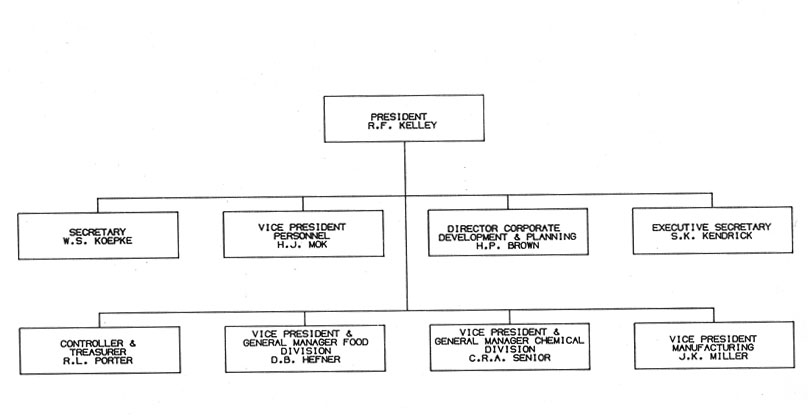
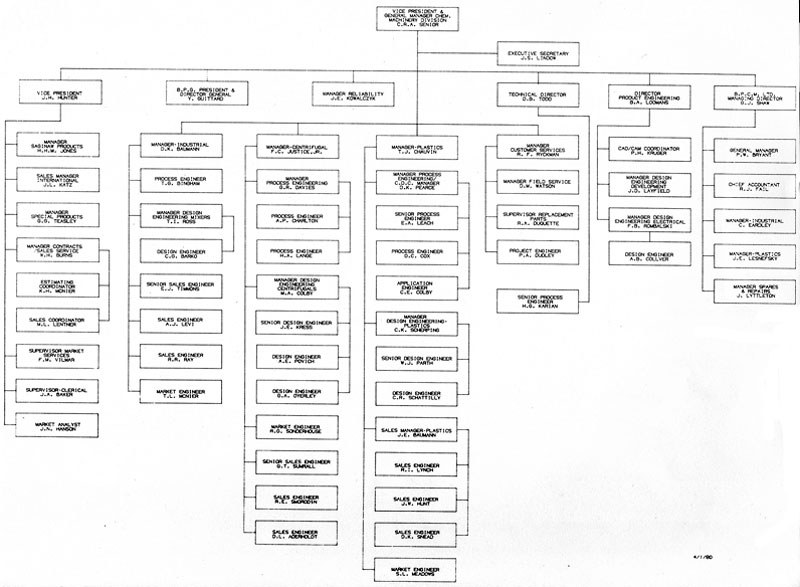
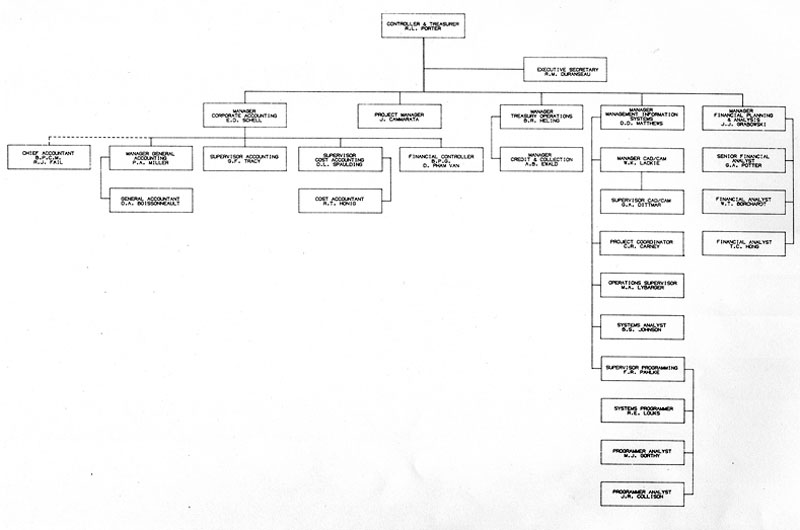
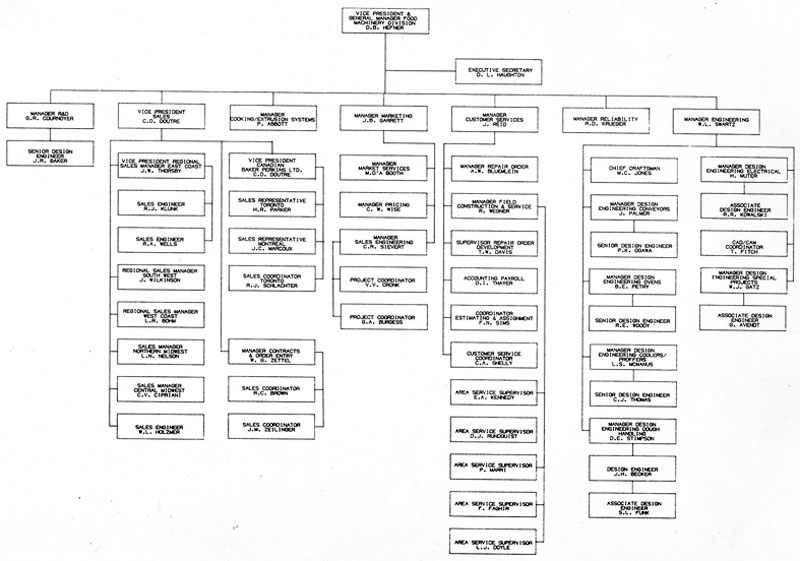
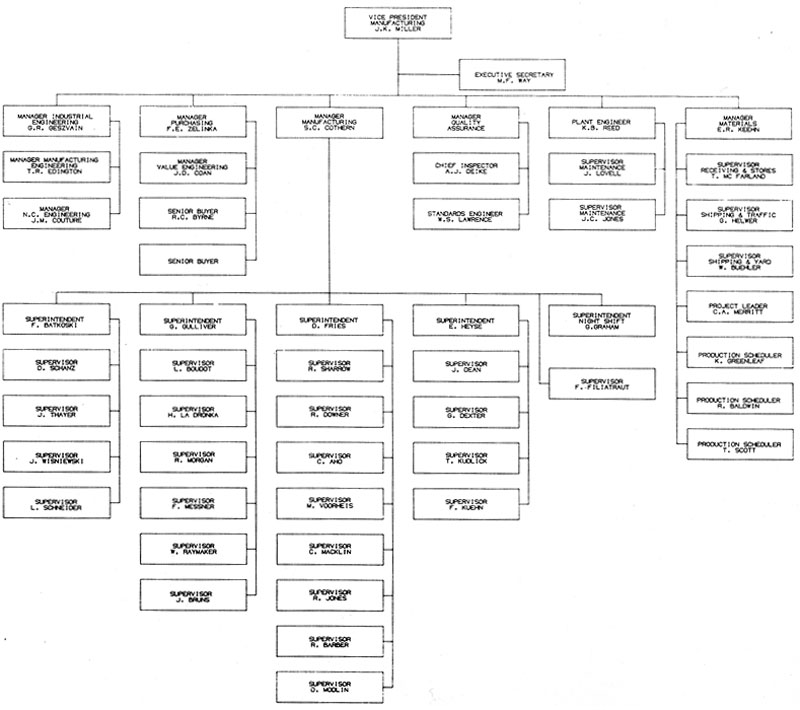
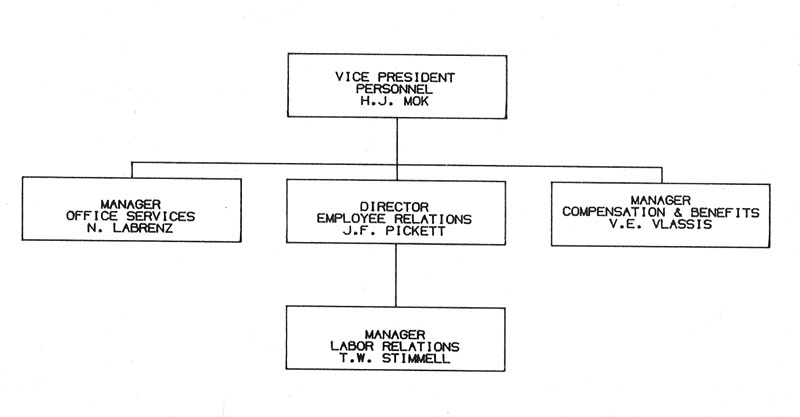
Saginaw's Chemical Division was restructured in December 1982 into two divisions – the Plastics Equipment Division, under C.R.A. (Bob) Senior , comprising the former Plastics business including Baker Perkins Chemical Machinery, Stoke-on-Trent, and the Process Equipment Division, under B.H. (Bernie) Liberman, made up of the former industrial and centrifugal business including Baker Perkins Guittard, Chelles. With the retirement of Bob Senior in July 1983, D.K. (Dan) Pearce became vice-president and general manager of the Plastics division.
Also in 1982, Saginaw introduced a radically new approach to palletising plastics that combined their expertise in both plastics extrusion and centrifuge technology. The G-Force pelletiser utilised a spinning die to both extrude molten plastic and to cut the emerging strands into uniform pellets, using half the energy required by competitive palletising equipment. (For more details see - History of Baker Perkins in the Chemical Business).
A combination of a strong dollar, low demand from customers who were themselves operating at very low levels of capacity and Saginaw's newly inbuilt capacity problem meant that the business remained under severe pressure throughout the early 80's. Inevitably, alongside the questions being asked about Saginaw's future, the potential for Saginaw's range of chemical machinery was being re-examined. The market for centrifuges was under pressure from European manufacturers; major changes were forseen in the type of mixers used for solid rocket propellants; and worries existed regarding the potential of the centrifugal pelletiser to transform the Group's plastics machinery business. Saginaw's capacity began to be cut back in 1985.
 R.F.
Kelley retired as President of BP Inc. in October 1985 and John Gallagher
took over as President of the newly formed chemical and plastics machinery
business in Saginaw. Further cut-backs in staff at Saginaw were made in
1986.
R.F.
Kelley retired as President of BP Inc. in October 1985 and John Gallagher
took over as President of the newly formed chemical and plastics machinery
business in Saginaw. Further cut-backs in staff at Saginaw were made in
1986.
The acquisition of Sterling Extruder Corporation in 1986, presented a partial solution to the Saginaw cost problem. The polymer machinery division and the sub-group management were relocated from Saginaw to the Sterling Extruder facility at South Plainfield, New Jersey. In October 1986 J.T. Gallagher and his staff moved from Saginaw to premises in Parsippany, New Jersey. These were to be known as the Corporate Office.
Following the merger of Baker Perkins Holdings and APV in 1987 there was an increased concentration on the food and drink machinery activities of the new business with chemical machinery assuming somewhat less importance. The April 1987 issue of the "APV Baker Gazette" announced that - "The loss making factory of Baker Perkins Inc. at Saginaw has been closed". Product manufacturing was transferred to the APV facility at Lake Mills, Wisconsin but engineering administration and customer demonstration remained in Saginaw.
In 1987, Baker Perkins Inc's Chemical sub-group employed approximately 700, with full-service companies located at Saginaw, Michigan; South Plainfield, New Jersey; Edison, New Jersey; Stoke-on-Trent and Newcastle-under-Lyme, UK; and Paris, France. Marketing companies were maintained in Milan, Italy and Hanover, West Germany. The sub-group marketed its products to the rest of the world through local agents, many of whom were APV group companies.
APV plc announced in September 1990 that it wanted to dispose of the Plastics machinery business and it was consolidated at the Edison facility. When, in December 1990, it was sold to Crompton & Knowles Corporation for $7.3m, APV was able to raise further funds from the sale of the freehold factory and offices at South Plainfield.
The engineering administration facility that remained on the Saginaw site, introduced a new continuous mixer for energetics in 1990. The company had by then been supplying machinery for explosives for 80 years and had developed a very wide range of explosives, pyrotechnics and propellants manufacturing equipment. Many hundreds of Baker Perkins machines were in service in leading chemical, aerospace and research facilities all over the world.
Long Service Presentations
Rewards for long service at Saginaw took a slightly different form than at other group companies (See Long Service Presentations). Rather than recognise 25 years' service as at the UK companies, Saginaw gave a pin for every five years of continuous service. The pin incorporated either diamonds or rubies denoting the length of service as follows:
Two rubies = 10 years; three rubies = 15 years; 4 rubies = 20 years; five rubies = 25 years; three diamonds = 30 years; two diamonds and three rubies = 35 years; four diamonds = 40 years.
Typical pins are illustrated below:
 |
 |
 |
 |
The End
Baker Perkins Chemical Machinery Ltd’s operations were moved from the original factory in Cooper Street, Stoke-on-Trent to the Parkhouse, Newcastle-under-Lyme facility in 1991. The manufacture and assembly of twin-screw extruders was re-located from Stoke-on-Trent to Peterborough in 1994, to take advantage of the state-of-the-art design and manufacturing facilities available at APV Baker’s headquarters.
Following the APV/Baker Perkins merger in 1987, Baker Perkins Guittard was renamed APV Chimie Equipement SA. It was sold to a company formed by its management in 1991 for one French Franc.
 |
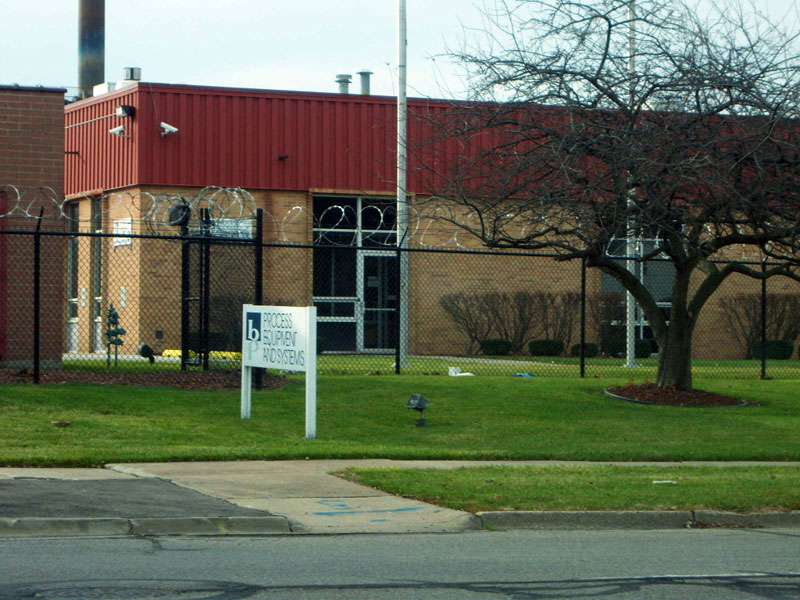 |
 |
That part of the Saginaw facility occupied by B&P Process Equipment - the newest part of the old office buildings, the old assembly building which was called building 12 and the Customer Demonstration Centre - as it is today. See also - "The Aftermath" - below.
The 1995 APV Group Annual Report states that the business of APV Chemical Inc was sold in April 1995 for £1.6m. This business still exists, working out of the original works/offices in Hess Street, Saginaw and producing the same chemical product line - Centrifugals, Continuous Mixers, Batch Mixers, Vertical Energetics, etc., under the name of B & P Process Equipment. From January 1st, the company was renamed B&P Littleford. Their website is bplittleford.com
Inside Saginaw
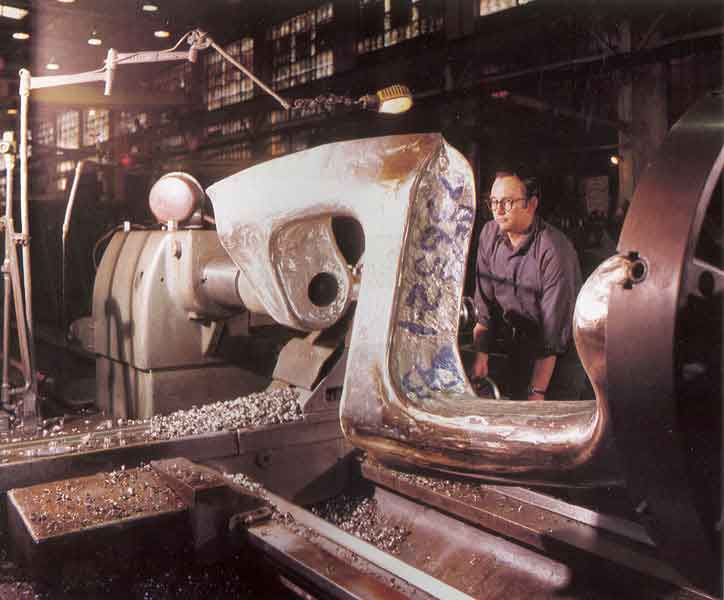 |
 |
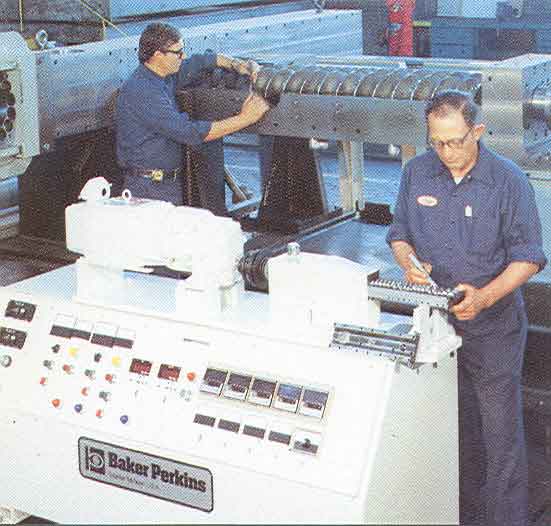 |
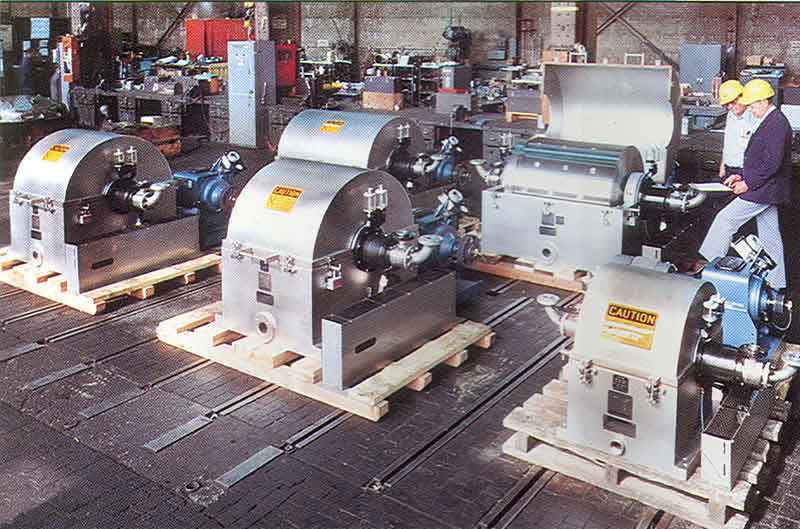 |
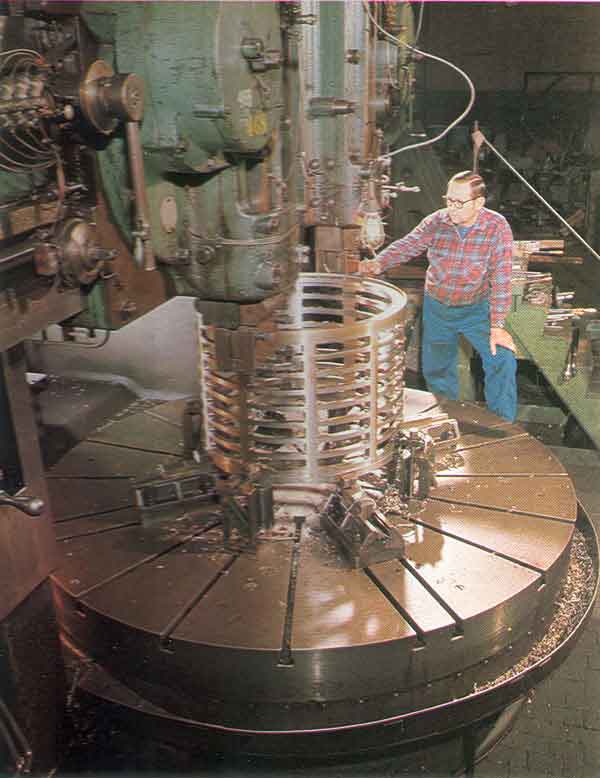 |
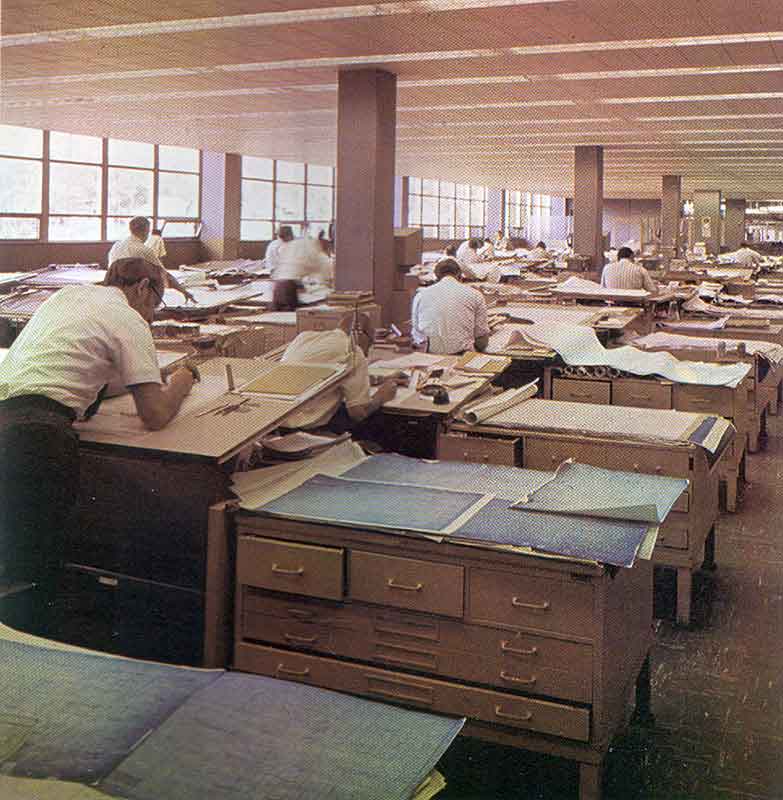 |
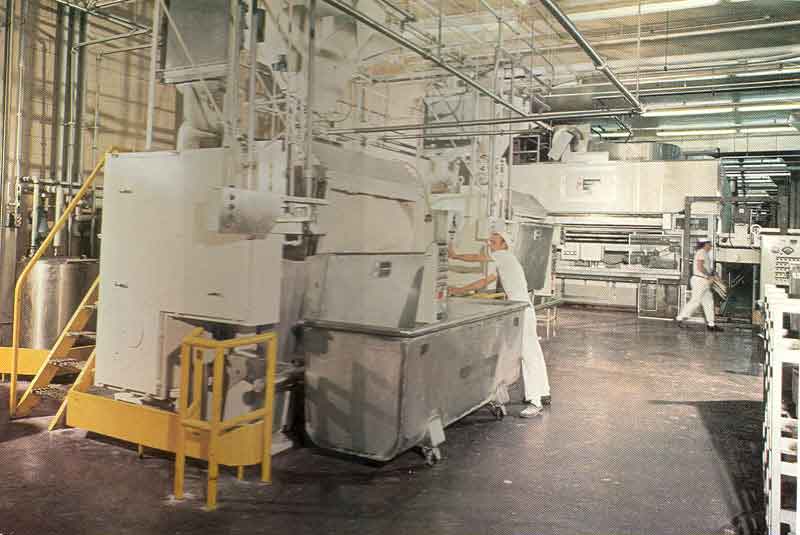 |
| Machining a mixer blade | Working on a chemical mixer gearbox | Production of twin-screw mixers | Podbielniak Contactors being readied for despatch | Machining a pusher centrifuge basket | Inside the Saginaw Drawing Office | Saginaw-built bread dough mixer |
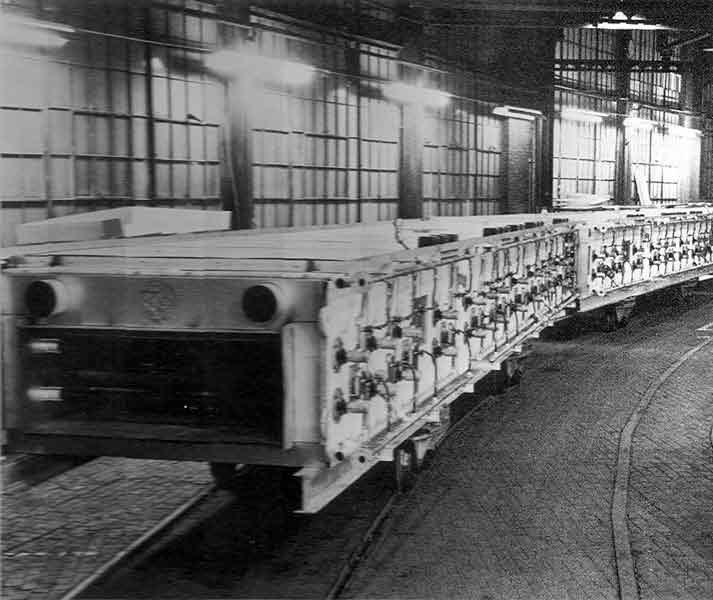 |
||||||
| 252 ft. pre-assembled biscuit oven |
The Aftermath
Jim Kowalczyk passed the old Baker Perkins buildings in Saginaw in early January 2012 and sent the following situation report:
"I discovered that the city is tearing down most of the old facility. As you know, B&P Processing Equipment inhabits part of the old structures. (See "The End" above). They remain in the newest part of the old office buildings, and also in the old assembly building which was called building 12 and they also have the Customer Demonstration Centre. This was called parcel "B" when the land was subdivided and parcel "A: was sold to a Realtor, who subsequently sold it to a man named Lou Beer (who was a local lawyer and investor).
The buildings in parcel "A" (which is being torn down) represented about 75 percent of the facility including the machine shop, the heavy fabrication shop, the light sheet metal shop, shipping/receiving and many of the maintenance buildings. Over the years Lou had rented the facility to several shops including SIMS (Saginaw Industrial Machine Systems which he bought out shortly after buying the property). SIMS was a company started by an ex-Baker Perkins machinist to manufacture parts for the likes of APV and other companies. There were also companies renting space in the old facility that did injection moulding of toys for Mattel and powder coatings of brake callipers for General Motors Power Train.
Lou died a few years back and his inheritors decided that they did not want to deal with the property as it is in a neighbourhood that is deteriorating rapidly, and the buildings were in very bad repair. Most of the tenants moved out for one reason or another and the buildings reverted to the city of Saginaw for back taxes. The buildings have been empty and derelict for a few years now, and it seems the city has decided to demolish them. I took some pictures (see below). The roofs and west and south walls of the buildings are down in the old machine shop and the light and heavy fabrication shops. The East walls against the street side are still up, but I suspect they will come down last after much of the debris from the other buildings is removed from the site. I'm not sure if they intend to tear down the office buildings, but I suspect they will do that also.
It looks like the B&P folks are going to stay in the remainder of the facility as they purchased the land and the buildings about seven years back. However, due to the deterioration of the local neighbourhood, security has become a real problem for this facility, and they have installed tall fences with barbed wire over the top. They have even installed it on the roofs of their buildings where they adjoin the adjacent old buildings from parcel "A".
This is all very sad, because at one time Baker Perkins was the second largest employer in Saginaw, second only to General Motors. When I started to work at Baker Perkins in 1969, there were over 1100 employees at this plant. B&P currently employs less than 40 people. To lose this business and the value it brought to the city and the surrounding community is a shame and is very sad indeed."
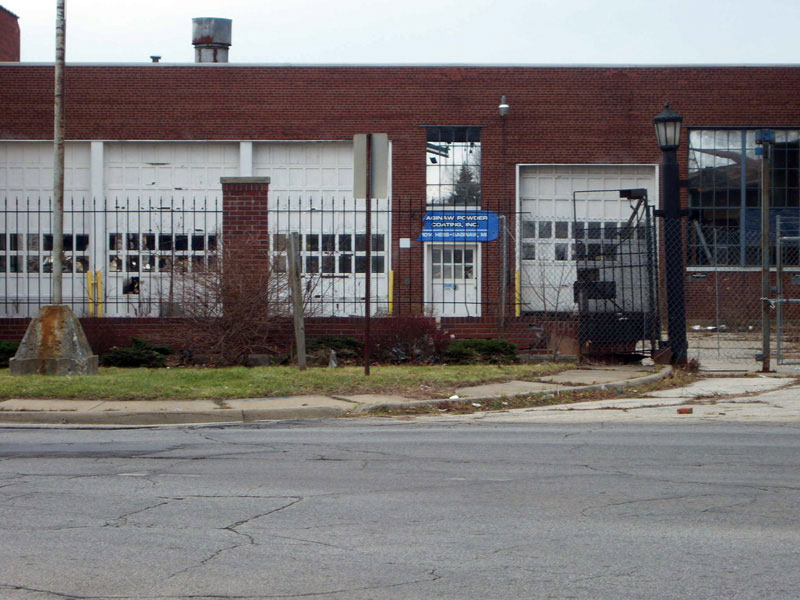 |
 |
 |
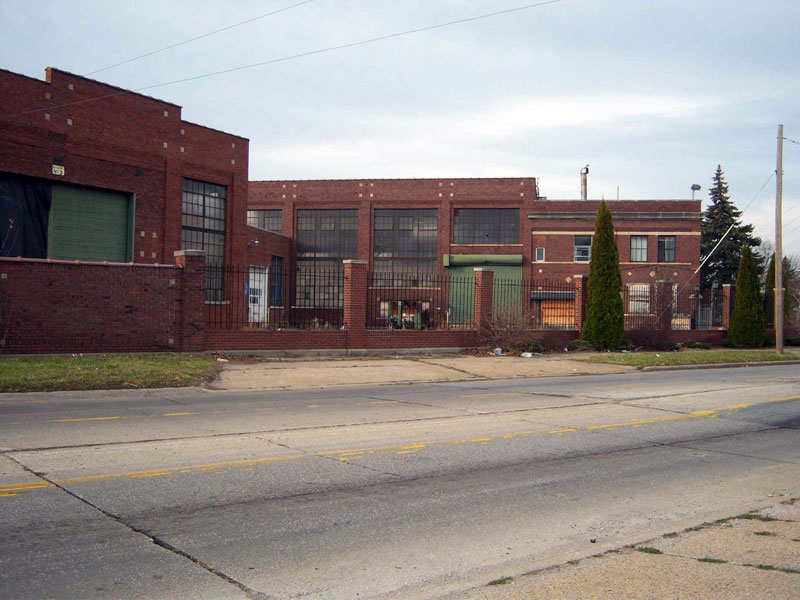 |
 |
 |
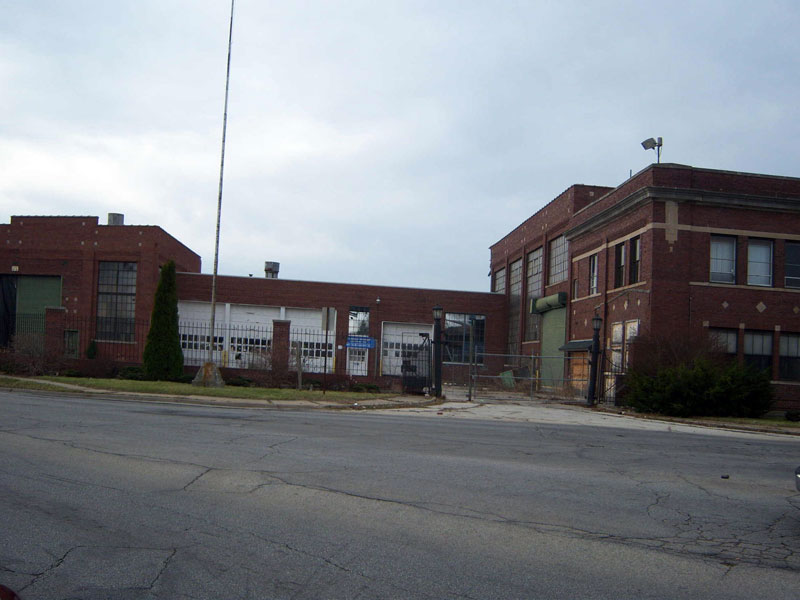 |
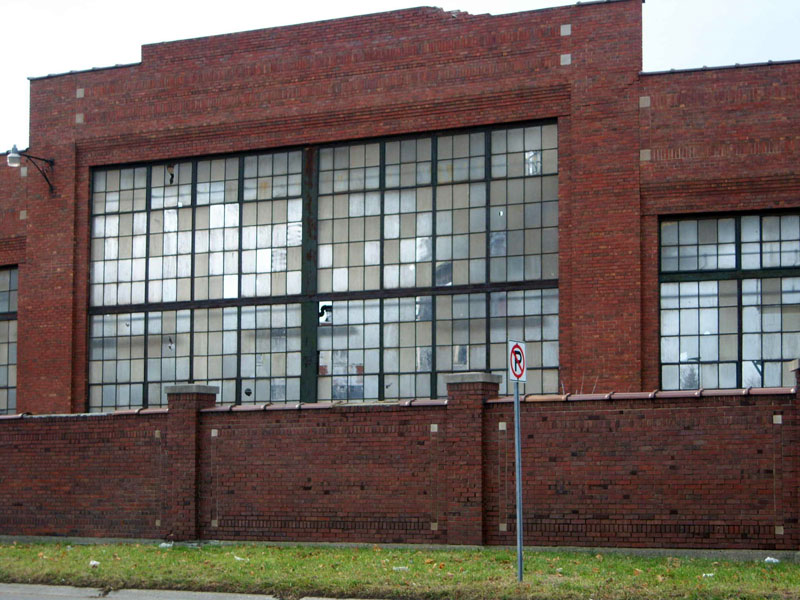 |
 |
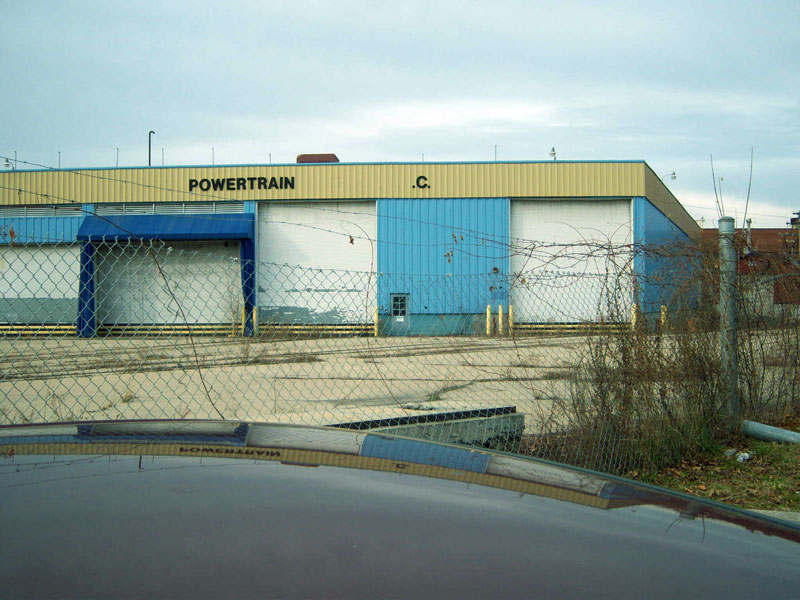 |
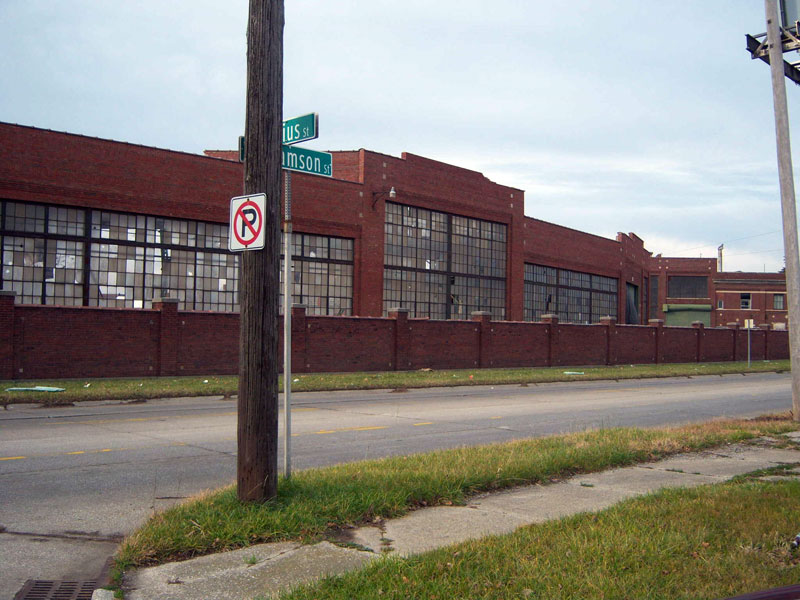 |
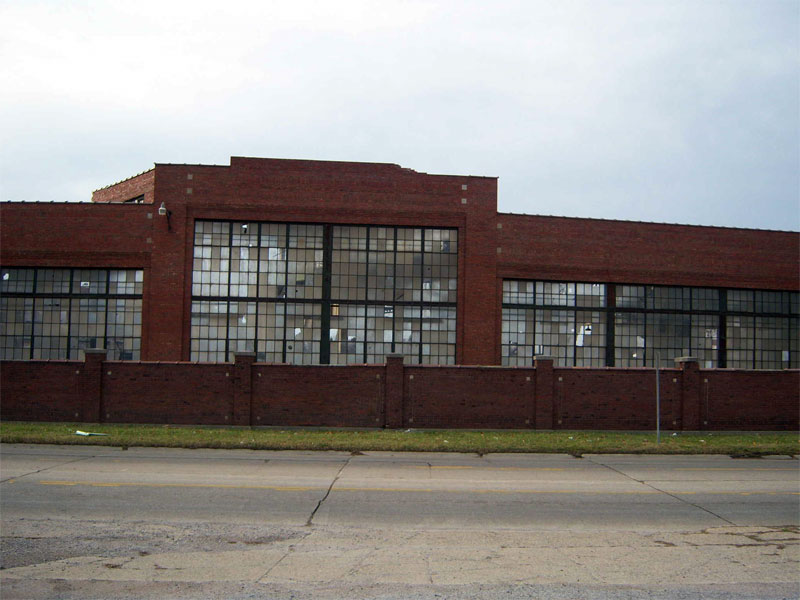 |
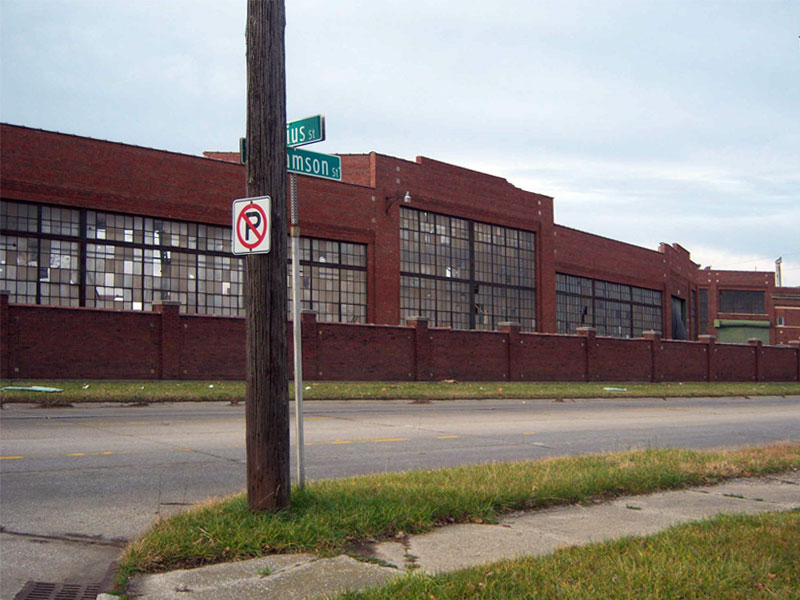 |
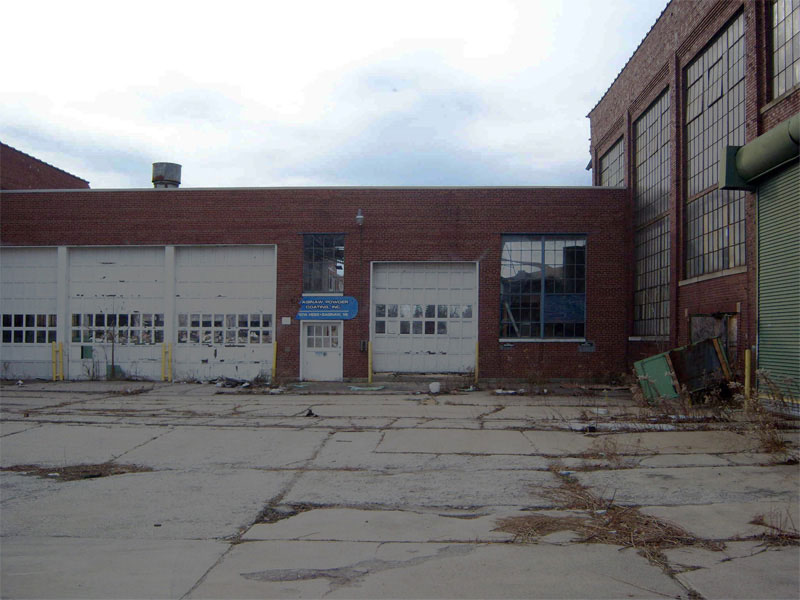 |
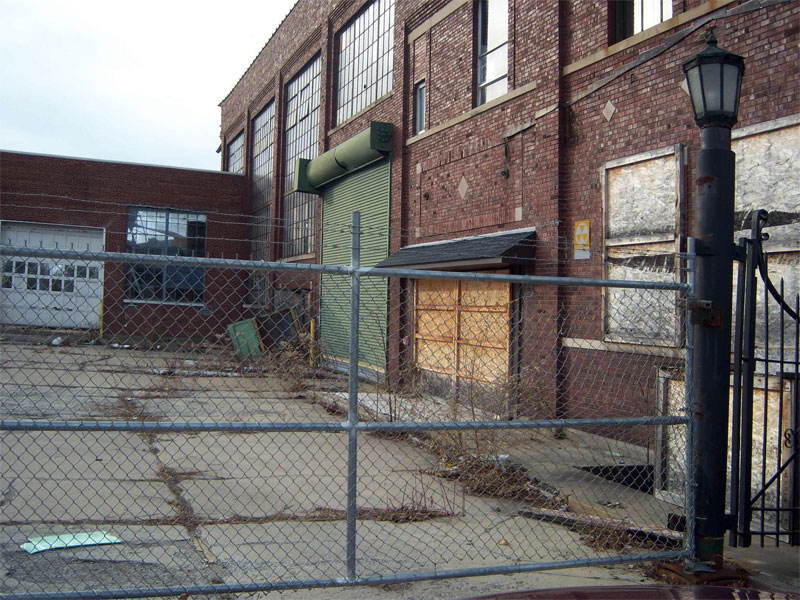 |
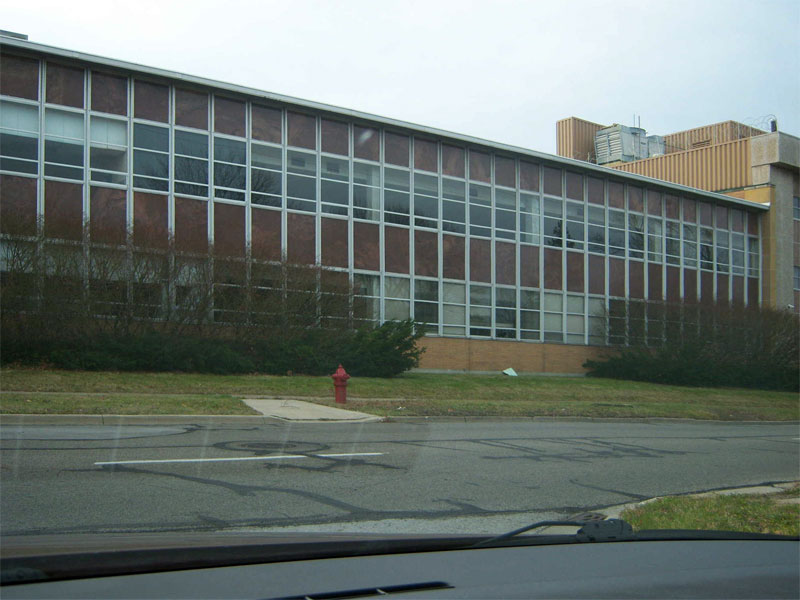 |
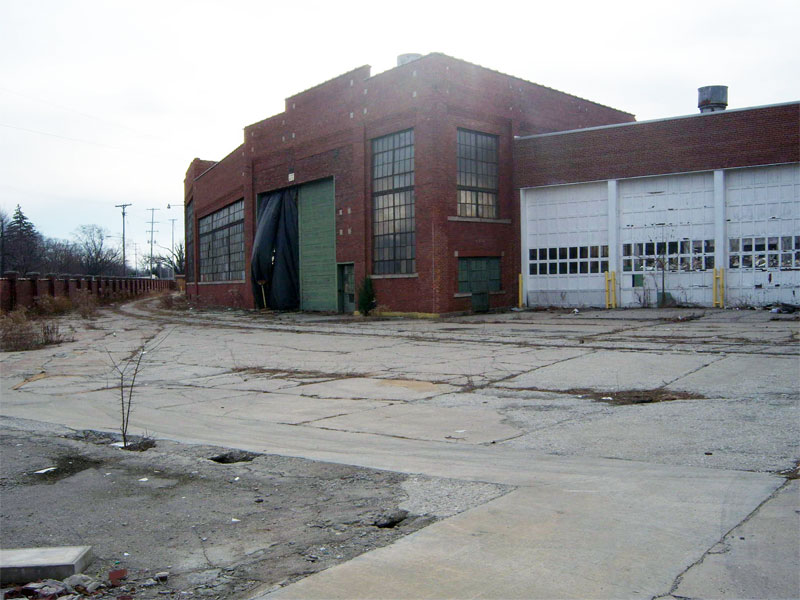 |
 |
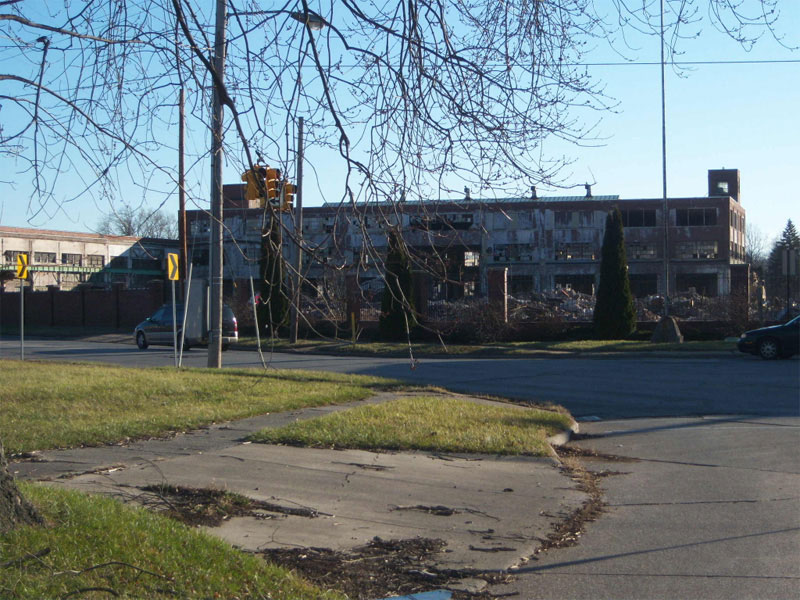 |
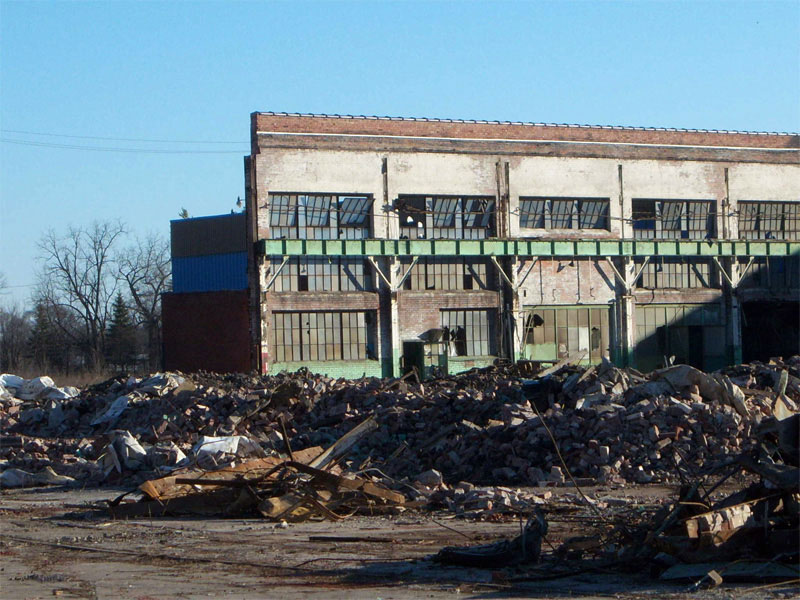 |
 |
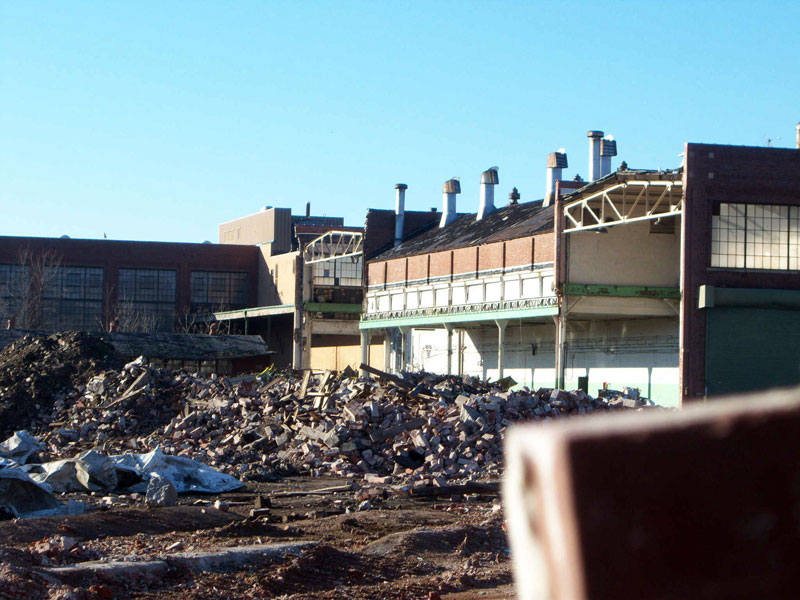 |
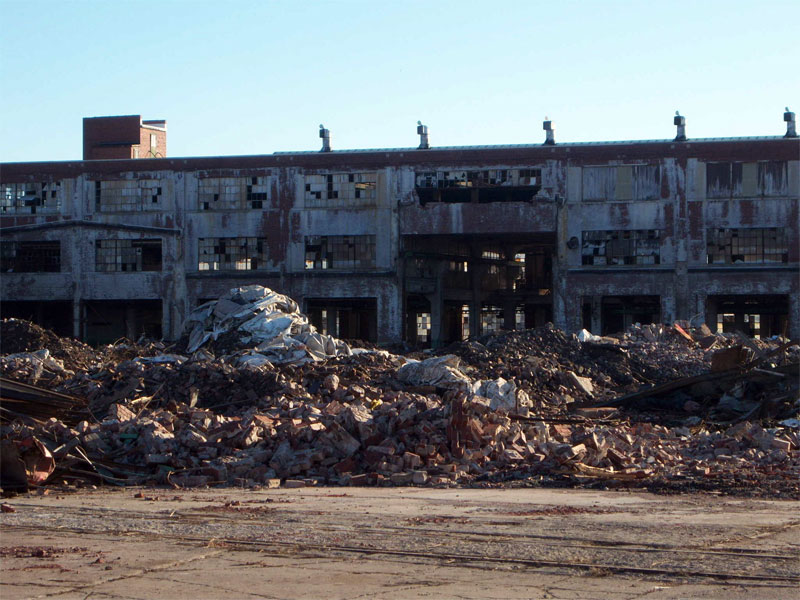 |
 |
Photographs of the demolition of the Baker Perkins Ltd factory in Westfield Road, Peterborough can be found here.
John Baker (no relation to THE ‘Bakers’), worked at the Saginaw, Michigan division of Baker Perkins from 1966 – 1980, first as a summer hire in the Drafting department of Food Engineering and then as a Design Engineer after graduating from college. He too, passed by the old company site recently (May 2014) and sent us the following:
 |
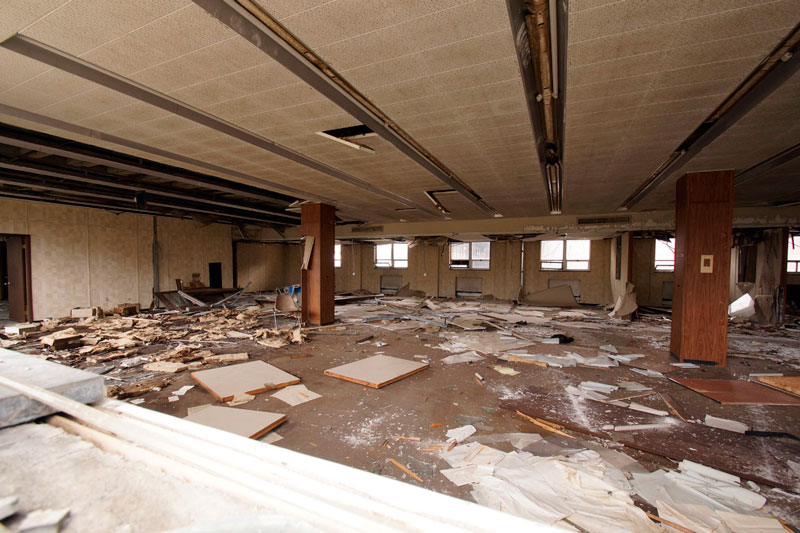 |
"I was recently passing through Saginaw on a business trip and stopped by the old factory site and took a few photos. It was pretty sad. All of the factory buildings have been demolished and only the offices are still standing and only one end of that building, and the old chemical laboratory, are still being used by what I think was a spin-off from the Baker Perkins chemical division, a company with the interesting name “BP Processing Equipment and Systems”.
The first photo shows what was once the main entrance to the plant off Hess Street. This was where deliveries entered the factory and where security welcomed visitors. As can be seen, this end of the office building is shuttered and boarded-up and the factory buildings themselves have all been demolished and the area is now nothing more than several acres of rubble. The second photo was taken through a broken window and shows the old Food Engineering drafting office, where I worked all those years that I was with the company".
Saginaw People
HELP REQUIRED - Images of some of the past presidents and senior managers of Baker Perkins Inc. Saginaw appear in the text above but we would like to include photographs of other ex-employees here. Any scans or originals would be gratefully received (preferably taken during the eras covered by this website).
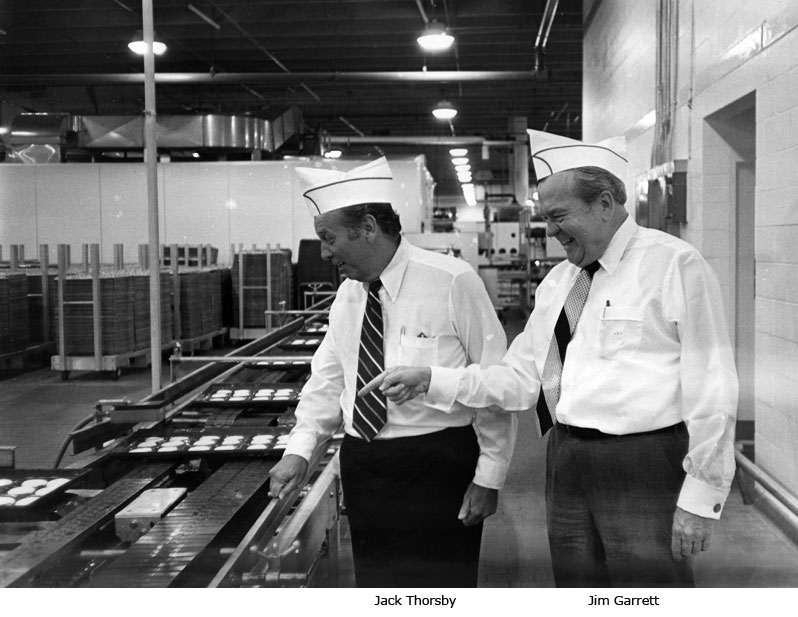 |
 |
.jpg) |
.jpg) |
.jpg) |
.jpg) |
.jpg) |
|
.jpg) |
.jpg) |
.jpg) |
.jpg) |
All content © the Website Authors unless stated otherwise.