
THE ORIGINS OF THE FOUNDERS OF BAKER PERKINS
- A Few First Thoughts
- Jacob Perkins
- Perkins Innovations on Naval Ships
- The Perkins Steam Gun
- Joseph Baker
A few First Thoughts
It is perhaps tempting to think of Jacob Perkins and Joseph Baker as early versions of Charles Rolls and Henry Royce, one an inventor, the other a business man, coming together in the 19th Century to build a new engineering empire. The truth is somewhat different. Firstly, the two gentlemen could not have met – Jacob Perkins died in 1849 and Joseph Baker did not arrive in England until 1876. Secondly, the initial contact between the two families is likely to have been in the 1880's between Joseph Allen Baker (Joseph's eldest son) and Loftus Perkins (Jacob's grandson), when Joseph Baker & Sons became agents for some of the Perkins steam ovens.
It is also interesting to consider that by 1904 when the first factory was built at Westwood, Peterborough, there was no longer any Perkins family involvement in the business. In fact, Loftus Patton Perkins - Loftus Perkins' eldest son – was the last of the Perkins family to be employed in the business having left the company soon after the merger between Werner Pfleiderer and A.M. Perkins Ltd, and this was before the company took the first tentative steps towards discussing a union with Joseph Baker & Sons Ltd just prior to WW1. If it were not for the strong anti-German feeling that existed locally at the beginning of WW1, the new company formed in 1919 might have been called Werner Pfleiderer & Baker or Baker Werner & Pfleiderer.
Although both Joseph Baker and Jacob Perkins were descendents of emigrants to the New World, Jacob's Puritan antecedents made the journey to New England 200 years before Quaker Samuel Baker – Joseph's father – sailed for Canada.
There is another dimension to this story. Quakers had settled in America as early as 1614, with a further major influx of Welsh and Swedish Quakers in 1650. The early Puritan settlers were said to be as punctilious in killing Quakers as they were in massacring the native Indians – all in the name of creating a "pure" society. They considered that "Baptists and Quakers were the devil's agents, Quakers were the worst" It should be remembered that the Puritans had fled England due to religious persecution and were now themselves persecuting others. Therefore it might be thought that if, after two centuries, there had remained any lingering religious animosity between Quaker and Puritan descendants, the creation of Baker Perkins might have proved difficult if not impossible. The fact is, that as suggested above, the union was not between the Perkins and Baker families but between the Baker family and, essentially, a German company, the managing director of which was himself a refugee from a form of persecution – that of Bismarck despotism (See the History of Werner, Pfleiderer & Perkins Ltd.).
JACOB PERKINS
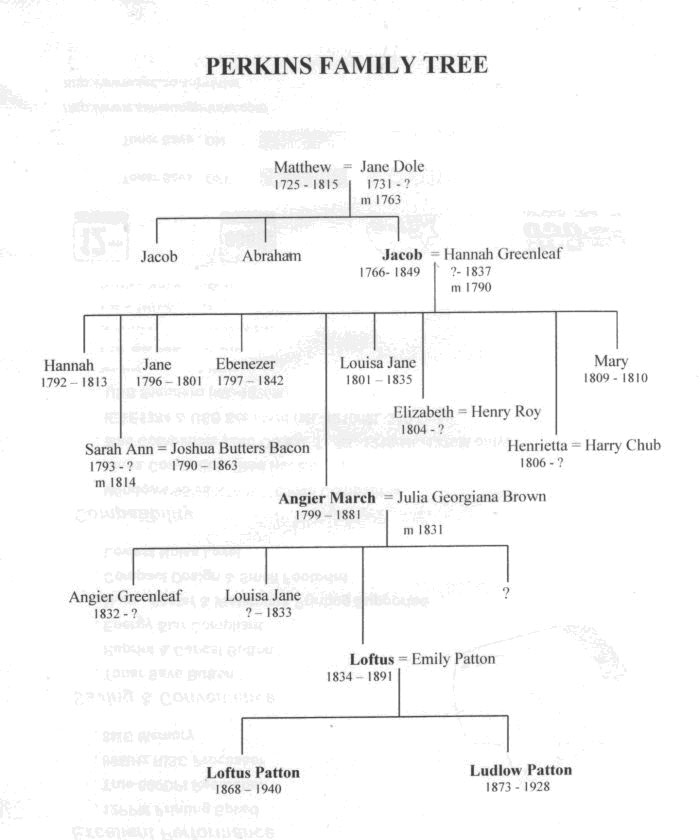 |
The Perkins Family Tree (with acknowledgements to The Heritage Group Website for The Chartered Institution of Building Services Engineers) |
Jacob Perkins was a descendent of John Perkins – born in Newent, Gloucestershire in 1590 - one of the earliest emigrants from the mother country, sailing from Bristol on 1st December 1630, ten years after the voyage of the Mayflower. He was a Puritan whose religious beliefs could not conform to the edicts of the Established Church of the Stuart period of English history. He was among around 1000 like-minded people who left for a new life that year under the leadership of John Winthrop, the founder and first governor of Boston, Massachusetts.
(John Winthrop and his Puritan settlers of the Massachusetts Bay Colony, arrived to the north in Salem. Finding Salem less than desirable for a settlement, Winthrop was invited to visit Shawmut. On September 17, 1630, Winthrop decided to make Shawmut a permanent settlement and renamed it Boston, after his hometown in Lincolnshire, England.)
 |
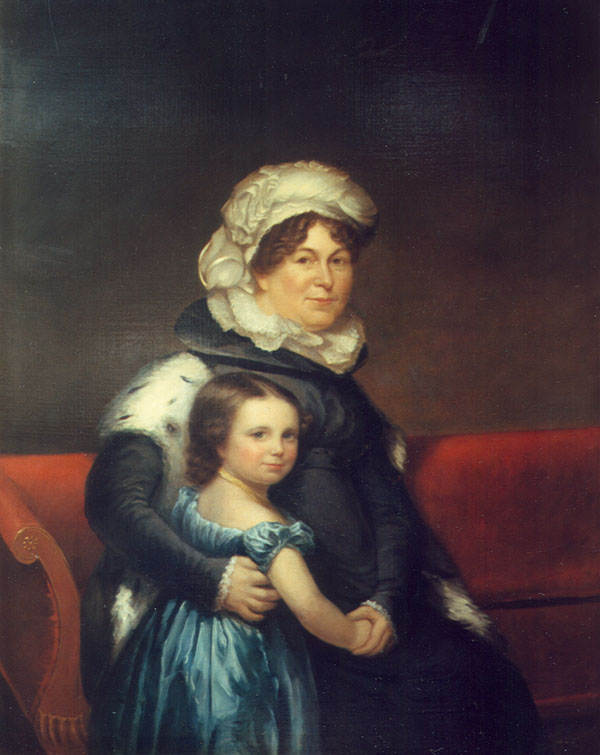 |
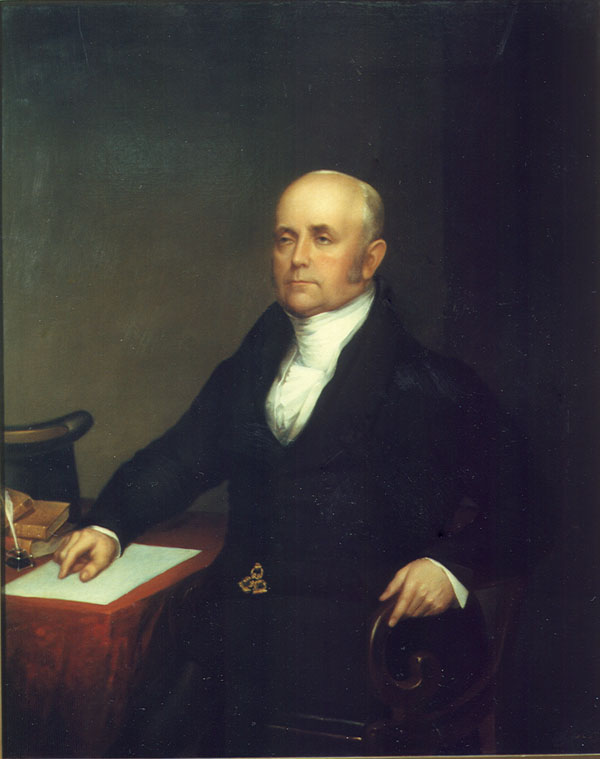
| Jacob Perkins | Hannah Perkins |
His early experiences in the New World were not all happy. His daughter, Mary, was among those accused of witchcraft during the hysteria of the Salem trials and, although convicted, was discharged as a result of the efforts of her friends.
Jacob was born 133 years and six generations later in Newburyport, Massachusetts on the 9th July 1766 to Matthew and Jane (Noyes) Perkins. He had a sister, Sarah; a brother, Abraham; and a half-brother, Capt. Benjamin. Both his father and grandfather were named Matthew.
He was apprenticed at the age of 12 to Elias Davis who taught him the art of rolling gold sheet from Spanish "Pieces of Gold" and Portuguese "Joes" from which jewellery was made. He became an expert engraver on gold and copper and worked as a silversmith from 1783 to 1816, having inherited his master's business at the age of 17. By the age of 21 he was employed by the State of Massachusetts to make dies for copper coinage. During this time he began his career as a prolific inventor with the development in 1790 of a machine to cut and head nails in one operation. In a portent of future events, the income potential for this was ruined by a lawsuit of 7 years duration disputing the invention, and the mismanagement of his partners involved him in great financial distress. The nail machine was first erected at Newburyport and then moved to Amesbury on the Merimac River. He also erected a mill and waterwheel considered at the time to be wonderful pieces of engineering. Machines, working on the Perkins principle, were also making nails by the million in England.
This nail-making venture was carried out under the direction of two Englishmen, Samuel Guppy and John Armstrong from Bristol. Despite Jacob developing the process and rapidly increasing production, the association ran foul of Jacob’s tendency to divert his attention elsewhere, the partners objecting to his weaning away profits to develop extraneous ideas – something which was to be a frequent source of friction between Jacob and future business associates.
Although credited with making dies for several types of military buttons, his principal die work was for jewellery, buckles and similar articles. His buckle business must have been significant as, in 1793, he advertised in a local newspaper for – “Two or three stout active lads – 14, 16 years old – as Apprentices to the buckle making business of Jacob Perkins”.
Jacob was married to Hannah Greenleaf (b. 20th December 1770 – daughter of Ebenezer Greenleaf and Hannah Titcomb) on 11th November 1790. They had 9 children – 2 boys (Ebenezer Greenleaf and Angier March) and 7 girls (Hannah Greenleaf, Sarah Ann, Jane, Louisa Jane, Elizabeth, Henrietta and Mary). His second son, Angier March Perkins, who was to play a major role in the development of his father's business, was born in 1799. They resided for some time in Boston and New York before moving to Philadelphia in 1814, where Jacob became associated with a firm of banknote engravers. It was while he was working in Philadelphia that he was introduced to Oliver Evans whose ideas probably led Jacob to think about developing a refrigerating machine.
Perkins Innovations on Naval Ships
Jacob Perkins is credited with filing no fewer than 21 American Patents between 1795 and 1838 and 19 British Patents between 1819 and 1836. Among his earlier inventions were a pump and other apparatus for fire engines, machines for stamping and embossing coins and milling and lettering the edges, marine propulsion and instruments for navigation, ships' ventilation and the reconditioning of naval cannons. These latter developments resulted from Jacob's association with Commodore Bainbridge at the Charleston Navy Yard during what came to be known as the Second War of Independence - a conflict fought entirely at sea from June 1812 to December 1814. It was during this time that "Independence." - the most completely equipped warship of any navy in the world, armed with 74 guns, was laid down (but not completed before the end of hostilities) and it was said that to Jacob Perkins must be given the credit for many of the innovations incorporated in this vessel.
Jacob's first work at the yard in 1813 centred around devising ways to re-condition the many old cannon that from frequent firing had become 'honeycombed', particularly at the chamber end. Jacob produced a cannon boring machine for reaming out the entire gun and then set about improving the moulding of the shot. His Triangular Valve Pump was installed in the "Independence" and - "was found to deliver double the quantity of water of the best chain pumps".
Perkins began experimenting with high-pressure steam boilers in 1823 and devised the means to attain working steam pressures of 800-1400 psi. He used the steam to power an engine of 2” bore and 12” stroke which was rated at 10 horse-power. By 1827, Jacob had produced a single-acting single-cylinder engine working at upward of 800 psi. At these high pressures he experienced problems with effective lubrication as the high temperatures encountered caused the oil to char and decompose. He overcame this by using a special alloy that became so polished after some wear that friction was less than where lubricants were used. It is not clear if Jacob patented this material at this time but it is the case that the material was used in his grandson, Loftus Perkins’, steam engine that powered the Steam Yacht "Anthracite" on its transatlantic trials in 1880, exciting much comment. (His grandson is on record as having patented, in 1872, "a new tin/copper alloy from which pistons rings needing no lubrication could be made". It is assumed that this refers to a similar material to that developed by Jacob but forty-five years seems a long time to wait before securing the benefits of such a material by patent).
For more information on the inventions of Jacob, his son, Angier March, and grandson, Loftus, see Early Inventions).
Heating of buildings was to become a significant part of the business of Jacob and his son, Angier, in later years and it is thought that Jacob began perfecting a central heating system in 1810. The first application on a significant scale came with his installation in the Massachusetts Medical College, Boston in 1815. The building was eighty-eight feet long and forty-three feet wide. The whole building was heated by a single stove situated in the cellar, surrounded by a brick chamber from which a brick flue rose to the second storey. This was connected by large pipes, or apertures, to all of the principal rooms in the building. Air, admitted form the outside through a brick passage to the stove, ensured a strong current of heated air rapidly warmed even the largest room. Surprisingly, Jacob received no payment for the use of his idea or for the installation of the heating system, nor did he patent his invention in America though he did obtain a patent later in England.
Jacob's engineering genius had a very significant influence on the banknote printing industry both in the United States and in England and led him to set sail for England on the sailing ship 'Telegraph', with his eldest son, Ebenezer Greenleaf Perkins, his engraver colleagues, Gideon Fairman and Asa Spencer, some workmen and many cases of machinery, on 31st May 1819, in the hope of gaining a contract with the Bank of England. For more details see History of Jacob Perkins in the Printing Industry. This venture, too, failed to live up to expectations but the move resulted in Jacob setting up in London a company to develop printing technology and, later, he and his son, Angier, created the foundations of the engineering enterprise from which may be traced the "Perkins" branch of the later Baker Perkins empire.
NOTE: Nothing much is known about the life of Jacob's eldest son, Ebenezer Greenleaf, after he landed with his father in England in 1819. except that he suffered from an unspecified, long-term disease. "Jacob Perkins - His Inventions, His Times and His Contemporaries", published by the Historical Society of Pennsylvania in 1943 indicates that it was decided in about 1830 that Ebenezer should return to Massachusetts in the faint hope that the long sea voyage and his native land might help his condition. In the event, the change was somewhat beneficial as he lived for several more years, passing away in Newburyport on January 20th, 1842.
Printing was not Jacob's only interest during this time. He spent much of his effort, and a not considerable proportion of the company's money, on his obsession with the use of high-pressure steam. At a time when a pressure of 5psi was considered to border on the dangerous, his process for generating high-pressure steam was seen as something of a miracle.
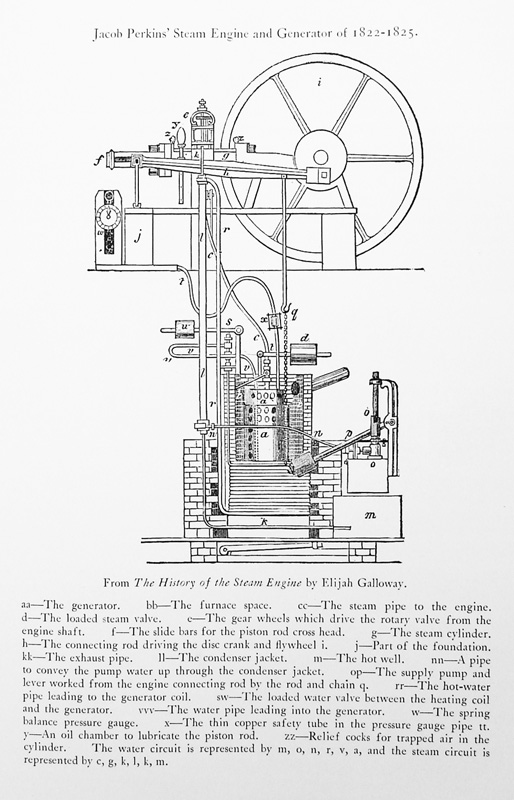 |
Jacob Perkins' Steam Engine and Generator of 1822-1825. |
The Perkins High-Pressure Steam Engine was also considered to be a phenomenon, years ahead of its time:
"The generator, as he called the boiler, was the crucial part of his engine. A cylinder of 3-inch gunmetal, closed at both ends, was fixed in the furnace so that the fire played all around it. Operated by the engine itself, bellows boosted up the heat of the fire until the generator reached a temperature of 450 degrees F, and the superheated water was forced into a pipe, where it flashed into high-pressure steam and exploded at 500 pounds to the square inch into the working cylinder. At 200 strokes a minute, the engine was reckoned to develop ten-horse power. To keep the joints steam tight, Perkins invented the double-cone pipe joint, an engineering device of some importance. In the course of his work on high-pressure steam, he evolved what he later called the Uniflow engine, with exhausts through a number of ports after the engine had completed its stroke, thus dispersing it in a one-way flow."
The Perkins Steam Gun
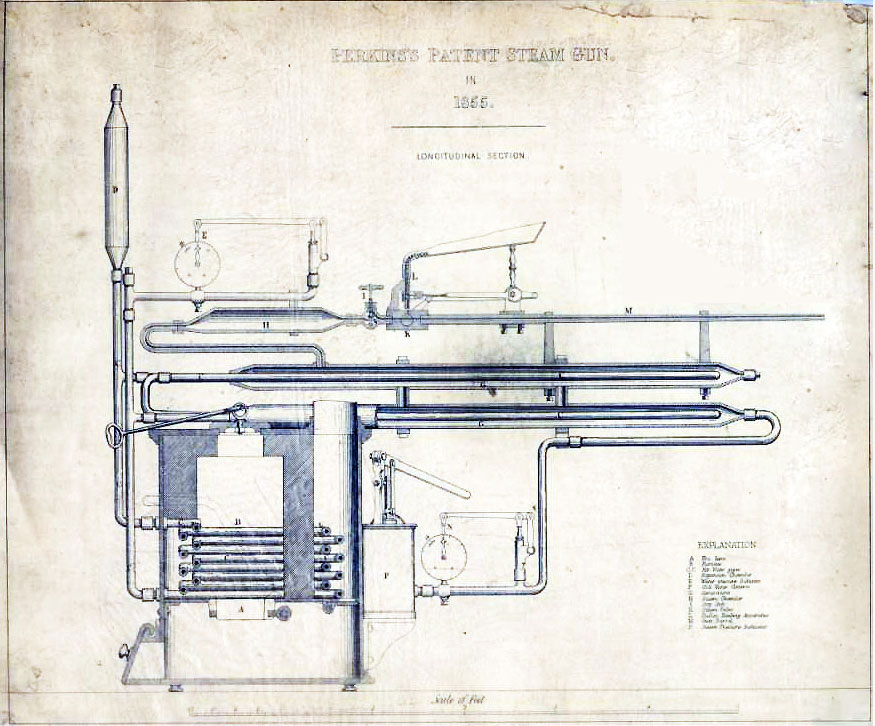 It has been suggested that, during his experiments in 1823 and 1824, Jacob was considering other uses for his patent ‘generator’ and had observed that, whenever the stopcock was opened, many small particles of metal and other debris were ejected with great force. It occurred to him that with a properly constructed gun, bullets could be propelled with great velocity.
An Original Thought
It is worth pausing here to consider whether this might have been an original thought, born out of Jacob’s undoubtedly fertile imagination. However, the use of the explosive potential of both gunpowder and steam for military purposes goes back into antiquity. Leonardo da Vinci described a steam cannon and attributed its invention to Archimedes. – “One third of the instrument stands within a great quantity of burning coals, above is a cistern of water which falls into the breech of the cannon through a valve............. and when consequently the water has fallen out, it will descend into the heated part of the machine and there it will instantly become changed into so much steam that it will seem marvellous, and especially when one sees its fury and hears its roar....“.
As will be seen later, the similarities between Archimedes’ ”Architronito” and Jacob’s device were significant. It is also interesting to note in the context of Jacob’s later claims for his device, that it was said that Archimedes’ machine – “Has driven a ball weighing one talent six stadia”. (NOTE: A Greek talent was approximately 80 pounds and the distance of six Roman stadia was about three-quarters of a mile). In a manuscript now in the library of the Institut de France, da Vinci describes this ‘steam engine’ minutely – “The action of this machine was due to the sudden conversion of small quantities of water into steam ("smoke," as he called it) by coming suddenly in contact with a heated surface in a proper receptacle, the rapidly formed steam acting as a propulsive force after the manner of an explosive.” It was really a steam-gun, rather than a steam engine, and it is not unlikely that the study of the action of gunpowder may have suggested it to Leonardo.
It is also understood that papers held in the US Library of Congress refer to experiments made in 1797 with a steam-operated musket by three Philadelphians. An accompanying sketch shows – “A steam chamber of cast iron shaped like a retort with a gun barrel attached to it by a stop cock”. The papers go on to suggest that – “With 12 oz. Of water thirty musket balls were shot with force to mark deeply a pine board at five yards”. The pressure used was estimated to be 300 pounds per square inch. On January 19, 1819, Captain Samuel Morey of New Hampshire filed a patent for “shooting by steam”. The details of this machine are unfortunately not available. (“Jacob Perkins – His Inventions, His Times, & His Contemporaries” by Bathe, published by The Historical Society of Pennsylvania, 1943).
While Jacob was carrying out his first experiments in 1823 and 1824, news of his invention was disseminating rapidly – it would have proved difficult to keep the trials secret because of the incessant din from exploding steam. The London Literary Gazette early in 1824 gave a brief mention of the gun – “The generator of Perkins’ steam engine was connected to a short iron pipe that projected through a hole in the smithy wall at Water Lane, and the bullets were fired across the courtyard at an iron target”. A correspondent for an American Newspaper reported – “It discharges ounce balls from a musket barrel against an iron target at a distance of fifty feet; the balls are flattened to the thinness of ½” evincing an energy quite equal to that of gunpowder. Two hundred and fifty may be discharged in one minute”
The London Mechanics’ Register of November 26th 1824 trumpeted:
"If Mr. Perkins's steam guns were introduced into general use, there would be but very short wars; since no fecundity could provide population for its attacks. . . .
What plague, what pestilence would exceed, in its effects, those of the steam gun? - 500 balls fired every minute . . . one out of 20 to reach its mark - why, 10 such guns would destroy 150,000 daily. If we did not feel that this mode of warfare would end in producing peace, we should be far from recommending it. . . .
We have heard, but we do not vouch for the fact, that the Emperor of Russia, who has more knowledge of the importance of steam than some of us Englishmen, has sent an agent to procure a supply of Perkins's steam guns, which that gentleman's patriotism will not allow him to offer. . . ."
Inevitably, the French were somewhat apprehensive about this worrying development and, in 1824, claimed that General Girard was the real inventor of steam artillery - in 1814, ten years before Jacob Perkins. It was claimed that he constructed a moveable boiler on wheels, supplying steam to six musket barrels. Bullets were fed from a hopper to the barrels at a rate of one hundred and eighty a minute. There is no record of the French gun being a success and the revival of these claims at the time of Jacob’s trials, smacks more of a futile gesture of Gallic pride.
Jacob was now ready to demonstrate his gun to the military.
A Demonstration for the Duke
An article in the London Times of December 6th 1825 recorded that:
PERKINS’ STEAM GUN
The neighbourhood of Mr Perkins’ safety steam engine manufactory near the Regent’s Park, was on Tuesday thrown into great consternation by some tremendous reports, arising from the discharge of his steam gun. Since a fatal accident, which occurred several months ago, where a lady threw herself from a gig, in consequence, as it was at the time incorrectly supposed, of her horse having taken fright at the prodigious noise made by the steam gun, the terrific engine of destruction had not been permitted to be discharged by the individuals belonging to Mr Perkins’ concern. On Tuesday morning, however, soon after eight o’clock, patrols were observed stationed on all the roads leading towards the manufactory, accompanied by men with placards on boards, warning all passengers on horseback or in carriages, to go through the Regent’s Park, instead of proceeding by the high road leading in front of the manufactory. - Soon after nine, numbers of military officers, in carriages and on horseback, alighted at the manufactory. They were soon followed by the Duke of Wellington; and immediately afterwards the discharge of steam, which had been previously occasional, and of comparatively slight force, commenced with a continued roar, resembling the loudest thunder we ever heard. The group of eminent persons then assembled, consisted of his Grace, the Master General of the Ordnance, and his Staff, the Marquis of Salisbury, Mr Pell, Sir H.Hardinge, Lord Fitzroy Somerset, the Judge Advocate General, and many military officers of the highest rank; together with a Committee of Artillery and Engineer Officers, who, it appeared, had been officially appointed by the Duke of Wellington to examine into the merits of this wonderful specimen of human ingenuity and destructive power. The discharge of steam now became almost incessant for two hours; during which, its incalculable force and astonishing rapidity in discharging balls, excited amazement and admiration in all present. At first the balls were discharged at short intervals, in imitation of artillery, firing against an iron target at the distance of 35 yards. Such was the force with which they were driven, that they were completely shattered to atoms. In the next experiment, the balls were discharged at a frame of wood, and they actually passed through 11 one inch planks of the hardest deal, placed at a distance of an inch from each other. Afterwards they were propelled against an iron plate one fourth of an inch thick, and at the very first trial, the ball passed through it. On all hands, this was declared to be the utmost effort of force that gunpowder could exert. Indeed, we understand that this plate had been brought especially from Woolwich, for the purpose of ascertaining the comparative force of steam and gunpowder. The pressure of steam employed to effect this wonderful force we learnt, on inquiry, did not at first exceed 65 atmospheres, or 900lbs. to the square inch; and it was repeatedly stated by Mr Perkins that the pressure might be carried even to 200 atmospheres with perfect safety. Mr Perkins then proceeded to demonstrate the rapidity with which musket balls might be projected by its agency. To effect this he screwed on to the gun barrel, a tube filled with balls, which falling down by their own gravity into the barrel, were projected, one by one, with such extraordinary velocity, as to demonstrate, that by means of a succession of tubes filled with balls, fixed in a wheel, (a model of which was exhibited,) nearly one thousand balls per minute might be discharged. In subsequent discharges or volleys, the barrel, to which is attached a moveable joint, was given a lateral direction, and the balls perforated a plank nearly twelve feet in length. Thus, if opposed to a regiment in line, the steam gun might be made to act from one of its extremities to the other. A similar plank was afterwards placed in a perpendicular position, and in like manner, there was a stream of shot holes from the top to the bottom. It is thus proved that the steam gun has not only the force of gunpowder, but also admits of any direction being given to it. But what seemed to create most surprise, was the effect of a volley of balls discharged against the brick wall by the side of the target. They absolutely dug a hole of considerable dimensions in the wall, and penetrated almost one half through its thickness. We heard several officers declare their belief, that, had the balls been made of iron instead of lead, they would have actually made a breach through it – the wall was 19 inches thick.
The Duke congratulated the inventor whilst the Duke of Sussex, who accompanied Wellington, went off crying "Damn'd wonderful – damn'd wonderful". Word of the new weapon flashed around Europe but then the members of the establishment at Whitehall made their presence felt. They argued that - it would take too long to get up steam in a sudden attack; the Perkins gun was not easily portable and the generator and other parts would soon fail under the tremendous steam pressure. On learning that the boiler for the gun weighed 5 tons, the Duke saw immediately how impractical it was to transport it across country or field. Even Jacob’s argument that – “To throw 15,000 bullets per hour for sixteen hours would require 15,000 pounds of gunpowder at a cost of £525, while by steam it would cost not more than £4” – did not carry the day. He went on - “I will make a steam-cannon big enough to fire a one-ton ball from Dover to Calais". In the end, the "Nothing to beat gunpowder" argument carried the day and the British government turned down the invention. Jacob, however, continued to make improvements to his device.
Augustus Muir records that at least one member of the military establishment was persuaded of the steam gun’s potential – “Admiral Lord Exmouth thought that – ‘if this cannon were mounted in the bows of a gunboat it could conquer a line of battle ships”. Others pushed the idea of using the steam cannon in fixed installations such as coastal batteries but enthusiasm faded in the face of arguments about the difficulty of raising sufficient steam in an emergency.
Jacob’s fertile imagination developed his idea further conceiving of throwing shells and rockets by making these projectiles provide their own source of power. Simply put, the concept was for a rocket to rest in an inclined position within the flame of a furnace. The rocket’s rear end would be closed by a fusible plug calculated to melt at a high temperature, releasing superheated water in a jet of steam, propelling the device into space. This invention was patented in 1824 but it is thought that the idea did not progress beyond the Patent stage.
In 1827-28, Jacob obtained an order to design a steam gun for the French Government capable of firing bullets under a pressure of 1500psi that was built for him by John Penn & Son, Millwrights and Engineers of Greenwich. It had a wrought-iron rifled barrel six feet long of 3 inches calibre and fired several hundred four pound balls a minute and during trials at the Limekilns, Greenwich proved to be as efficient as Perkins had hoped. It is thought that the device was sent over to Vincennes, France in October 1828. Jacob was unable to attend these trials because of illness but was optimistic of a complete success. In the event, - “The steam gun, after what is considered a fair trial, does not possess the power of throwing a ball more than half the distance that a common cannon of the same calibre did”. Jacob received no recompense from the French Government for his efforts.
A Glorious Failure?
It might be construed that the steam gun concept failed primarily on the difficulty of creating a portable steam supply capable of being transported across a muddy battlefield. However, many of Jacob’s claims failed because of the differences in character of the expansion of gunpowder compared with steam. Based on the experiments made with the steam gun that propelled small bullets with a velocity more than surpassing that with gunpowder, it might have been assumed that this superiority could be obtained regardless of the size of the shot. However, the expansion of steam did not prove nearly as effective as the expansion of gunpowder. Perhaps Jacob had fallen into the trap well known to generations of engineers, that of “scale-up” – “if it works in the laboratory at a particular size and speed, it will work at higher sizes and speeds” – but not always!
Jacob had already shown, in his original tests, that the smaller lead balls, a very close fit, often stuck halfway down the barrel but closing the steam valve and then opening it suddenly always expelled the bullets. He had estimated that while it took 500 to 1,000 atmospheres of pressure when gunpowder was used, only 40 to 50 atmospheres of steam pressure were required for the same effect, the difference due to the almost instantaneous pressure of gunpowder while steam expanded more uniformly and gave a constant force until the bullet left the barrel of the gun.
The French tests used lead balls of 2.6” in diameter, weighing about three pounds, and although made in metal moulds were not truly round and therefore not a good fit in the gun barrel. It was argued that the expanding steam rushed past the ball without imparting the equivalent velocity. The expansion of gunpowder is so rapid, amounting to a blow that would impart its force to the ball irrespective of the loss of part of the gas between the ball and the bore of the gun. The gunpowder of that day would impart a pressure of some 14,500 pounds per square inch when closely confined in a cannon, Jacob’s 900 psi in his initial trials – which he claimed could be increased to 2,800 psi, still falls far short of the initial pressures obtained from gunpowder. The promise of Jacob’s invention was not lived up to as the velocity imparted to a small ball was mistaken for unlimited propelling power. Penn stayed in Paris for about three months, but the fall of the French government in 1830 ended all interest in the project.
Before the results of the French tests were known, Jacob had opened negotiations with the American Government but they, in view of the unsatisfactory performance of the steam cannon in France, showed no further interest in the device. However, a letter, dated October 15th 1861, (6 months into the American Civil War), is said to exist from "eminent citizens of New York, to the President, Abraham Lincoln, and Secretary of war, Simon Cameron, requesting a trial of Perkins' Steam Gun for defending harbours and arming fortifications and war vessels."
Other inventors had rushed to develop a credible steam cannon. The so-called Winans Steam Gun, a shiny, black, oversized metal contraption, that was made by an Ohio inventor who boasted that it could take out an entire regiment in one sweep, firing up to 400 rounds a minute from 300 yards away. There are only a few reports of this steam gun being fired, including a demonstration before the Baltimore City Council. Still, widespread news of its purported prowess made it one of the original feared weapons of mass destruction. And it just happened to be on display in Baltimore during the riot of April 19, 1861, one week into the start of the American Civil War. It is believed that the Winan Steam Gun was ultimately dismantled for scrap - with no credible evidence of its potential.
Jacob’s fertile imagination developed this idea further conceiving of throwing shells and rockets by making these projectiles provide their own source of power. Simply put, the concept was for a rocket to rest in an inclined position within the flame of a furnace. The rocket’s rear end would be closed by a fusible plug calculated to melt at a high temperature, releasing superheated water in a jet of steam, propelling the device into space. This invention was patented in 1824 but it is thought that the idea did not progress beyond the Patent stage.
The Steam Gun is yet another example of Jacob’s inability to gain pecuniary advantage from his prodigious talents. There have been many instances over the years of inventors sticking doggedly to their pet idea, failing to see that the basic premise on which their invention was based had been inappropriate or had perhaps been overtaken by events. It is interesting to note that Jacob Perkins, never one to worry too much about the commercial potential of his inventions, placed much emphasis on the comparative cost of steam propulsion compared with gunpowder. It might be argued that cost assumes a lesser importance when the enemy is swarming over the ramparts!
Arguably, the Steam Gun failed to meet two fundamental requirements – an attack weapon requires portability and a defence weapon must be instantly available. Unfortunately, the level of technology available at that time meant that steam could never beat gunpowder as an agent of ballistic propulsion. An inventor (a dreamer) always needs a realist alongside to evaluate the real potential of his concept. It might be thought that Jacob’s son, Angier Marsh had already proved his worth in that role and it is just possible that Angier’s persistence in arguing the steam gun concept with the British military establishment over 30 years after they had turned it down owed more to filial affection than a demonstration of his true business acumen.
NOTE: The Perkins Steam Gun is on display in the White Tower at the Tower of London.
Commercial success had once again evaded Jacob, largely through his own fault. It was left to his son and grandson to attempt to achieve some degree of success. (See History of A.M. Perkins & Son). There was much argument at the time among scientists about his theories and his wild optimism did cause him some harm but, nearly two centuries later, some of his claims have been justified – the use of steam at even higher pressures than Jacob ever envisaged now being possible with advances in metallurgy.
Mention is made above of Jacob's association with Oliver Evans of Philadelphia and his ideas on refrigeration. Jacob had worked on a process of mechanical refrigeration when he first came to London and, although he failed to bring it to a point where it had commercial value, his concept has been described as the parent of all modern compression refrigerators. Again, it fell to his grandson, Loftus, to develop a refrigeration device that had some commercial value.
Jacob was 53 when he came to England and he finally handed over control of the business to his son, Angier, in 1835 at the age of 69. His withdrawal from professional life began in 1833 and was practically complete by 1836. Although in good health, his disappointment with being unable to carry on with his steam engine experiments weighed heavily on him. To counteract this, he conceived the idea of a permanent museum to display the sciences and arts of the day, his own and others' inventions being demonstrated for an admission fee which he hoped would yield an adequate return. The "National Gallery of Practical Science" was part of his campaign to publicise his designs for high-pressure steam boilers and his spectacular steam gun, which he had already been exhibiting for several years in London to enthusiastic crowds.
The Star of the Show?
"The Adelaide Gallery of Practical Science" - as it was soon popularly known - was opened in 1832, near to Charing Cross Hospital. Admission was 1/- daily, Ten to dusk, displaying - "Steam Gun, Steam Boat Models propelled on water; Steam Carriages for Railways; Magnet of extraordinary power, producing brilliant sparks; Electro-Magnet; Cooking by Gas; Distillation of Spirit from Bread; Water compressed by immense power, Fossils, Instrumental Music, magnificent Paintings, etc."
The Adelaide Gallery was initially designed to house an array of Perkins's own devices but the scheme was soon expanded to accommodate new inventions of all kinds. The proprietors set out to "promote...the adoption of whatever may be found to be comparatively superior, or relatively perfect in the arts, sciences or manufactures [and to display] specimens and models of inventions and other works &c. of interest for public exhibition, free from charge…thereby gratuitously offering every possible facility for the practical demonstration of discoveries in Natural Philosophy, and for the exhibition of any new application of known principles of mechanical contrivances of general utility."
Jacob's Steam Gun proved to be a very popular exhibit. Although considered a failure for the purposes of war, it earned a lot of money for the Gallery as a "Thrilling display" - demonstrations of its power being held daily. The Gallery must have given much pleasure to Jacob in his declining years. The house in Fleet Street also remained one of the gathering places for American visitors and fellow scientists arguing the merits of his inventions.
The steam gun was fired up several times a day to discharge rounds of seventy balls in four seconds at a target placed at the further end of the Gallery's Long Room, which also featured a 70-foot-long canal and pool on which demonstrations of model paddle-driven steam boats were given. In rooms surrounding the upstairs gallery visitors could see the Hydro-oxygen microscope magnify the waters of the Thames an alleged 3 million times. Feeding time for the Adelaide's rare electric eels was another major attraction. Within a few years, even this venture was threatened by a more ‘commercial’ enterprise. Another enthusiastic inventor-entrepreneur had opened a rival establishment to the Adelaide Gallery on Regent Street. The driving force behind the Royal Polytechnic Institution, which opened its doors in 1838, was the aeronautic pioneer Sir George Cayley. Where the Adelaide Gallery featured Perkins's steam gun as the star attraction, the Polytechnic had a full-sized diving-bell in which visitors could descend to the bottom of a glass tank. By the early 1840s, the Polytechnic also featured the latest product of electrical ingenuity: W. G. Armstrong's hydroelectric machine. The high-tension electricity produced as steam sprayed out under high pressure through a series of nozzles could be used for brilliant illumination.
By the end of the 1840s, and before Jacob died, the fortunes of the Adelaide Gallery were in decline and the academic presentation of science gave way to something approaching Vaudeville, before becoming first a Casino, a marionette theatre and then a shooting gallery.
In 1843, Jacob's son, Angier, moved to a more imposing house in Regent Square as befitted his increasing business prosperity and soon Jacob went to live there, his creature comforts being well attended to by his daughter-in-law, Julia. He was by now enfeebled and house-bound and he died on July 30th 1849, aged 83. He is buried at Kensal Green, London.
In the words of an 1895 biography, he was "an ingenious mechanicke (sic)………. whose track to glory was bloodless, and whose elevation never gave the human heart a pang, nor drew from mortal eye a tear".
A last throw of the Dice
Jacob's major fault was that he consistently neglected the business side of his activities, siphoning off money from his partners to fund his obsession with the application of steam to more and more engineering problems. It was left to his son, Angier March, to bring the company back onto a sounder financial footing. Angier March continued the attempts to persuade the Army of the Steam Gun's merits and produced a modified version of his father’s weapon in 1851. Later still, In October 1856, Angier was writing to Colonel Pickering of the Ordnance Select Committee, Royal Arsenal, Woolwich and still pleading the case for steam gunnery:
“Sir, I had the honour to forward you a letter on the 8th inst. in reply to which you state that the subject of it would be brought before the Committee at their next meeting.
I beg in addition to that letter, to make a statement with a view to some practical results in the matter of the steam gun. The experiments which I have made in generating high-pressure steam it must be acknowledged are of great importance; inasmuch as they show how safely steam of great density may be managed and controlled.
The question of its applicability to warfare is yet to be solved. I have endeavoured by my humble means to settle the main principle – that of generating the steam and I now with some confidence appeal to your Scientific Committee to continue your powerful assistance and to recommend the construction of such a generator as will put beyond question the practicability of steam gunnery.
I would propose that a generator of sufficient dimensions be constructed to discharge a ball of three hundredweights and so fixed in such a position as to admit of a series of experiments upon barrels of different diameters and of different lengths.
I would undertake to build such a generator for the sum of five thousand pounds (£5,000) which would suffice for the purpose.
Should the Committee think proper to recommend such an experiment I will give the subject my best attention to ensure success and I feel persuaded that the money will not be thrown away upon a useless experiment.
I have the honour to be
Sir,
Your Obedient Servant,
A.M. Perkins".
It is not clear when these attempts ceased but soon Angier's efforts, and those of his son Loftus, were increasingly being put towards perfecting the Perkins Heating System and the Perkins Steam Engine. However, it is understood that Loftus was still working with his father on the steam gun in 1862.
Now see:
History of Perkins.
Bacon & Petch.
History of Jacob Perkins in the Printing Industry.
History of A.M. Perkins &
Son.
Early Inventions.
Some
Historic Correspondence.
Before Westwood.
How
it Started.
JOSEPH BAKER
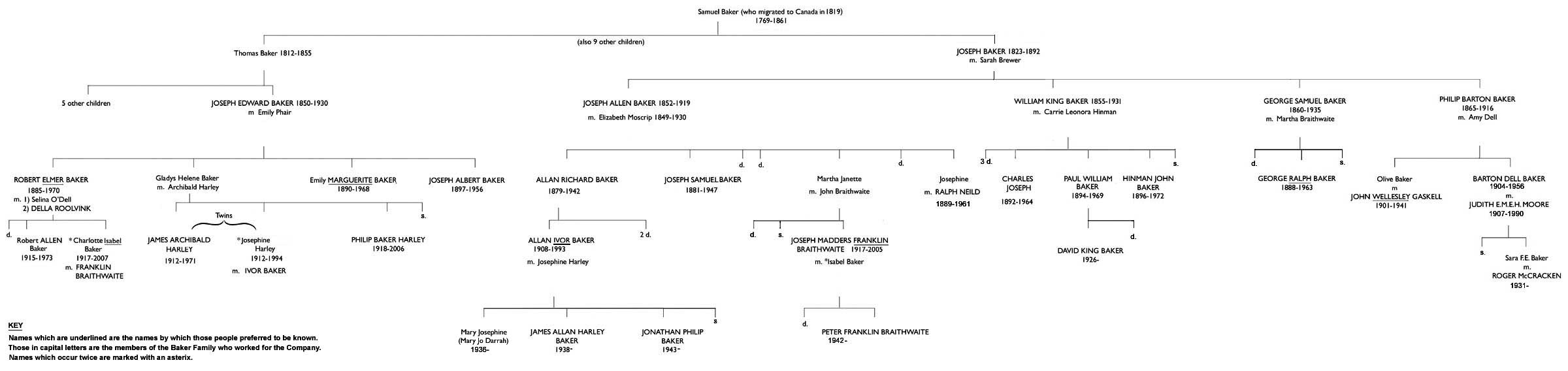 |
The Baker Family Tree (with acknowledgements to Mary Jo Darrah) |
Joseph Baker was the great-grandson of William Baker who, in 1740, left the village of Islington – at the time separated by miles of country fields from the city of London – to settle in Wexford, Ireland. The Baker family had been members of the Society of Friends almost since its foundation by George Fox in the seventeenth century. Samuel Baker, William's grandson, spent his childhood under the system of government established by the British Act of 1782 and he was caught up in the violent rebellion that broke out in 1798. The cruelties and sufferings that he witnessed first hand – including the massacre, within full view of the Baker's home, of 1300 insurgents by King George's soldiers - had a profound effect on Samuel, and through his recounting of these stories to his son and grandson, helped reinforce the Baker family's determination to live by the Quaker doctrines.
By early middle age, Samuel had seen a continual worsening in the living conditions of all those around him and he resolved to seek a new life in a new country free from the unrest, poverty and sorrow that he had known for so long. In 1819 he chartered a transatlantic vessel and, with his whole family, servants and possessions, started out on the three-month journey to Canada.
After encounters with icebergs, whales and other "monsters of the deep", they sailed down the St. Lawrence River and then travelled overland to Hallowell, Prince Edward's County, Ontario – forty miles from Kingston on Lake Ontario. Samuel purchased 200 acres of land on the 23rd September 1819, settled there on the 29th and by 4th October had sowed five acres with wheat.
The Samuel Baker Family Samuel Baker (1769- 1809) married Sarah Waring (1783-1824) the daughter of Thomas Waring and Abigail Wright. They had the following children:
[The two last 2 children were born in Canada - William in 1820 and Joseph in 1823, before their mother died in 1924.] |
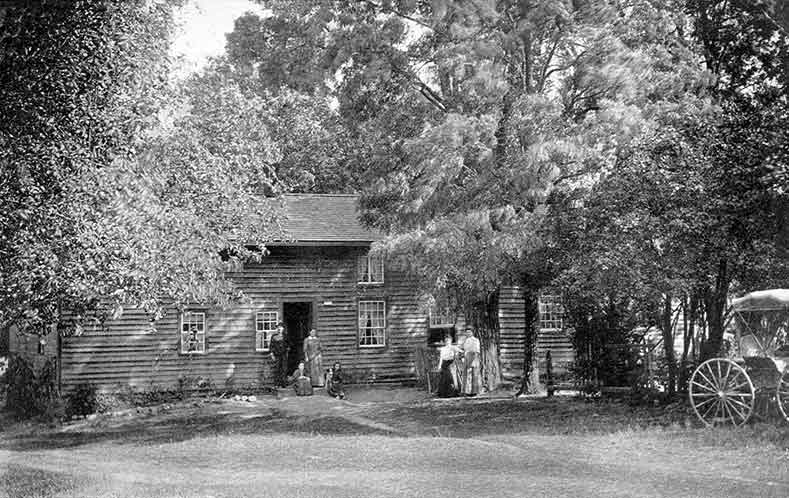
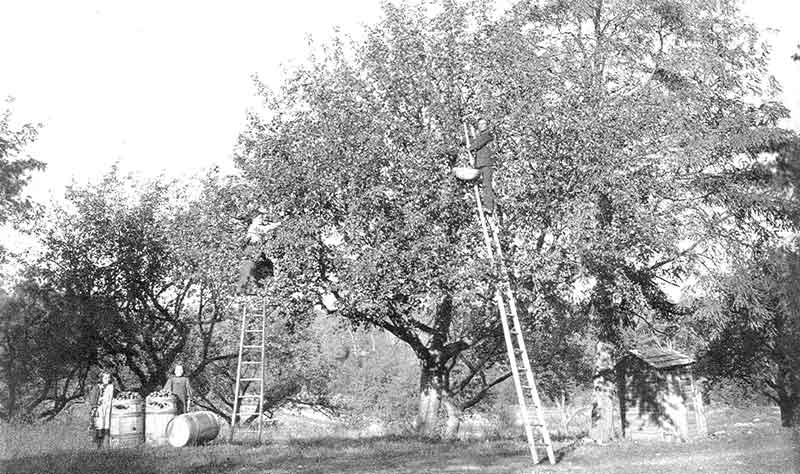
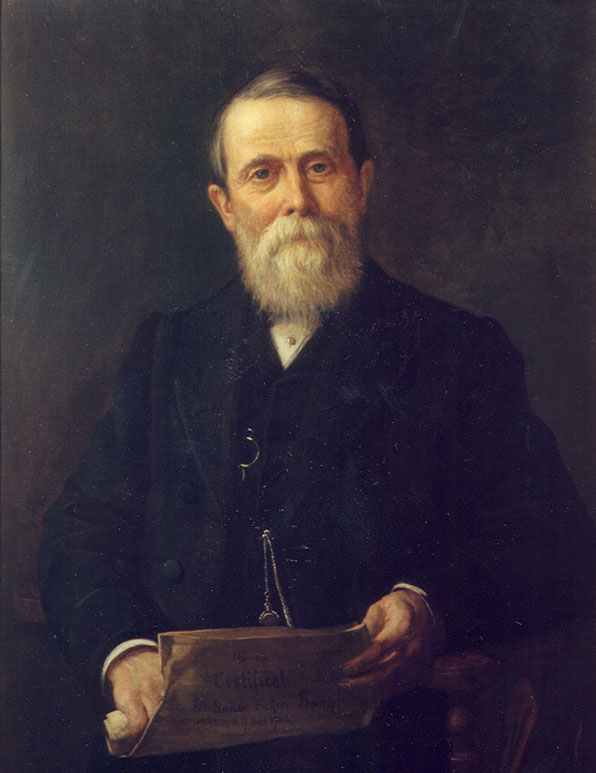
In 1823, Samuel's youngest son, Joseph, was born. He passed his youth in Hallowell, preparing to follow in his father's footsteps as a farmer. At the age of nineteen he married Roxa Leavens, settling down in a homestead on the other side of the bay. The homestead, called Maple Ridge and separated from any other habitation by miles of forest, had been given to him by his father who, with his older brothers' help, had cleared it. Five miles from the town of Trenton, Maple Ridge was Joseph Baker's home for many years and remained in the possession of his descendents for much longer.
 |
 |
The Old House at Maple Ridge |
|
Unfortunately, Joseph was not destined to share Maple Ridge for long with Roxa. When her first child, John, was two years old, a baby girl was born but, sadly, Roxa passed away on the day of the birth.
 |
 |
| Joseph Baker | Sarah-Ann Baker |
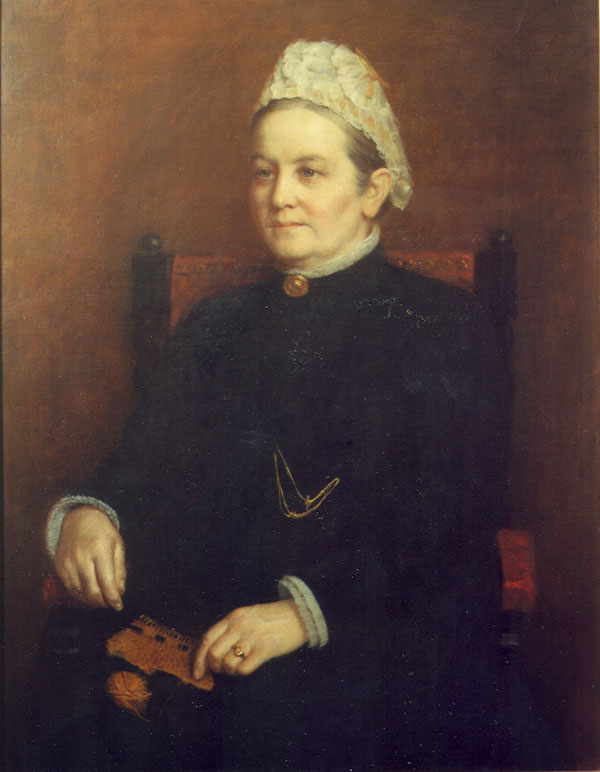
Two years later Joseph married Sarah Ann Brewer, the mother of J. Allen Baker. Sarah's family history had its share of dramatic quality. Her great-grandfather, Elazarus Brewer, whose family had lived in New York almost from the city's foundation, was one of the "United Empire Loyalists" forced to flee the country at the end of the American Revolution. Leaving behind all of his accumulated wealth, he escaped overland to Canada. The journey on foot, through hundreds of miles of unbroken forest and the bitter cold of the Canadian winter, took many weeks before they arrived at the wild, unsettled country around Lake Ontario. Elazarus settled at Elginburgh, near Kingston where his grandson, Philip Brewer, Sarah Ann's father, met his wife Elizabeth.
Four sons were born to Joseph Baker and Sarah Ann at Maple Ridge, the first being Joseph Allen Baker, on April 10th 1852, followed by William King Baker, George and Philip. Growing up in Trenton was full of adventure, not to say danger, and the boys made the most of the opportunities for exploration, log-jumping and ice skating. By the time that J. Allen Baker reached 10 years of age, the area had been developed and settled by organized communities although settlements of red Indians were not far away and, in accordance with the traditional friendship between Indians and Quakers, a 'brave' or squaw would often walk in to Maple Ridge unannounced and stay for hours.
While J. Allen Baker was at High School, Joseph's health gave way and he was unable to carry on the farm at Maple Ridge. More misfortunes followed and, at the age of seventeen, J. Allen had to leave school and join his father in an attempt to make their fortune by "canvassing" books, maps and pictures from house to house. Choosing the Middle West as their "territory", they worked hard at this activity for seven years, with varying success.
After a time, they added to their wares a flour-sifter for household use that Joseph had invented. Joseph had watched his wife engaged in the tedious task of sifting her stone-milled flour to remove the impurities and, possessing a mechanical turn of mind, decided to make a little machine that would make the task easier. The scoop-sifter worked like a charm and the obvious question was asked – "would other housewives like one?" Joseph made a few more to take on his rounds. The device was an instantaneous success and, soon, they gave up the sale of other things, made arrangements for the large-scale manufacture of the sifter, and concentrated on pushing its sale in Canada and the Middle West.
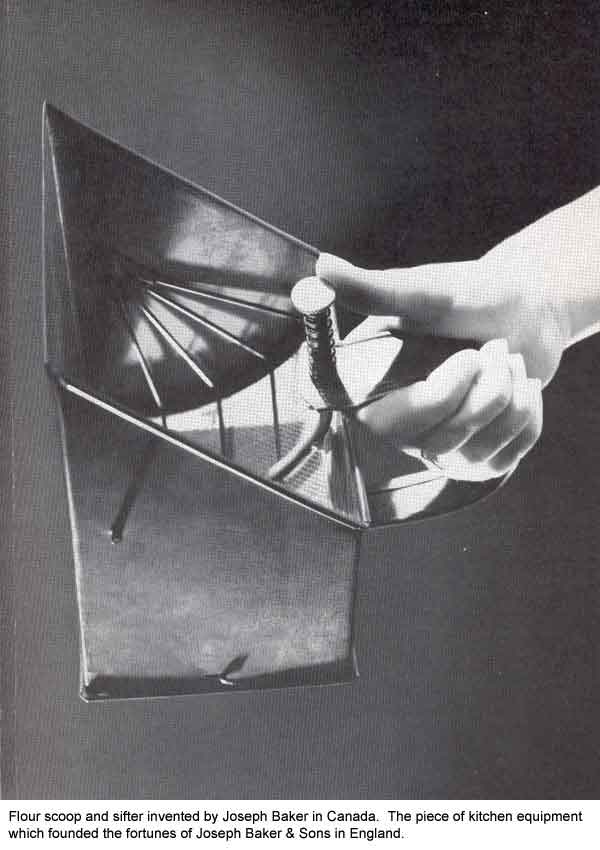 "Whereas George Haseltine of the 'International Patent Office', Southampton Buildings, London, Doctor of Laws, hath by his Petition humbly presented unto Us that he is in possession of an Invention for 'An improved combined scoop and sifter' which the Petitioner believes will be of great public utility that the said Invention has been communicated to him from abroad by Joseph Baker of Trenton, Canada, Gentleman, and that the same is not in use by any other person or persons to the best of his knowledge and belief."
- Patent No. 2289, July 1874.
The sifters were made in their little workshop in Trenton and a Canadian patent was taken out on 12th January 1870 with a United States patent just over a year later. The Minerva Lane workshop grew into a small factory and before long, other sizes of sifter with different attachments to handle other food products were added to the range. The Bakers cut a dashing figure in their silk hats and frock coats and were soon giving demonstrations to, and receiving very big orders from, large gatherings of housewives. By now the business was flourishing, the manufacturing department had made economies, and they had thirty travellers on the road. One of these was Richard Moscrip whom J. Allen Baker had met whilst snowed-in at an inn during one of his sales tours - more of him later.
The profit on each sifter was small and there had been talk of opening another factory in Detroit but a threatened lawsuit - an infringement action by two Americans alleging copying of their own device – put a stop to that. The case was still pending when Joseph, considering more ambitious schemes, decided in May 1876 to visit England with his eldest son.
Their first stop was New York, where they learned that the centenary celebrations of the Declaration of American Independence were being held in Philadelphia. The celebrations included the opening of a great international "fair" or exhibition – one of the first to be held – and known ever since as the "Centennial". J. Allen Baker resolved to go with his brother, William, who had travelled to New York to see them off.
The exhibition had a profound effect on J. Allen Baker, in particular, the "products of the world, Europe, Australia, India, China and the rest" and among them the mechanical wonders of the "Machinery Hall". The concept and purpose of the exhibition made a great impression on him but he little thought that at every succeeding international exhibition his company would have a large exhibit in the machinery section. (See also Trade Exhibitions).
The transatlantic voyage was uneventful and they reached Liverpool 10 days later. They spent three weeks in London, seeing the sights and meeting other Friends, before travelling to Ireland to visit numerous friends and relations. A selling trip was then made to East Anglia where they found their sifters and mixers well received, not only by middlemen who hoped to sell them on to housewives, but also by confectioners and chemists. It was decided to set up an English branch and, on August 24th, Joseph sailed from Liverpool leaving his twenty-four year old son to make his way alone.
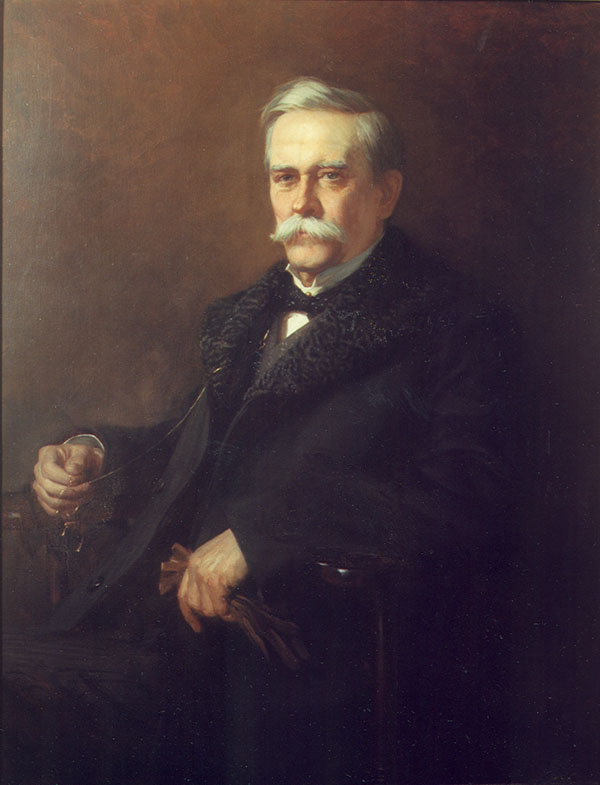
J. Allen Baker did not start work immediately but spent some time touring the Lake District and also visited Paris for three weeks before the end of the year. At neither place did he attempt to do any business but, between the two, he had spent two months in the Glasgow and Edinburgh areas, working hard and achieving satisfactory results. It was during this time, in early October 1876, that he made his first visit to the family of the aforementioned Richard Moscrip. Here he met Richard's sister, Elizabeth Balmer Moscrip, whom he was to marry on 27th February 1878.
 |
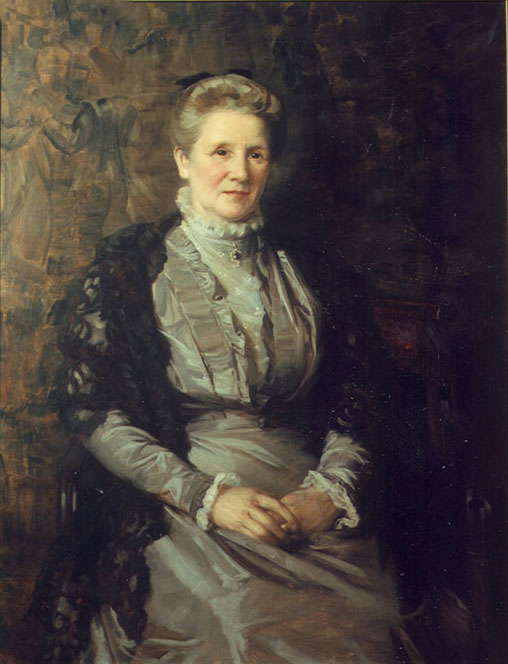 |
| Joseph Allen Baker | Elizabeth Baker |
By the time of his marriage, the business was in very good shape. There was a ready market in England for his father's inventions and he set himself the task of creating a wholesale market with the aim of building a business on a scale that would transform both the manufacturing and sales operations. The goods were still supplied from the Canadian factory and, although his father had set up a London office in Finsbury prior to his departure, J. Allen set up another in Liverpool from which he supervised the unshipping and distribution of the goods to the North.
Early in 1877, he sent a cabled order for "2,000 setts" and had calculated that he should be able to sell "at least 100,000 setts and clear upwards of £30,000 above expenses and manufacturing costs". The work load was such that he asked his brother, William, to join him.
The narrowness of his margins did not prevent him from investing a considerable amount of money in circulars and other methods of advertising. Business prospects became so good that his father decided to move his whole family across to England. The house at Trenton was sold, Maple Ridge was given on a long lease to a tenant, the factory left in trusted hands and Joseph Baker, his wife and sons, George (aged 19 and an engineering student) and Philip (a schoolboy of fourteen) crossed the Atlantic to join J. Allen and Elizabeth in their London home.
Now see:
History of Joseph
Baker & Sons.
Before Westwood.
Early Inventions.
All content © the Website Authors unless stated otherwise.